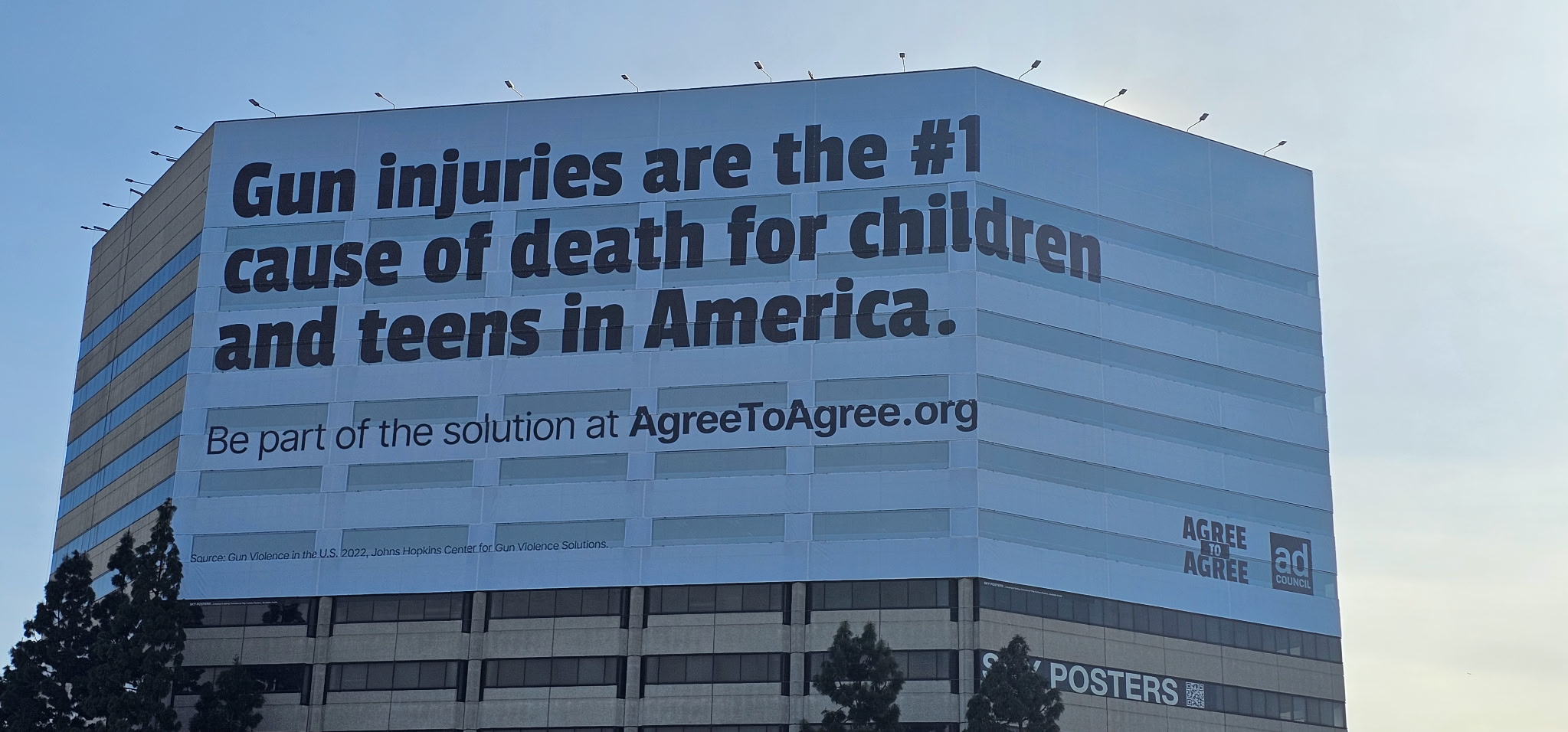
We are in the midst of a devastating gun violence crisis in the United States. For four consecutive years, gun injuries have been the leading cause of death for children and teens ages 1–17. Yet awareness of this reality remains alarmingly low: our research shows that, while 79% of adults identified gun violence as one of their top concerns, only 26% recognized that gun injuries are the leading cause of death for kids.
Our challenge: Deep ideological fault lines around guns make the topic particularly sensitive and contentious. Many feel it’s difficult to have constructive conversations without getting into heated debates over politics, values, or sensitive personal experiences. So, they avoid the conversation. The fear of being misunderstood and the lack of personal experience are major obstacles that lead to siloed conversations and heightened skepticism of others’ views.
Our task: Create a cultural movement to change the perception that conversations about guns will become arguments and show how having productive conversations about gun violence can help keep kids safe. Too often, discussions about guns end in an “agree to disagree”. That ends a conversation. “Agree to Agree” starts one.
Gun violence is an issue that has been caught in decades of political crossfire, and many people avoid talking about it because they believe conversations about guns end in arguments. This vacuum of constructive communication leads to a perception that we can’t find common ground and viable solutions. But our research affirms that Americans agree on more than we think when it comes to gun violence, especially when children are at the center of this crisis.
Importantly, there is broad agreement that everyone has a role to play in solving the issue, individual actions can make an impact, and there is shared optimism around the importance of having productive conversations. In fact, 82% of Americans agree that having more productive conversations can help reduce gun injury and death among children and teens, and 84% of parents support health care systems playing a role in preventing and reducing gun violence. This research shows that Americans believe gun safety education and conversations are the non-advocacy solutions needed to reduce gun violence. By reframing gun violence as an urgent health crisis and centering the safety of children and teens, we can sidestep division and mobilize everyone to be part of the solution, including gun owners, non-gun owners, parents, young people, health care professionals and more.
With a foundation of rigorous research —qualitative exploration and quantitative validation— we’ve worked closely with experts, gun owners, gun violence survivors, and more to develop a series of integrated campaigns addressing this crisis through multiple pathways. “Agree to Agree” is a cultural movement focused on the common ground we DO have, to make conversations about gun safety as normal as talking about food allergies, wearing a helmet, or using a seat belt. We’ve tackled hard conversations before. We can do it again.
With this foundation, we launched the campaign with a powerful video PSA, “No Debate Debate”, which features real students and their parents—not actors—attending what they think is a student debate about gun violence. It quickly becomes clear that gun violence is not a divisive two-sided debate, and the students confront the audience about the sobering reality of gun injuries impacting kids.
We’ve continued to address this massive and nuanced issue from multiple vantage points since the campaign’s launch in February 2025, expanding the platform to include content directed to health care professionals (video series, PSAs, and a robust online resource hub) and news partnership content that further raises awareness of this critical issue and its impact on youth.
Creative assets direct audiences to AgreeToAgree.org and AgreeToAgree.org/Healthcare. There, people can access vital resources, including conversation guides, strategies and tips from trusted experts, and additional materials that aim to educate and empower audiences to take individual steps to help prevent gun violence and keep children and teens safe.
We are already seeing the real-world impact of this cultural movement. In the past year+, we’ve reached audiences at scale with this critical message, driven meaningful engagement, and encouraged productive conversations about gun violence to help keep kids safe.
We've achieved 42% net PSA recognition among the media target audience (household with child <age18). The campaign has garnered over $52M in donated media support and generated more than 3B+ impressions across donated, paid, earned and owned channels (February 2025-April 2026). We’ve driven over 706K visits to AgreeToAgree.org, with 17,000 clicks on resource or conversation guides, materials that encourage important conversations about youth firearm injury prevention.
Most importantly, 66% of PSA-aware respondents reported having a conversation in the past year about preventing gun injury and death among children and teens compared to just 47% of those not PSA-aware, indicating that the campaign is contributing to real-world impact. Additionally, PSA-aware respondents were more likely to know the leading cause of death for children and teens is firearm injuries (41% PSA-aware vs. 33% Not PSA-aware), and they were more likely to agree that they can play a role in preventing gun injuries and death among children and teens (75% PSA-aware vs. 58% Not PSA-aware).
Our work is far from over, but these results demonstrate how we’ve successfully addressed this crisis through a multi-channel campaign focused on finding common ground and mobilizing everyone to be part of the solution. Together, we can shift perceptions, have productive conversations, and keep kids safe from gun violence