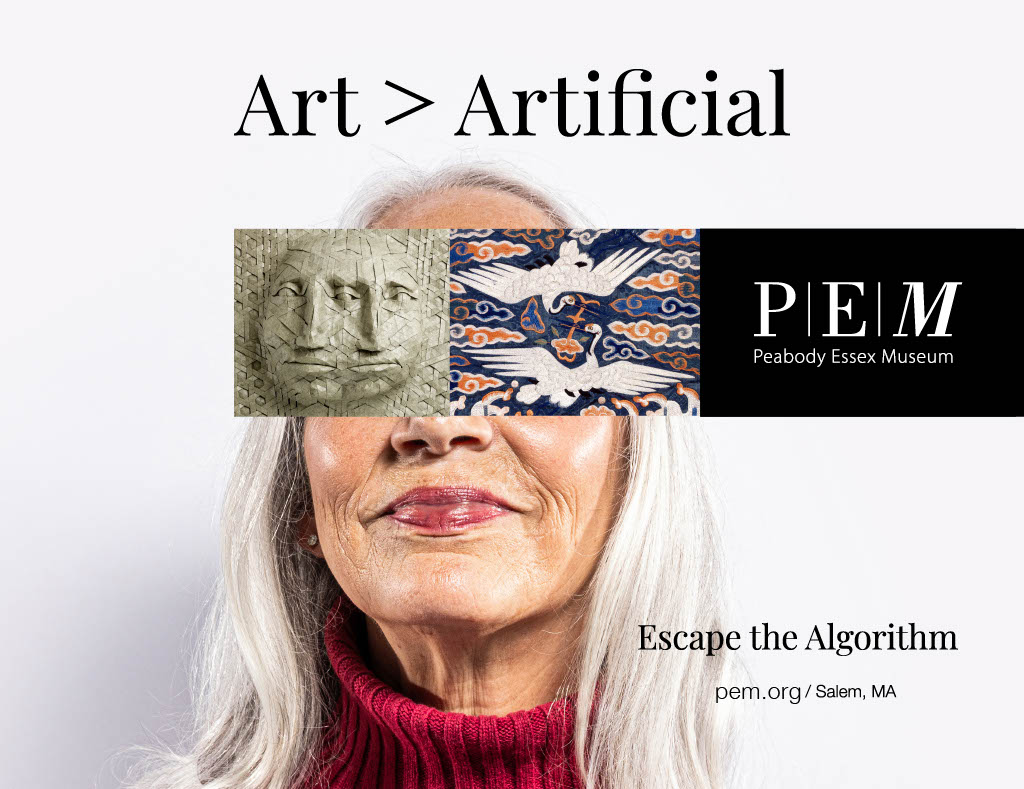
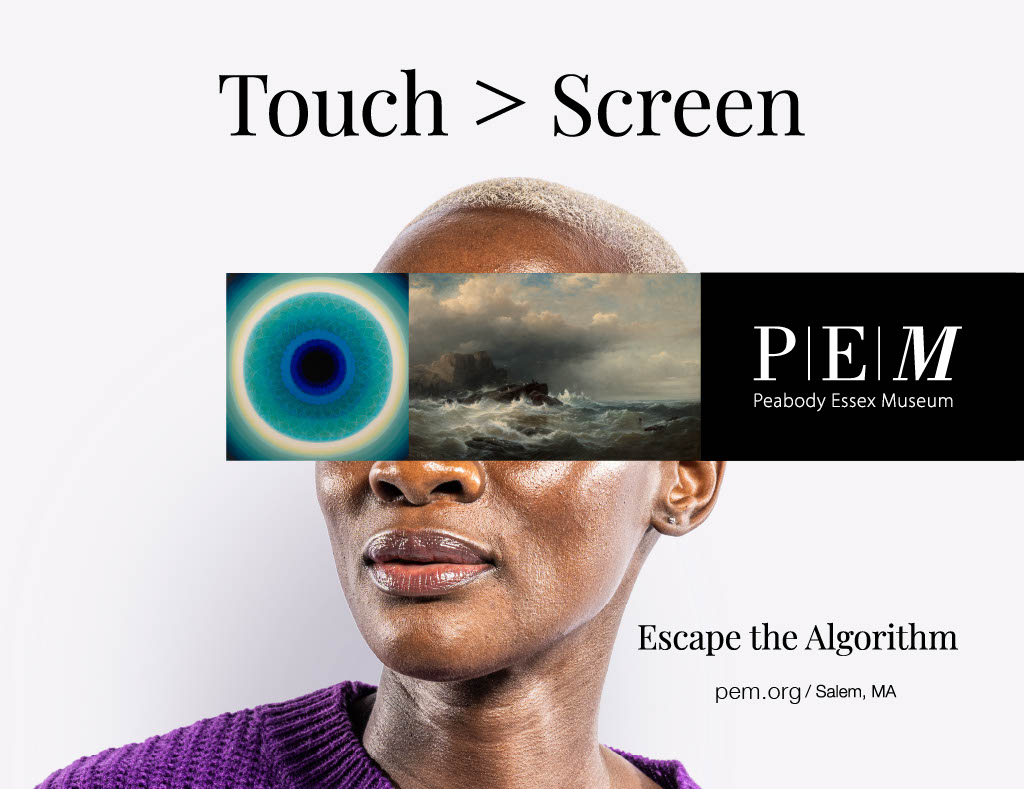
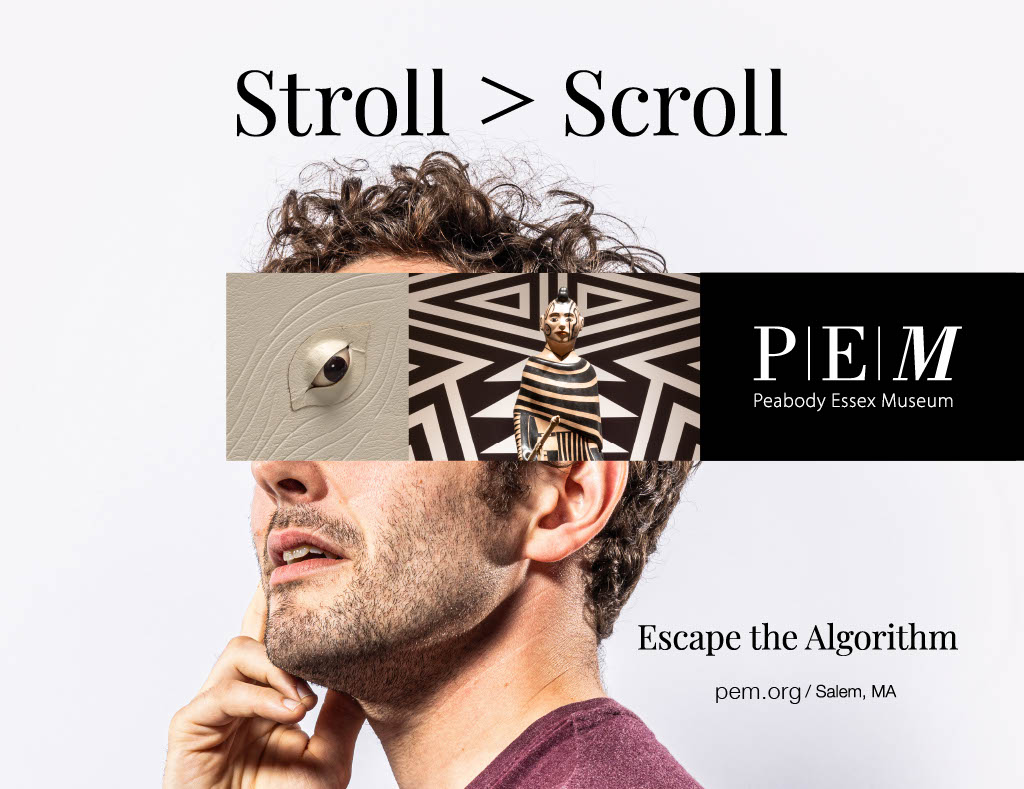
At 225 years old, the Peabody Essex Museum (PEM) in Salem, Massachusetts, is one of the oldest continuously operating museums in the country. But age and acclaim don’t guarantee relevance. PEM’s toughest competition wasn’t another museum or a weekend outing. It was the algorithm: the endless, targeted scroll that keeps people staring at screens instead of experiencing the world in front of them.
HATCH set out with PEM to change that. The goal was to reposition the museum as a living antidote to digital overload and, in doing so, draw a broader, more diverse range of visitors that better reflects the community PEM serves. Underneath every decision was a question of belonging: how do you make a centuries-old institution feel like it was built for everyone, not just lifelong “museum people”?
We approached the work through a framework we call Consumer Brand Experience, or CBX: the idea that a brand is the sum of every interaction a person has with an institution, not just its advertising. That meant the campaign couldn’t stop at awareness. It had to invite people in, give them a reason to look up from their phones and create moments worth sharing. Success would be measured not only in reach but in real engagement: new visitors, deeper digital connection and a stronger sense that PEM belongs to its whole community.
We built the campaign around a provocative contrast: the curated, sensory, human experience of a museum set against the targeted, artificial sameness of the endless scroll.
Our creative made that contrast literal. Striking imagery showed diverse visitors “wearing” PEM’s art and artifacts as if they were virtual-reality headsets, seeing the world through the museum rather than through a screen. We paired the images with headlines that needed no explanation:
• “Stroll > Scroll”
• “Scenes > Screens”
• “Art > Artificial”
• “Touch > Screen”
Because the campaign was meant to reach a more diverse audience than PEM had traditionally drawn, we engaged our Cultural Advisory Council for the first time. The council combines community leadership and activism with marketing expertise to identify cultural blind spots and strengthen creative before it goes live. Its input shaped the work so it would resonate authentically across the communities PEM serves, not only its existing members.
The campaign came to life everywhere people scroll and everywhere they don’t: billboards across Greater Boston, transit station domination ads, mall signage and digital and social content, alongside live experiences and engagement activities at the museum itself.
But “Escape the Algorithm” couldn’t just tell people to put their phones down. That contradiction would have undercut the whole idea. Instead, the campaign changed how PEM showed up online. Rather than publishing only polished posts about the institution, the team began regularly sharing short videos about the collection, including works not currently on view. Unlocking the stories behind the objects created a different kind of engagement: these behind-the-scenes posts became some of the museum’s highest-performing content, with followers asking questions and suggesting the stories they wanted to see next.
PEM took co-creation further by launching a TikTok Creator-in-Residence program, the first of its kind at any U.S. art museum. By inviting outside voices to narrate the museum’s story in their own words, PEM showed what happens when an institution trusts its audience to help shape the narrative rather than tightly controlling it.
Most recently, the campaign added two “glitching” video ads built for social feeds, designed to interrupt the scroll, break through digital noise and point viewers toward a real-world experience at PEM.
Throughout, CBX guided the work: the belief that a brand lives in every touchpoint, from a billboard to a TikTok comment to the way a front-desk staffer greets a first-time visitor. Getting attention was only part of the job. The harder part was turning it into a reason to show up, look around and feel like they belonged.
The campaign delivered measurable results across audience growth, engagement and earned media.
• Website sessions increased by nearly 50%.
• New online visitors grew by almost 75%.
• The campaign generated 145 unexpected online purchases, an unplanned revenue stream that surfaced organically from awareness-focused work.
• TikTok followers grew 159% and video views jumped more than 3,000% during the Creator-in-Residence program.
• Coverage in the Boston Globe, Artnet News and The Art Newspaper carried the campaign well beyond Salem.
Beyond the numbers, the campaign changed how PEM connects with its audience. Behind-the-scenes collection videos became some of the museum’s highest-engagement content, turning passive followers into active participants who asked questions and shaped what came next. The TikTok Creator-in-Residence, a first for any U.S. art museum, extended that participation to outside voices and broadened who sees themselves in PEM’s story.
Most telling were the unscripted moments the work made possible: visitors sharing their own experiences, commenters describing what the museum meant to them, first-timers discovering they were “museum people” after all.
For a 225-year-old institution, “Escape the Algorithm” showed that relevance comes from opening up: a more human and more welcoming experience that gives a wider community a reason to look up from the scroll.