According the World Health Organization, more than 1.3 billion people worldwide live with a significant disability. Despite that, accessibility remains inconsistent across digital media and social platforms. Social media has become one of the primary ways people consume documentary content, yet social-first productions often overlook the access needs of Deaf, blind, low vision, neurodivergent, and disabled audiences
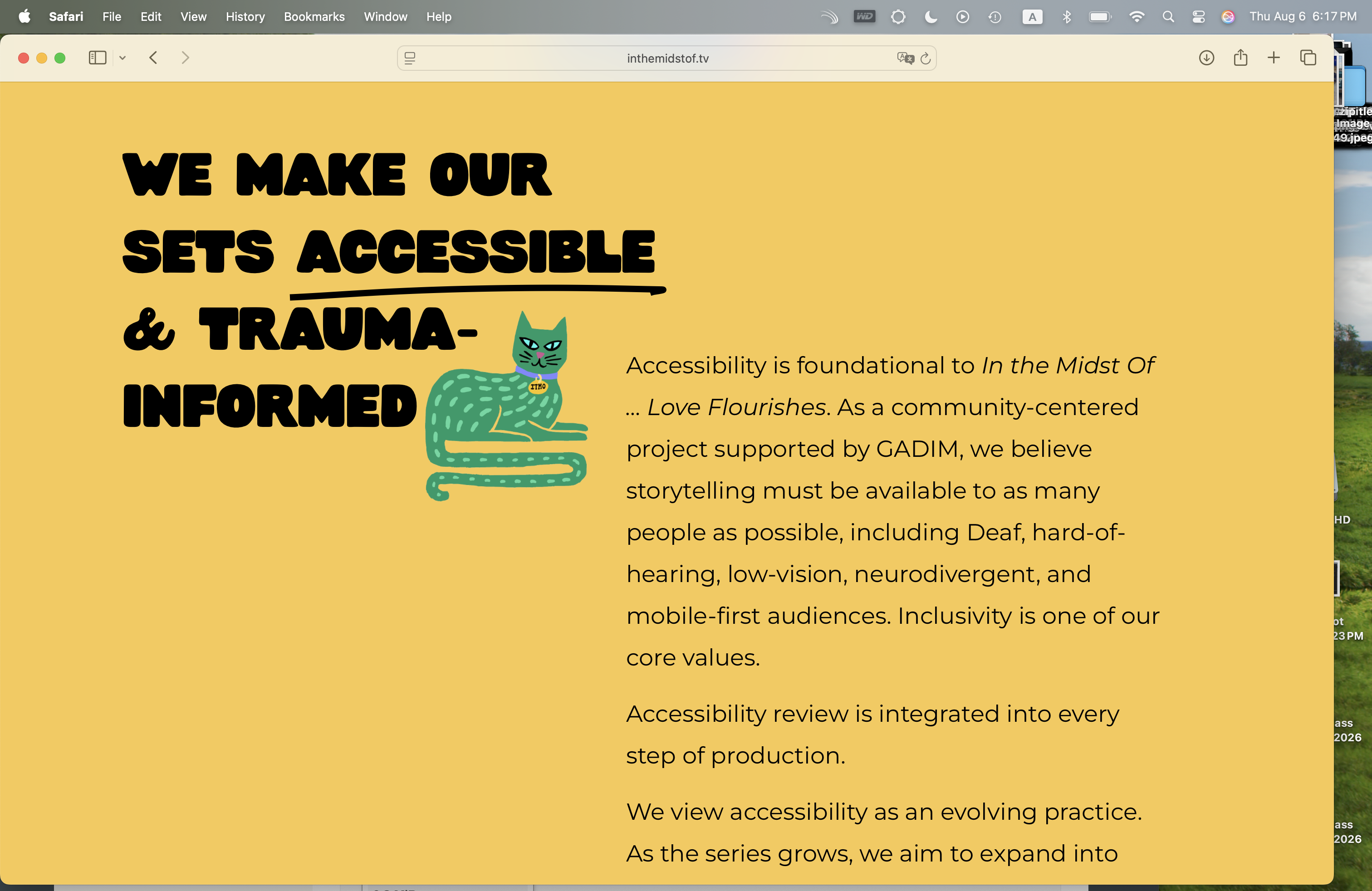
As a project produced by the Global Alliance for Disability in Media and Entertainment (GADIM), we saw an opportunity to demonstrate that accessible social storytelling could be both artistically ambitious and widely engaging. Accessibility was embedded from the outset through accessible production practices, accessible locations, professionally produced captions and transcripts, audio description, alt text, participant self-descriptions, and ongoing accessibility review throughout post-production.
Beyond the audience experience, we wanted to model a different way of making media. Our production was led by disabled and neurodivergent (and trans) creatives whose lived experiences informed decisions throughout the project. Rather than treating disability inclusion as something that happened as an afterthought, we integrated it into every stage of development, production, post-production, and distribution.
Our goals were to:
To ensure accessibility was fundamental rather than additive, we embedded it into every stage of production, from concept development through distribution. As a project produced by GADIM, accessibility was treated as a creative discipline, not a compliance exercise.
Production prioritized accessible locations, gathered access requirements from cast and crew, arranged accessible transport and accommodation for participants with mobility needs, and built flexible schedules, particularly for team members living with chronic illnesses. We worked to develop practical solutions that enabled everyone to do their best work. For example, our director, who has ADHD and dyslexia, found it difficult to simultaneously maintain eye contact with participants while managing interview questions. To support his access needs and the quality of the conversations, another crew member quietly prompted questions off-camera, allowing interviews to flow naturally while maintaining genuine connection with participants.
Accessibility continued through post-production with captioning, transcripts, AD, self-descriptions, alt text, and accessibility review. Rather than relying on auto generated captions, we invested in professionally produced captions and transcripts to ensure accuracy, readability, and respect for participants' voices.
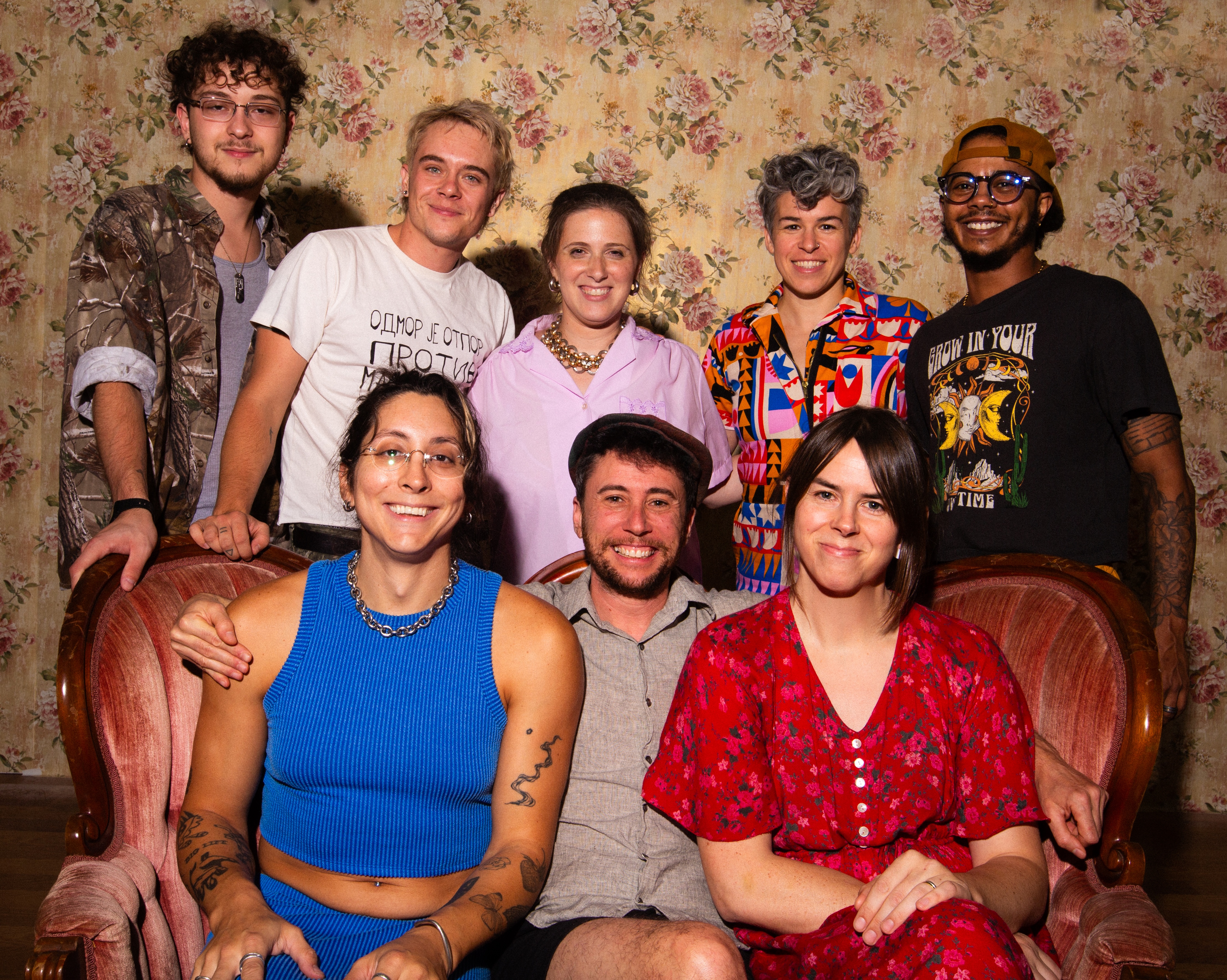
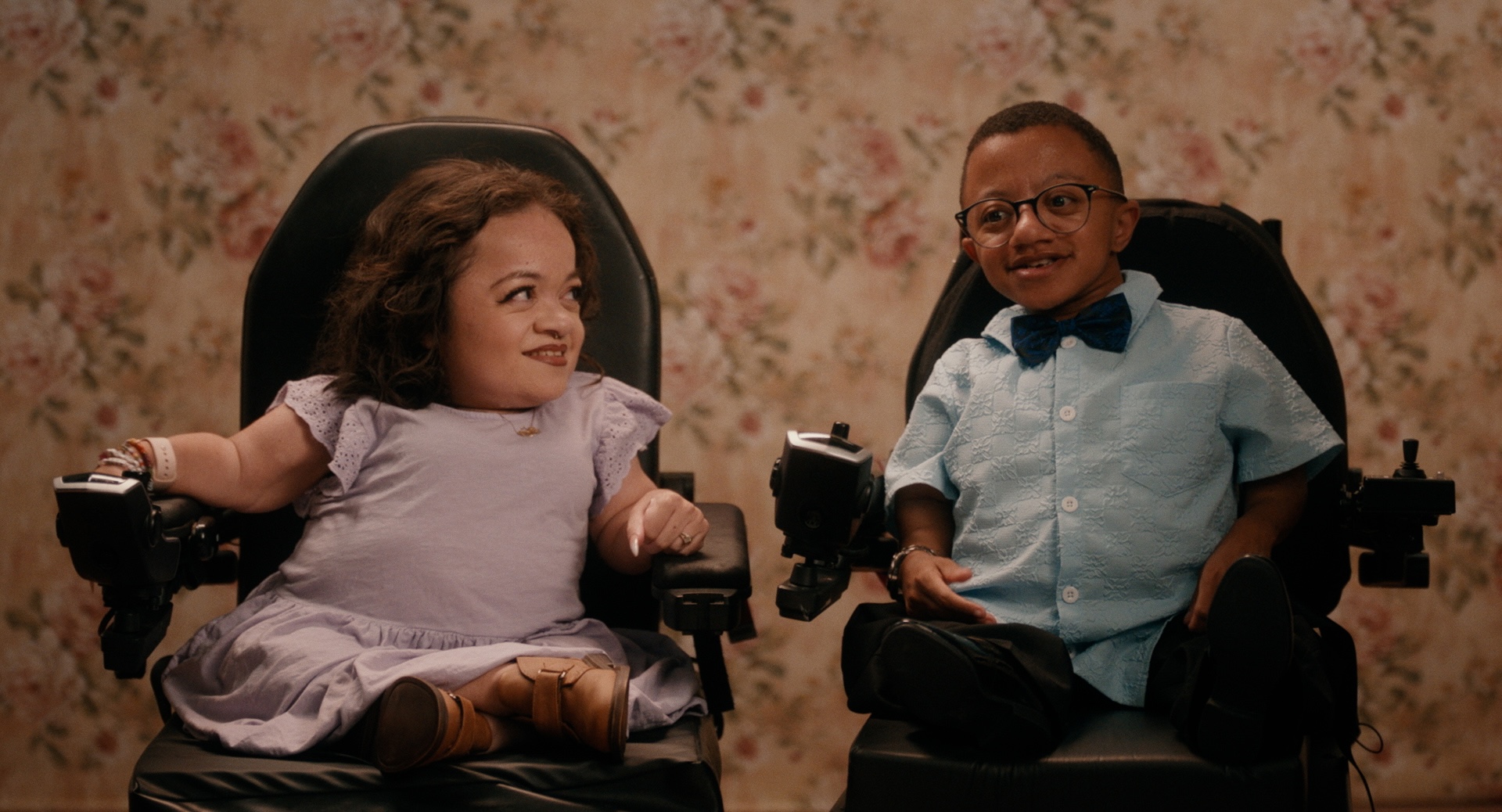
We designed the project specifically for social media, recognizing that millions of people, particularly disabled people who may face barriers to attending cinemas, festivals, or community events, now experience stories primarily through online media. Disabled creatives led the production, and more than 90% of participants, including well-known couple Jay Manuel and Pamela Chavez, and creator Briel Adams, identified as disabled or neurodivergent.
Notably, accessibility wasn't driven by the project's subject matter. Although the series centers trans love and relationships rather than disability, we believed disabled representation and inclusion matters, and audiences should be able to engage fully with every story. By embedding accessibility throughout the production, we demonstrated that inclusive design should be standard practice, not something reserved for disability-focused content.
One assumption we frequently encounter is that hiring disabled crew members and securing accessible locations inevitably creates significant production challenges or increases costs. That was not our experience. Like every production, accessibility presented practical considerations to solve, but they weren't more complex than the countless logistical decisions every film production makes. Every challenge was solvable within budget through thoughtful planning, flexibility, and open communication. In fact, prioritizing people's needs, whether related to disability or not created a stronger production, as it fostered an environment where people could do their best work.
One of our greatest challenges was balancing the rapid pace of social media publishing with the time required to produce high-quality accessible assets for every piece of content. Before production began, departments estimated the time they would need, with our accessibility team requiring the longest review period. Once the series was underway, it became clear that this estimate wasn't sufficient. Rather than asking the accessibility team to work faster or reducing the quality of the accessible materials, we deliberately adjusted our release schedule, delaying several episodes so access work could be completed to the standard our audiences deserved. Although there was pressure to maintain momentum with social algorithms, we chose accessibility over speed.
Our objective was to demonstrate that accessibility and creative excellence can coexist within social-first media. The success of the series showed that accessible storytelling is not a limitation but an opportunity to reach broader audiences while creating a better experience for everyone.
The project also demonstrated a production model in which disabled and neurodivergent creatives shaped both the creative vision and operational decisions. By embedding accessibility into planning, production, post-production, and distribution, we created a practical example that other digital storytellers can adopt.
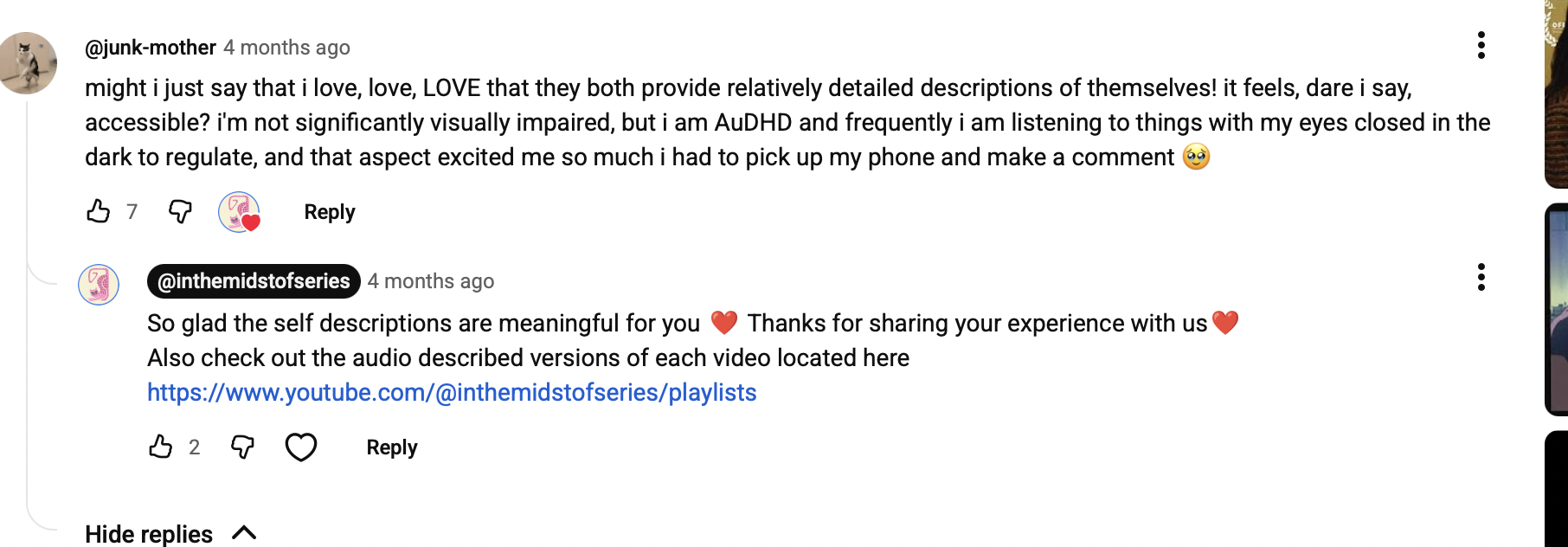
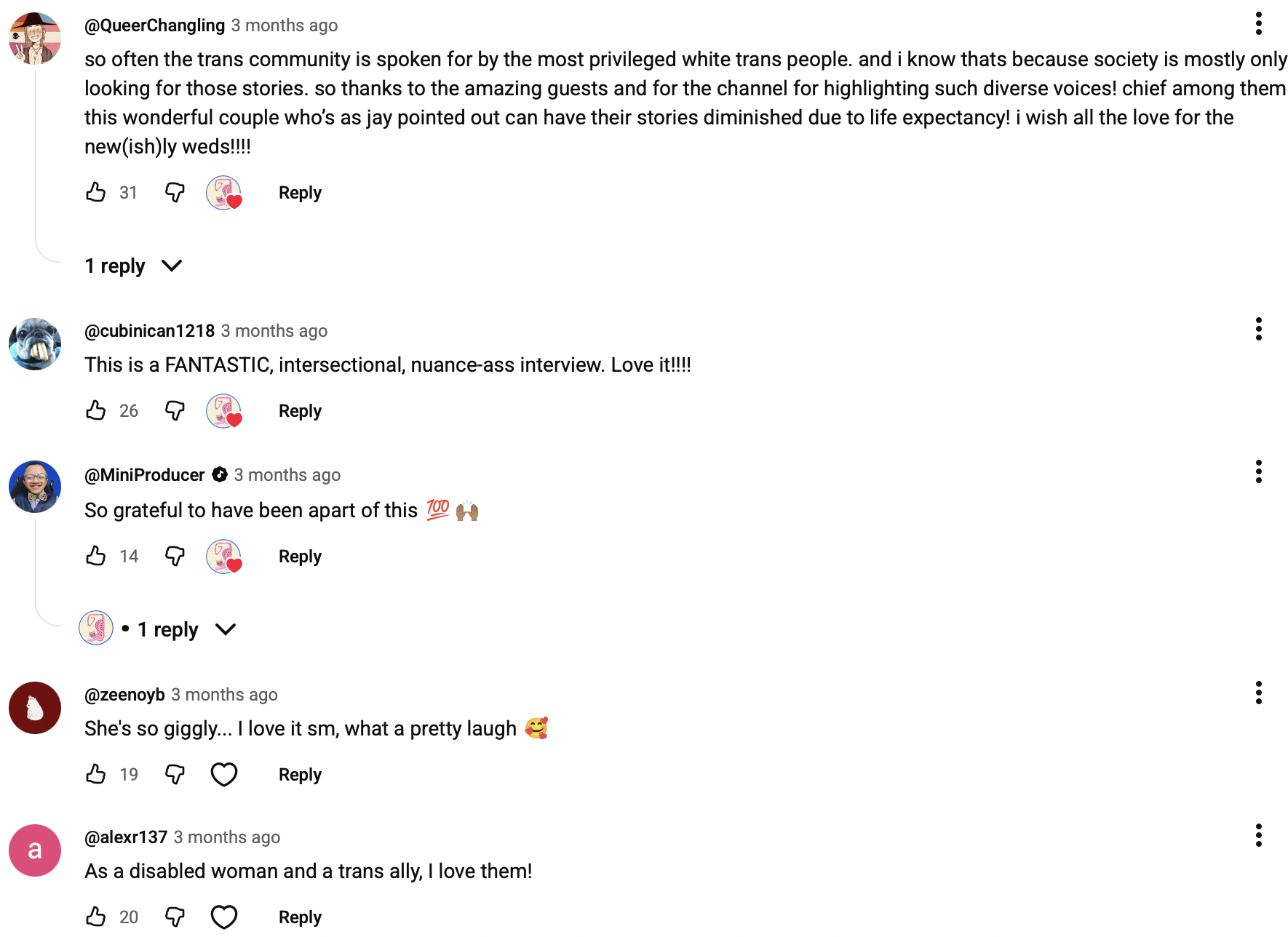
We heard directly from the audiences we hoped to serve. Numerous viewers thanked us for our inclusivity. Others specifically recognized our investment in professionally created rather than AI-generated captions, highlighting the accuracy and care they brought to the viewing experience. For us, these responses were every bit as meaningful as our audience metrics because they confirmed that our accessibility efforts made a tangible difference.
The project's impact was also reflected in its reach. Within six months of launch, the series organically generated more than 50 million views across platforms and built a community of more than 136,000 followers. It also received a Telly Award for Diversity & Inclusion.
A few quotes from our comments section:
“Thank you for also including the disabled. I’m a Queer amputee.”
“This is so healing to watch, especially how inclusive the video itself is. And accurate captions! ☺️”
“The visual descriptions are hugely appreciated !!!!! Accessibility for low/no vision folks is so often forgotten about.”