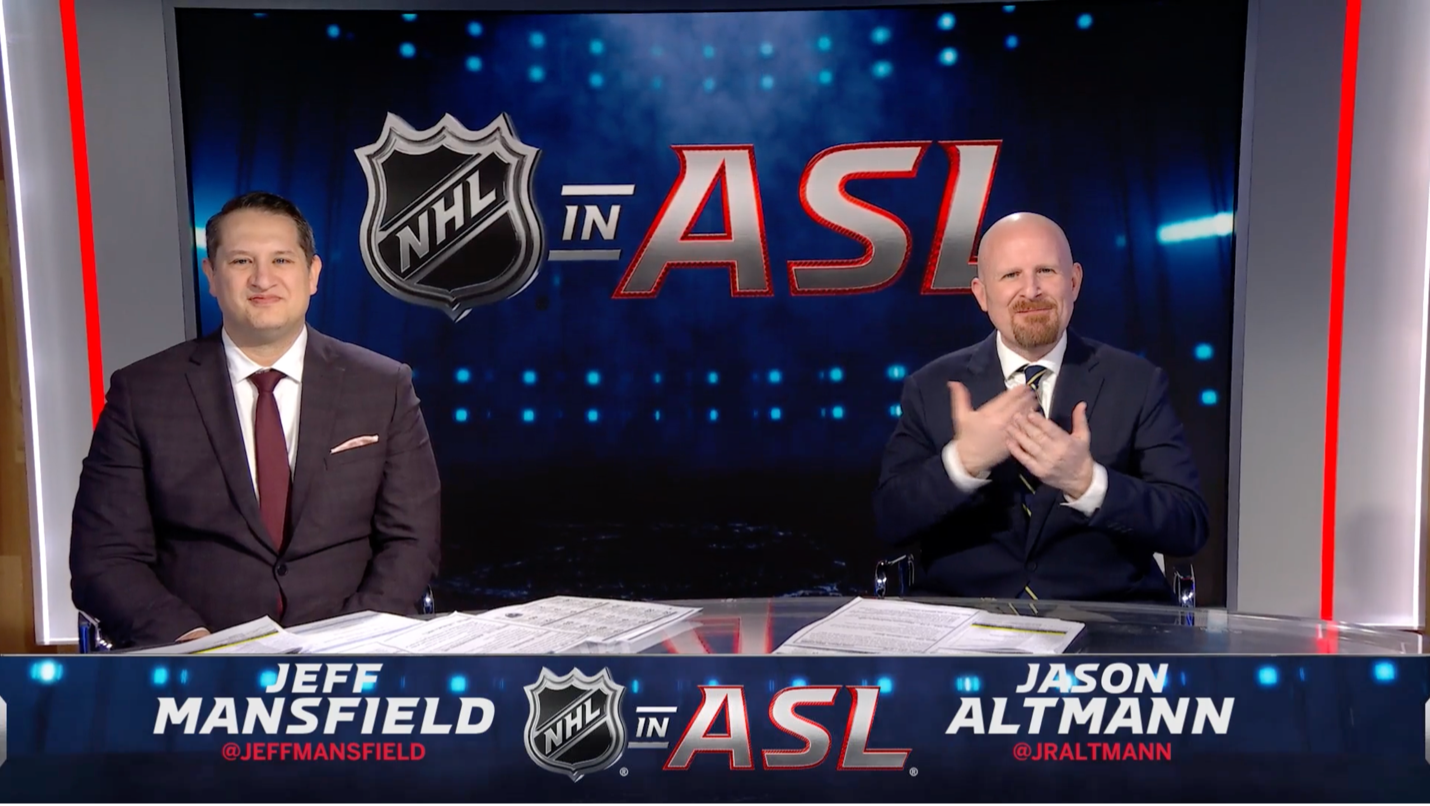
NHL in ASL transformed the traditional sports broadcast model by integrating live American Sign Language interpretation directly into marquee NHL events, creating one of the first fully accessible professional sports viewing experiences for Deaf and hard-of-hearing fans. Produced in partnership with P-X-P, the initiative combined the scale and credibility of live television with digital-first storytelling and engagement strategies that expanded hockey’s reach to entirely new audiences.
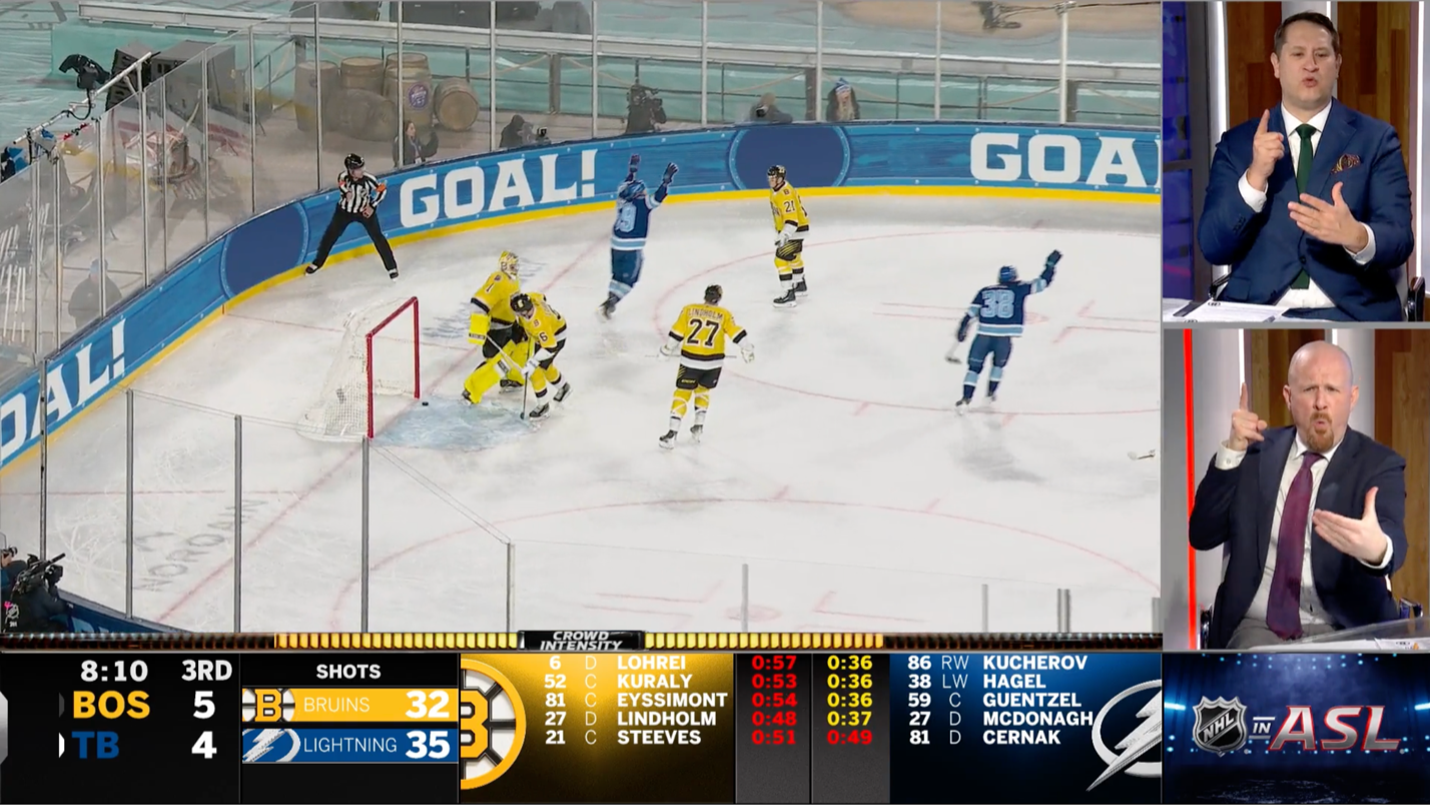
The program featured groundbreaking broadcasts including the first-ever NHL Stadium Series game presented fully in ASL, alongside live athlete interviews conducted by Deaf broadcasters, a historic first for professional sports. Innovative visual elements such as enhanced graphics, live anthem interpretation, and real-time crowd-noise visualization translated the energy and emotion of live hockey into a fully immersive and accessible experience.
Beyond the broadcasts themselves, NHL in ASL drove sustained digital engagement through social media polls, educational ASL content, weekly highlight shows, and behind-the-scenes storytelling that invited both Deaf and hearing audiences to participate. Fans learned hockey terminology and player names in ASL while engaging with content across platforms year-round.
The initiative generated significant earned media attention, elevated underrepresented voices within sports media, and demonstrated how accessibility can strengthen fan affinity, deepen engagement, and expand audience growth. By seamlessly integrating traditional live sports production with innovative digital engagement, NHL in ASL redefined what inclusive sports media can look like.
NHL in ASL was built with a simple but ambitious goal: to create an authentic, fully accessible NHL viewing experience designed specifically for the Deaf and hard-of-hearing community; not as an add-on to a traditional broadcast, but as a standalone production led by Deaf talent and rooted in Deaf culture.
To bring the project to life, the NHL partnered with P-X-P to assemble Deaf broadcasters, interpreters, and accessibility consultants who worked collaboratively with traditional live sports production teams throughout the season. From the outset, the focus was on creating an experience that preserved the speed, emotion, and storytelling of hockey while rethinking how live sports could be visually communicated through American Sign Language.
One of the project’s defining innovations was reimagining the traditional live sports production workflow itself. Because the broadcast talent communicated solely in ASL while the production control room operated through standard verbal communication systems, interpreters became fully integrated members of the production team, functioning not only as interpreters, but effectively as producers between the talent and control room. They facilitated real-time communication around timing, storytelling, replay elements, interviews, transitions, and breaking game action, ensuring seamless collaboration in an incredibly fast-paced live environment. This unique workflow required the creation of entirely new production processes and communication systems that had never before been implemented at this scale within a live professional sports broadcast.
The execution extended far beyond simply interpreting commentary. Broadcast graphics were redesigned to improve visual clarity and storytelling. Real-time crowd-noise visualization and enhanced referee explanations helped translate the atmosphere and energy of the game into a more immersive visual experience. The production also incorporated live anthem interpretation and educational content to further connect fans to the sport and to Deaf culture.
The initiative also produced several historic firsts, including the first-ever NHL Stadium Series game fully presented in ASL and the first live interviews between Deaf broadcasters and professional athletes during an NHL event. Executing these moments required navigating complex live-event conditions, including outdoor stadium environments, crowd noise, weather variability, and the speed of live gameplay, while maintaining seamless accessibility and production quality throughout.
Digital engagement was equally central to the strategy. Leading up to broadcasts, fans participated in social media polls and educational campaigns teaching hockey terminology and player names in ASL. Weekly highlight shows, behind-the-scenes content, and clips from athlete interviews extended engagement across platforms and created year-round touchpoints for audiences. The NHL in ASL digital hub centralized these resources, allowing fans to continue learning and engaging long after the live broadcasts ended.
What makes NHL in ASL unique is that accessibility was never treated as a secondary feature—it was the creative foundation of the entire project. By blending traditional sports media, innovative production workflows, digital storytelling, and authentic cultural representation, NHL in ASL redefined what inclusive sports broadcasting can look like and established a new model for accessible live entertainment.
NHL in ASL exceeded our objective of expanding accessibility while proving that inclusive programming can drive audience growth, cultural impact, and mainstream visibility for live sports. From the beginning, our goal was not simply to provide accommodation, but to create an authentic viewing experience that centered Deaf voices and welcomed entirely new audiences into hockey.
The initiative generated billions of media impressions globally across broadcast, digital, social, and earned media coverage, significantly elevating awareness of accessibility in sports media. NHL in ASL also drove sustained engagement through educational ASL content, live-event storytelling, highlight packages, and historic player interviews conducted in ASL.
Most significantly, NHL in ASL earned three Sports Emmy nominations, validating both the creative excellence and industry impact of the initiative. The nominations recognized NHL in ASL across live event and interactive categories, reinforcing that accessibility-driven programming can stand alongside the most innovative work in sports broadcasting.
Beyond measurable reach and recognition, NHL in ASL is helping open an entirely new sector of the broadcasting industry by proving there is both an audience and demand for accessibility-first live sports content. By building a production model centered around Deaf talent, ASL storytelling, and innovative visual communication, the initiative created a blueprint for how sports and entertainment media can evolve.
Ultimately, NHL in ASL succeeded because it transformed accessibility from a feature into the foundation of the storytelling itself—deepening fan connection, expanding representation, and redefining what inclusive sports broadcasting can look like.