Buying new remains the default, even when useful products already exist in our homes and communities. Products may still hold practical and emotional value, yet the system around us makes replacement feel easier, more desirable and more normal than reuse. Second-hand is often framed as a compromise, while sustainable consumption can feel like a lifestyle choice rather than an option open to everyone.
SwapShare set out to make swapping a credible first choice before purchasing new. The ambition was not simply to raise awareness of overconsumption, but to change both perception and behaviour: remove the stigma around second-hand, preserve the value of items already in circulation and make reuse feel easy, desirable and rewarding.
The model also needed to work for everyone. Participation should not depend on spending power, and every pop-up should create value beyond the exchange itself by bringing neighbours, volunteers and local organisations together.
Across the 2025–2026 programme, SwapShare aimed to build a recognisable and repeatable community model that could extend product lifecycles, reduce waste and CO₂ emissions, introduce new audiences to swapping and give returning visitors a reason to participate again.
The central idea was simple: not another campaign telling people to consume differently, but a system that lets them practise it. Swap before you buy.
SwapShare brought the idea to life through community driven pop-ups built around a simple exchange model: bring quality clothing, books, toys or homeware, receive SwapShare credits and use those credits to discover something new to you. Credits could be spent immediately or saved for a future event. This preserved value, removed money from the moment of exchange and created a reason to return.
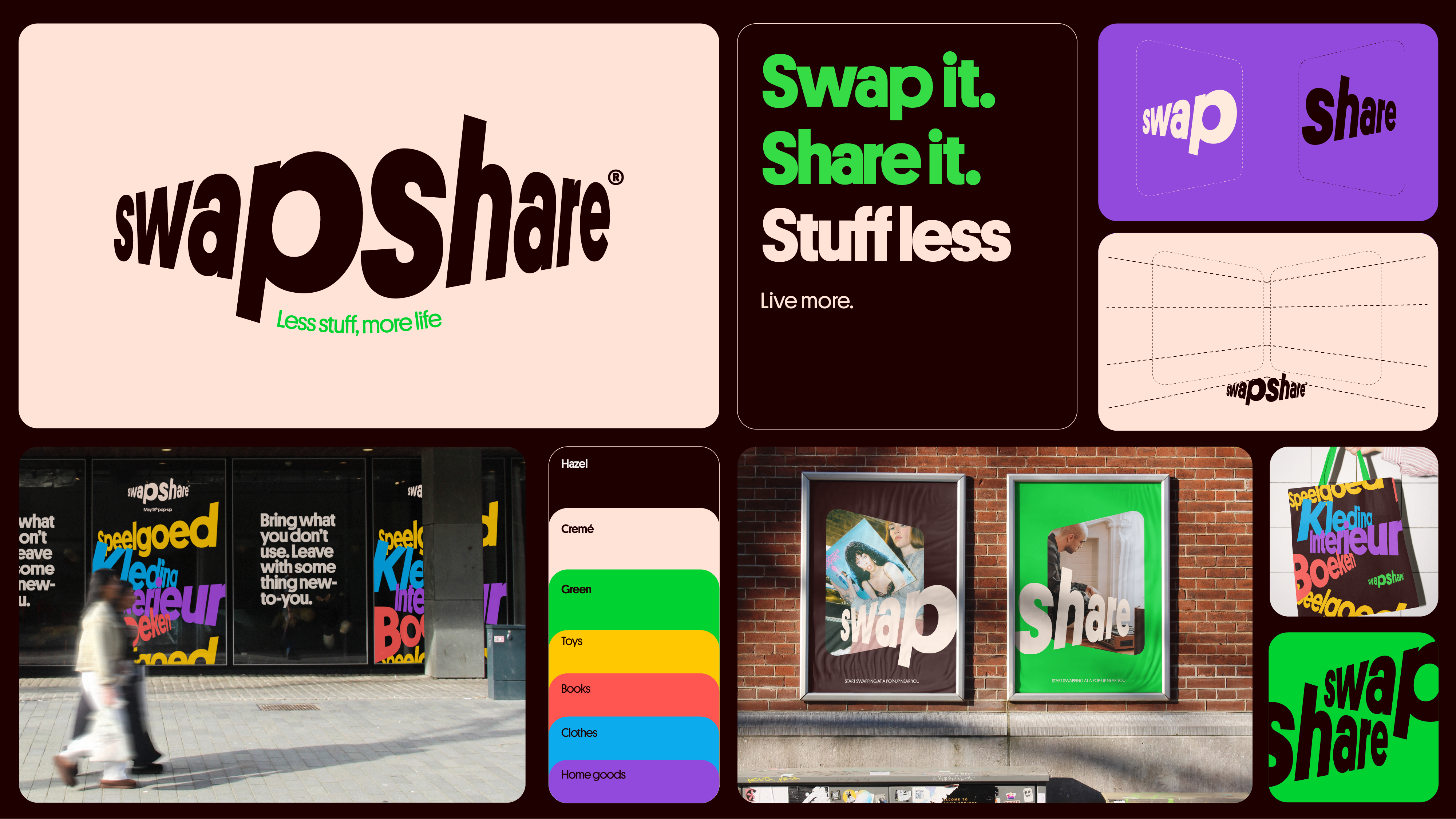
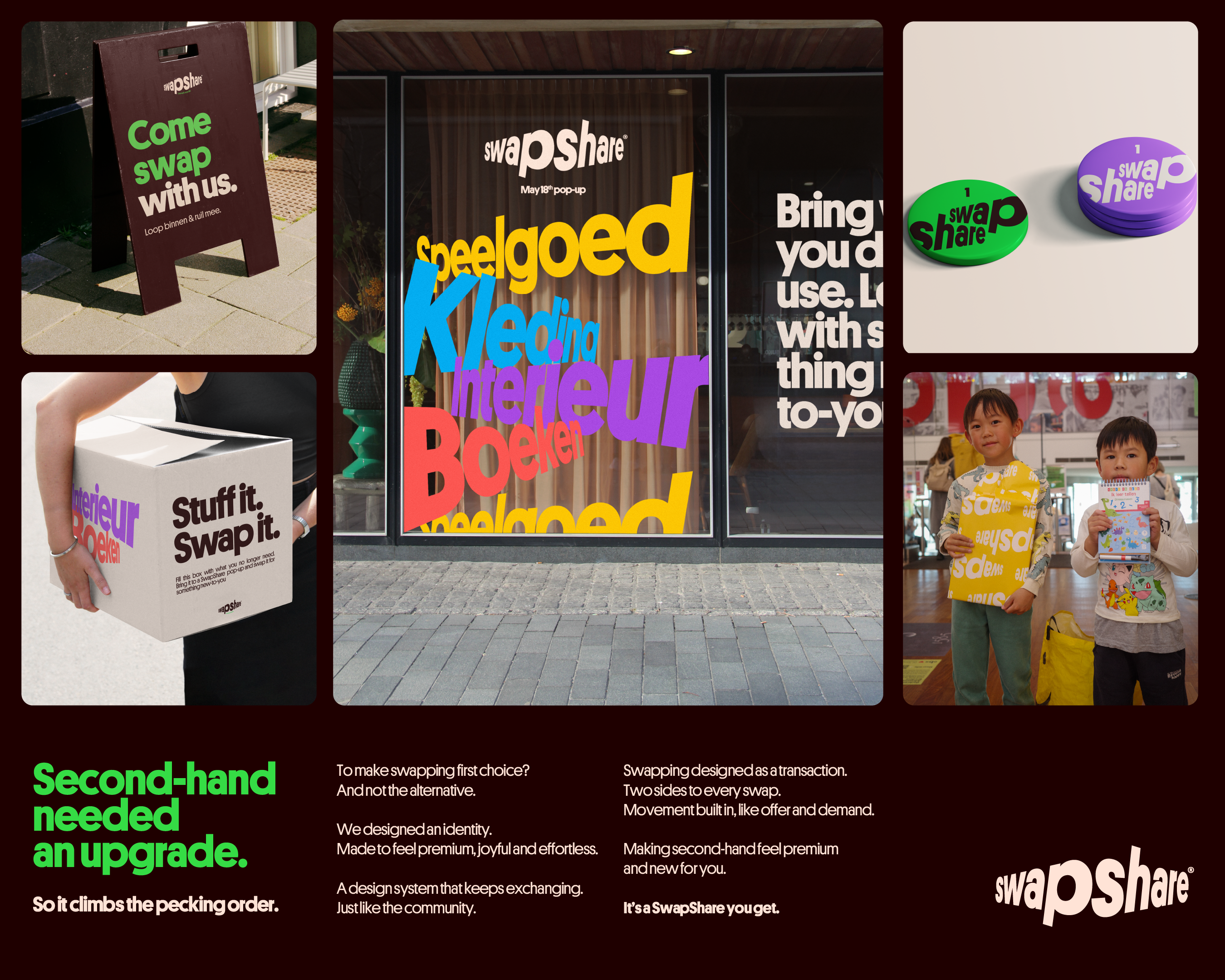
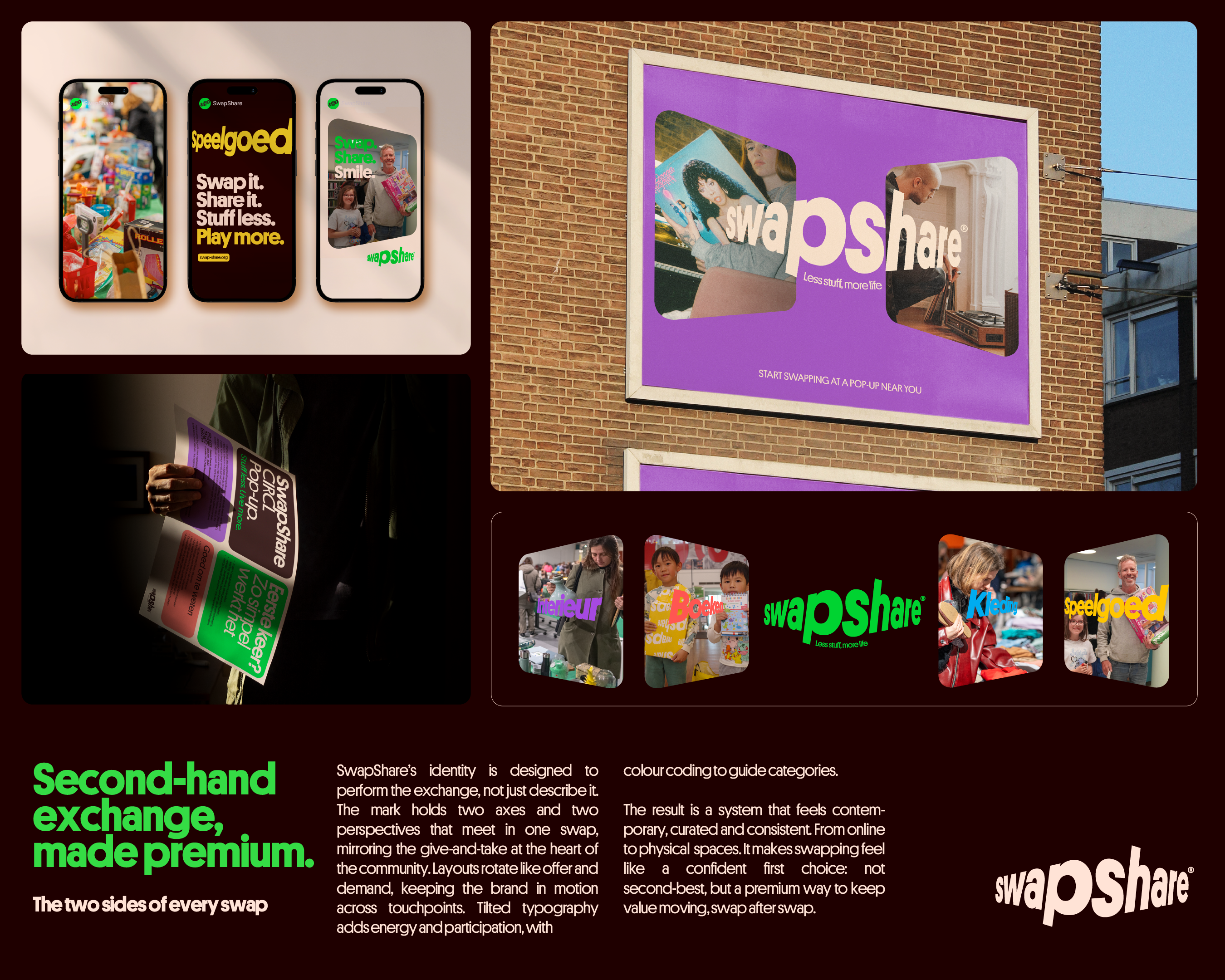
The first challenge was perception. Second-hand can feel inconvenient, low-value or associated with charity and sacrifice. SwapShare was therefore positioned as a premium exchange open to everyone: curated and organised with the appeal of retail, but equal in access. A bold, joyful identity, dynamic wordmark, category colours and real-life photography made swapping feel contemporary, trustworthy and desirable.
The second challenge was making the system feel fair. SwapShare was not designed as a giveaway shop. Quality standards and a one-item, one-credit principle made every contribution count, while allowing people to keep their credits protected value over time. What someone no longer used became purchasing power for something they did need, regardless of the size of their wallet.
The third challenge was turning separate pop-ups into one recognisable and repeatable grassroots programme. The same identity and points system connected every touchpoint, from social content and event invitations to storefronts, signage, sorting, category navigation and checkout. Clear rules and curation built trust, while the four categories made the experience easy to understand for first-time visitors.
Online and offline activity reinforced each other. Digital communication introduced the idea, explained how the system worked and activated local audiences. The physical experience then generated stories, images, word of mouth and returning participants that travelled back into social channels and future editions.
Pop-ups were organised in trusted local venues across Amsterdam, Utrecht and Haarlem, in collaboration with municipalities, public libraries, volunteers and circular partners. Local partners added credibility, neighbourhood reach and shared programming, while the consistent brand and exchange system ensured that every edition still felt unmistakably SwapShare.
The events were timed around moments when buying pressure and the potential impact of reuse were highest, including circular economy and waste-reduction weeks and the run-up to the holiday season.
The identity was never the end product. It translated SwapShare’s community model into a clear and desirable experience across screens, streets and pop-up spaces. A better image lowered the social barrier. A simple and fair system gave people a reason to participate and return.
The result was more than an event format. SwapShare created temporary social infrastructure: places where products remained in circulation, value moved without money changing hands and neighbours socialised and met around a practical alternative to buying new.
Premium in experience. Equal in access.
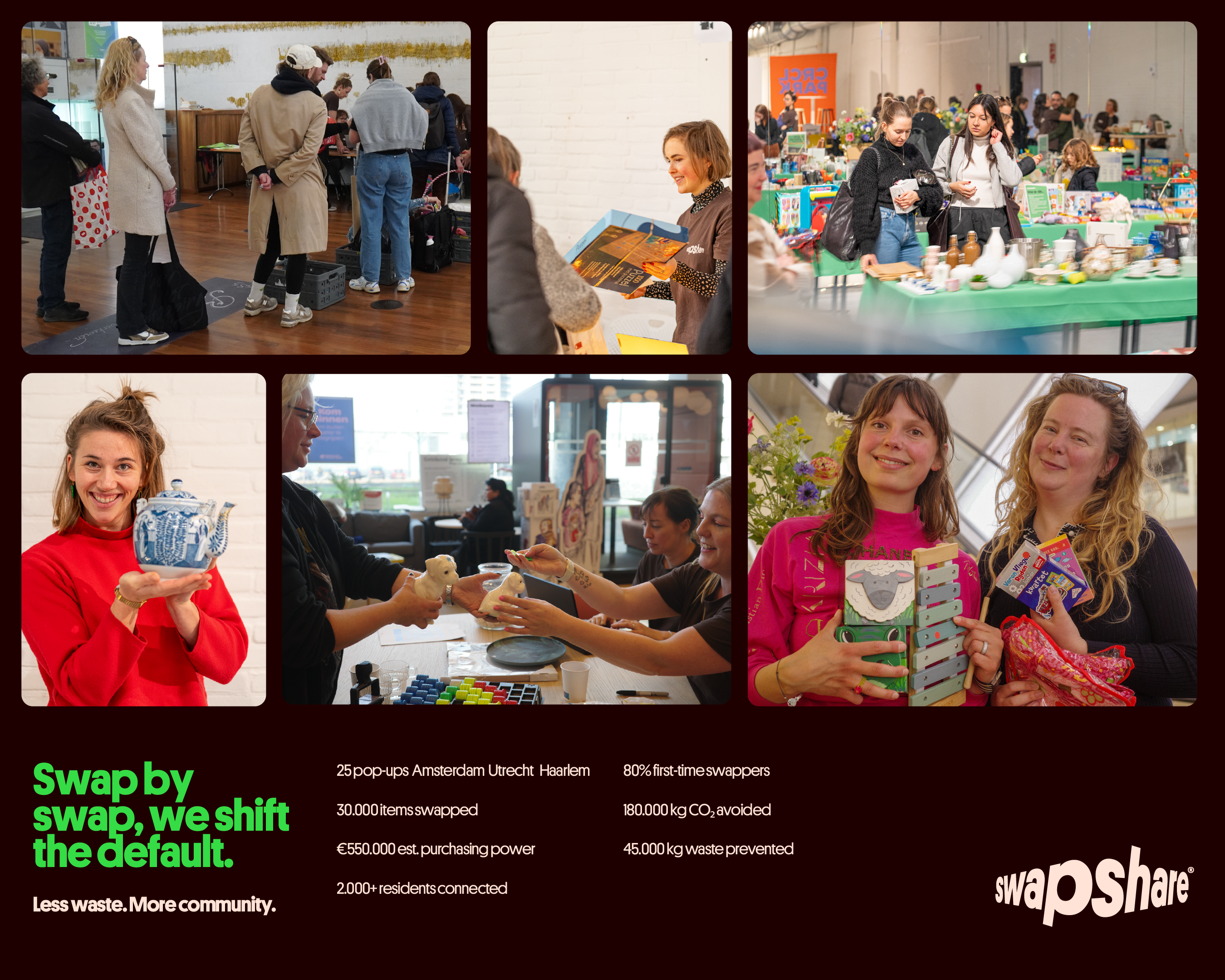
During one measured 12-month period within the 2025–2026 programme, SwapShare organised 25 pop-ups across Amsterdam, Utrecht and Haarlem. More than 2,000 residents exchanged over 30,000 items, keeping products in circulation and avoiding an estimated 45,000 kg of waste and 180,000 kg of CO₂ emissions.
The results met the project’s behavioural goal as well as its environmental one. Eighty percent of visitors swapped for the first time, showing that a large new audience was willing to participate when the experience felt easy, trustworthy and socially rewarding. Returning visitors saved credits for future events, extending participation beyond a single pop-up and signalling the beginnings of repeat behaviour.
The points system also created social and economic value. Because access was based on contribution rather than spending power, people could take home useful, quality items regardless of income. The physical pop-ups brought neighbours, volunteers and local organisations together around one shared activity, turning reuse into a visible community habit.
At the largest Amsterdam event, nearly 700 residents participated and 4,350 items gained a longer life. Together, they avoided 4,350 kg of waste and an estimated 43,500 kg of CO₂. Attendance grew from approximately 150 to almost 700 within one year. The wider activation reached more than 500,000 people and generated over €100,000 in estimated media value.
SwapShare succeeded by making circularity practical and desirable: less waste, broader participation, repeated action, more equal access and stronger local connection.