Government data helps determine where roads are repaired, how disaster aid is distributed, and whether public programs are working. But the systems behind those decisions are showing their age. Some datasets have been discontinued, others have gone without updates, and much of the information that remains is fragmented or difficult to use.
USAFacts has spent years drawing attention to these issues through public statements on data significance and work such as its Federal Data Excellence program, which evaluates federal data resources and tracks changes in their availability and functionality.
Now, the Data We Depend On campaign marks the next step: calling on Americans to take action and demand better from Congress.
The campaign invites the public to sign an open letter asking Congress to build a better national data ecosystem. The letter calls on lawmakers to use data as a standard part of policymaking and improve federal data when it is too slow, incomplete, or inaccessible.
Those requests are informed by “Building the National Data Ecosystem America Deserves,” a report developed by USAFacts and the Center for Open Data Enterprise with input from 154 data stakeholders. The report lays out a vision for stronger data governance and the public infrastructure needed to support it.
USAFacts aims to secure 100,000 signatures by September 1st (as of this writing, the total sits at 60,000 signatures). Along the way, the campaign seeks to activate USAFacts’ audience while reaching Americans who have never thought of government data as a civic issue, turning them into advocates for its future.
Federal data governance can sound like an issue reserved for statisticians and policymakers, but its consequences affect every American. Government data helps determine where hospitals are built, which roads get repaired, and when communities receive warnings about dangerous weather. When that data is missing or outdated, these decisions suffer, compromising the services people depend on.
With the Data We Depend On campaign, USAFacts set out to make that connection visible and invite Americans to demand better data.
The policy work came first. USAFacts and the Center for Open Data Enterprise convened two roundtables with 154 participants from government, civil society, academia, community organizations, and business, including former BLS Commissioners from the Trump and Biden administrations. Their input shaped “Building the National Data Ecosystem America Deserves,” a report that outlines seven goals for a modern national data system. Its recommendations address the preservation of critical datasets, stronger governance, better state and local data systems, and preparation for an AI-driven information environment.
The report provides a detailed policy foundation for the campaign’s open letter to Congress. Titled “A Mandate for 21st-Century Government Data,” the letter distills the issue into two requests Congress can act on. Lawmakers should use data to define problems, allocate resources, and evaluate outcomes. They should also improve federal data when gaps, delays, or outdated systems limit its usefulness.
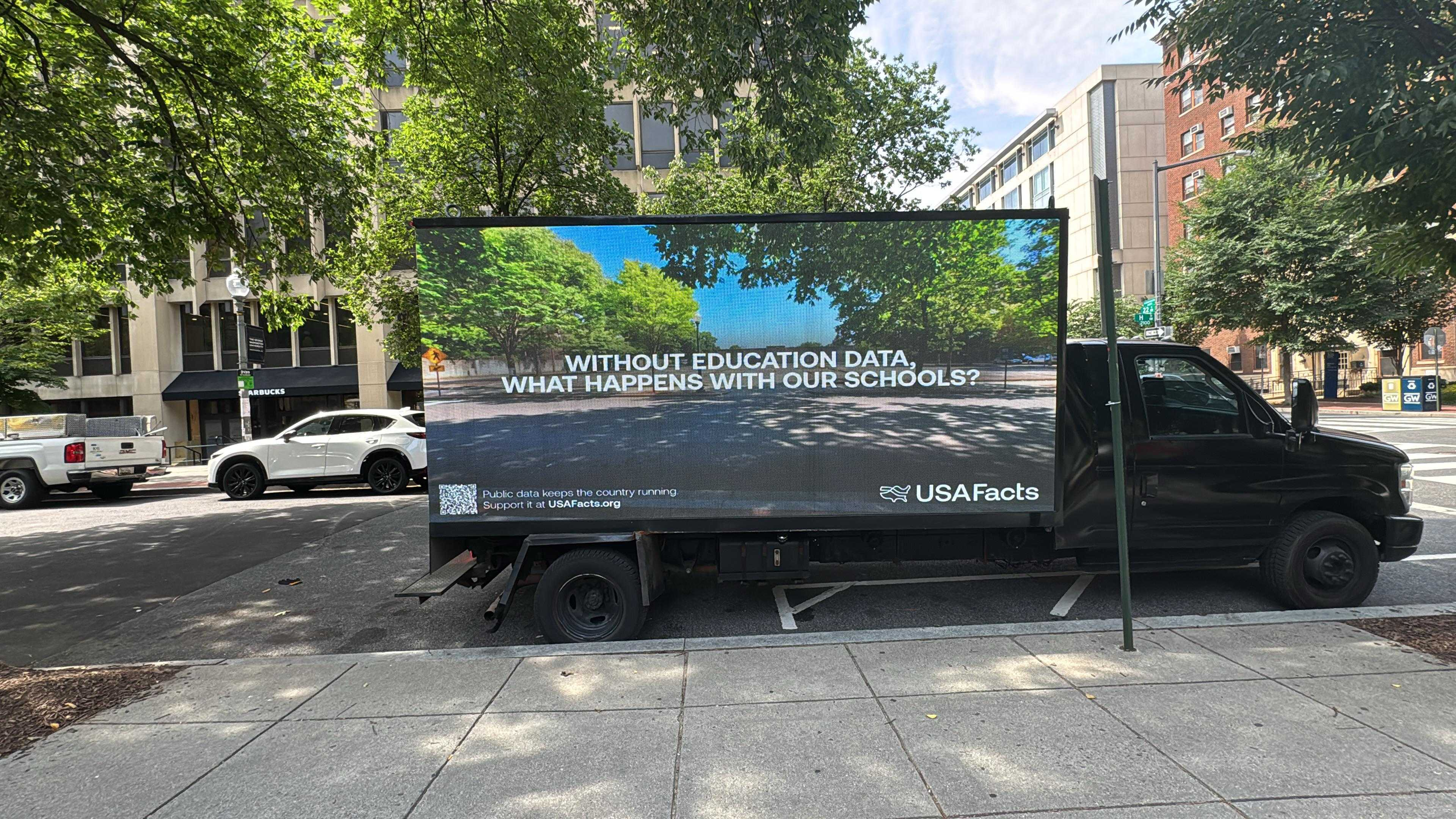
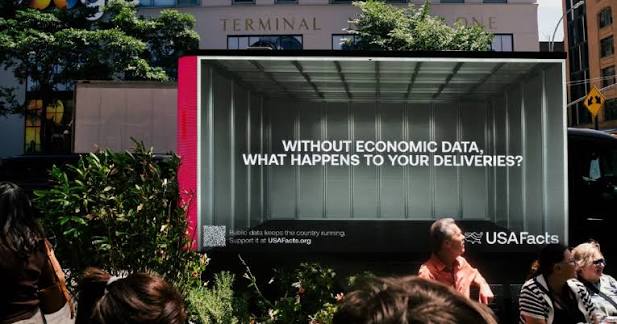
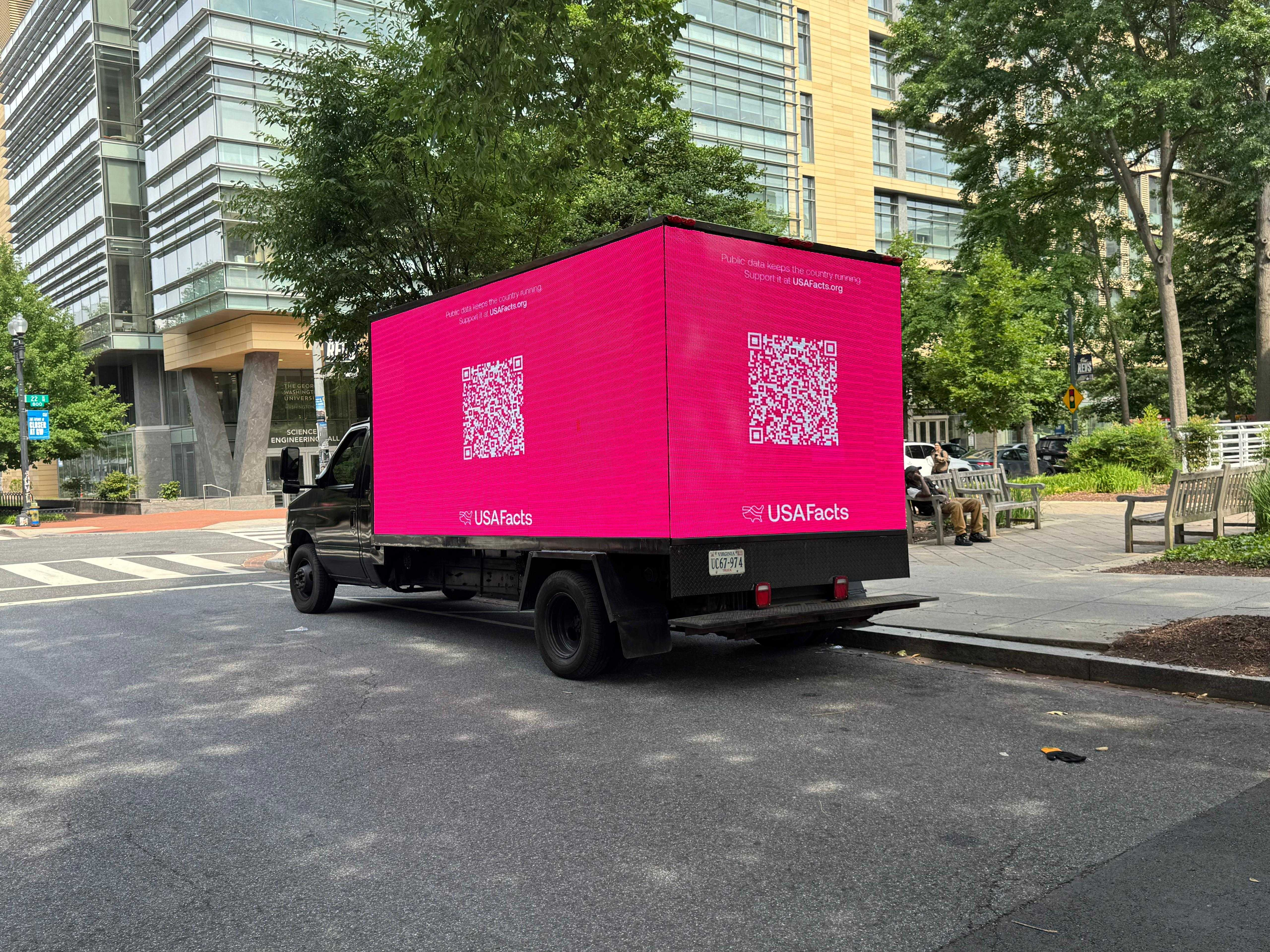
To illustrate the issue on a real-life scale, USAFacts launched a set of custom out-of-home installations nicknamed “The Fact Fleet” in New York, Los Angeles, Washington, D.C., and Miami. Using mobile billboards, the fleet placed visual representations of data loss directly into everyday settings, depicting potential data loss impacts such as broken roadways and missing schools and hospitals.
Social media posts carried “The Fact Fleet” beyond the four cities, while earned media coverage in Fast Company and The Well News gave USAFacts president Lauren Woodman space to explain how data quality affects policymaking and civic participation. Newsletter and video outreach across 1440, 2WAY, and USAFacts’ own channels called on an audience already invested in nonpartisan facts, while the visual campaign found a compelling way to introduce the issue to new people.
Signers provide their ZIP codes, enabling USAFacts to show lawmakers that people in their own districts want better data infrastructure and optimization. The campaign turns USAFacts’ 10 years of public service into a community of advocates with a specific request for better data.
To date, over 60,000 Americans have signed USAFacts’ open letter asking Congress to use data in policymaking and to improve the national data systems that inform those decisions. Each signature marks an individual willing to advocate for an issue that rarely appears in everyday political conversation, despite its influence on public spending, community planning, and government accountability.
The letter is the campaign’s clearest measure of civic engagement. Signers support two defined requests for congressional action and provide their ZIP codes, giving USAFacts a record of where that support exists. USAFacts can use those responses to show lawmakers that better data governance matters to people in their own district.
The campaign is also bringing more Americans into USAFacts’ orbit. More than 32,000 people have joined its newsletter audience since The Data We Depend On began. That growth gives USAFacts a larger community to educate about federal data and activate as the campaign continues toward the 2026 midterms.
Together, these metrics show the campaign working on two levels. It is mobilizing people who already value USAFacts’ work and introducing new audiences to the data systems that make that work possible. The report gives the public and Congress a vision for a better national data ecosystem, while the letter gives Americans a voice in pursuing it.