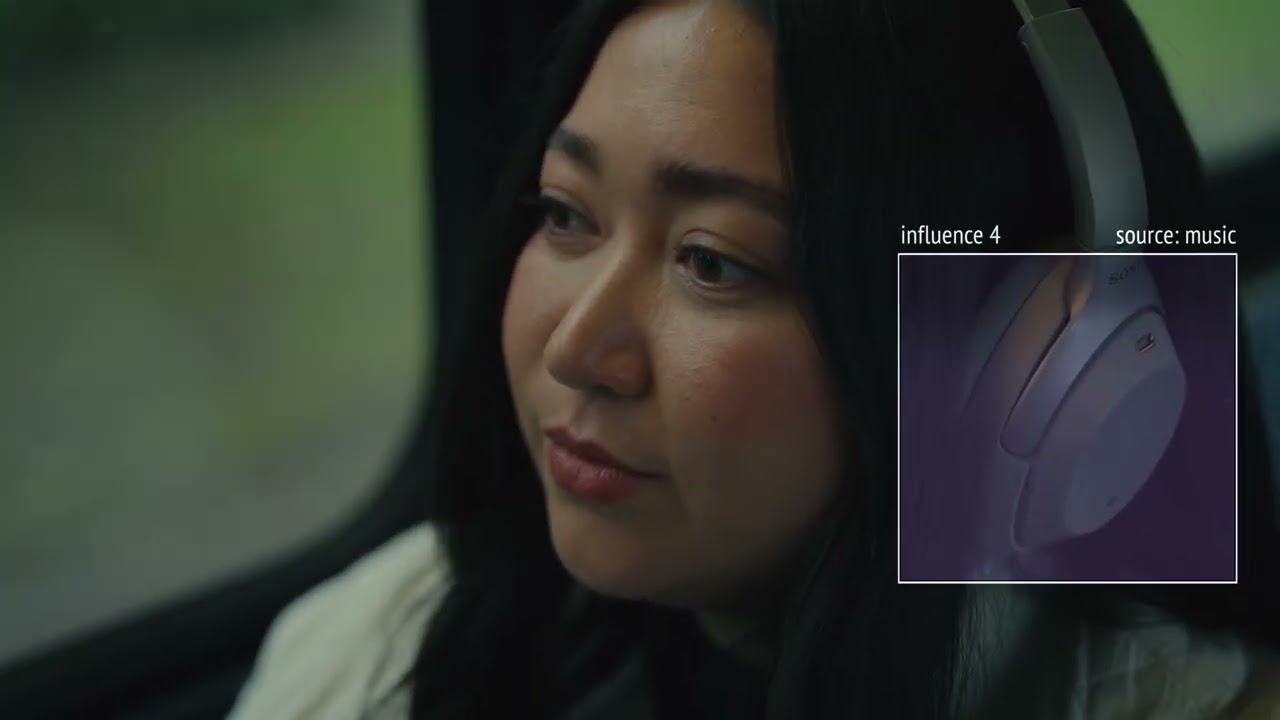
Alcohol is so deeply woven into everyday Canadian life through music, at sporting events, on our social feeds, at family gatherings, and on the clothes we wear that most people stop noticing it. This constant, low-level visibility normalizes drinking and quietly shapes our expectations and choices, even though many of us now know any amount of alcohol can be harmful and that it's linked to at least seven types of cancer.
The idea behind this campaign was to make that invisible influence visible: to help people pause and ask, "Why does alcohol feel like it belongs here?" Rather than shaming individual drinkers, we set out to shift the conversation toward the systems and commercial forces that make alcohol feel commonplace.
Developed for the Pacific Public Health Foundation, the campaign targeted middle-aged and older adults (35–64), a group identified through health authority partner data as having higher-risk drinking rates and outsized influence over social norms, policy support, and family-level conversations.
We set three goals: denormalize alcohol and change the public conversation around it; increase awareness of both alcohol's harms and the industry influence driving its ubiquity; and empower individuals and communities to take action to make healthier options more accessible.
The project started with the identification of the target audience. Data showed that adults aged 35–64 have higher-risk drinking rates in British Columbia (B.C.), Canada, but are also key influencers regarding social norms, policy support, and family-level conversations. This makes them the group most likely to shift the broader cultural tide around alcohol. From there, we built a multi-channel media strategy designed to meet this audience wherever they already are: on streaming platforms, in social feeds, and in the physical spaces where they carry out their daily routines.
The centrepiece of our execution was counteractive marketing. We deliberately placed our ads in the exact environments where alcohol marketing already dominates. On connected TV, many of our video spots ran immediately before or after alcohol-related ads. Our OOH placements targeted restaurant and café washrooms, SkyTrain stations, and high-volume highway corridors — the same physical spaces alcohol brands rely on for visibility. For social media targeting, since platforms don't allow direct targeting by alcohol consumption, we built proxy audiences based on engagement with alcohol brands, breweries, and hospitality pages, as well as adjacent lifestyle content where alcohol marketing is heavily embedded. This allowed the campaign to make its point simply by showing up: "This isn't an alcohol ad" lands differently when it appears in a spot the audience expects to see one.
A key challenge was determining the tone. All our campaign partners were united in wanting to raise awareness of real, serious harms such as alcohol's link to cancer and its $6.3 billion annual healthcare cost in Canada. The challenge was to do this without shaming, which research shows shuts down reflection rather than inviting it. We solved this by anchoring every piece of copy in curiosity rather than judgment, using prompts like "Have you noticed how often alcohol shows up?" instead of directives, and by incorporating a campaign hashtag (#UnderTheInfluence) that invited people to share their own observations rather than be told what to think.
Coordinating the campaign with a provincial foundation, all regional health authorities, First Nations Health Authority, and Métis Nation BC also meant building a flexible partner toolkit (including templates, talking points, FAQs, posters, and one-page campaign summaries) so every organization could amplify consistent messaging.
To further ensure campaign resonance, we developed adapted versions of the main campaign for young adults (aged 18-30) and men who work in trades. A dedicated campaign targeted towards Indigenous communities has also been created, designed to reflect the lived experiences, cultures, and diverse perspectives of Indigenous people across British Columbia.
Our Meta performance exceeded every benchmark set. Against a benchmark of 207,000, we reached 315,474 people, and drove 718,416 impressions against a projected 269,000. This reach came at a lower cost than anticipated: our CPM landed at $5.52, under the $14.89 benchmark, and CPC came in at $0.39 against a projected $0.89, indicating we delivered more awareness and engagement per dollar spent. The YouTube placements also surpassed our targets, delivering 621,856 impressions (129% of its 481,000 benchmark) at a strong CPM of $5.03 (under the budgeted rate of $6.65).
This efficiency in CPM and CPC matters because our objective was to prompt reflection on alcohol consumption, not just gain visibility. Meta clicks reached 10,056 (against a benchmark of 4,500) showing that the "curiosity, not judgment" approach to our creative was pulling people out of passive scrolling and into active engagement with the campaign's message. Nearly 28,248 people watched at least three seconds of our video content, with 3,803 thruplays, showing that once people paused, many stayed with the message long enough to absorb it.
We consider this campaign a success because of its real impact on the target audience. Counteractive marketing and curiosity-driven creative outperformed conventional public health messaging benchmarks on both cost and engagement. For a campaign asking people to notice something they've been conditioned to overlook, converting that noticing into clicks and video views is the clearest evidence it worked.