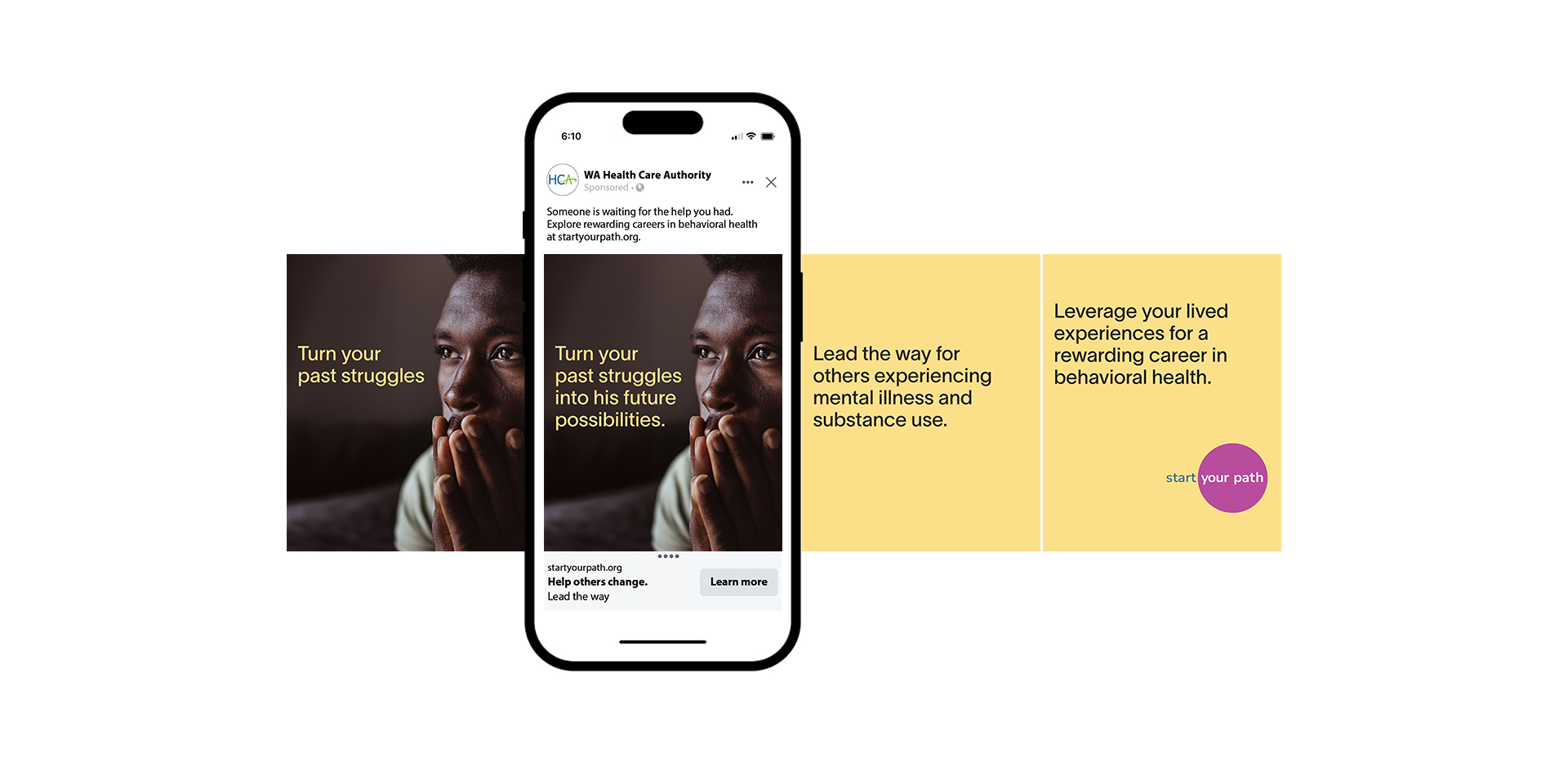
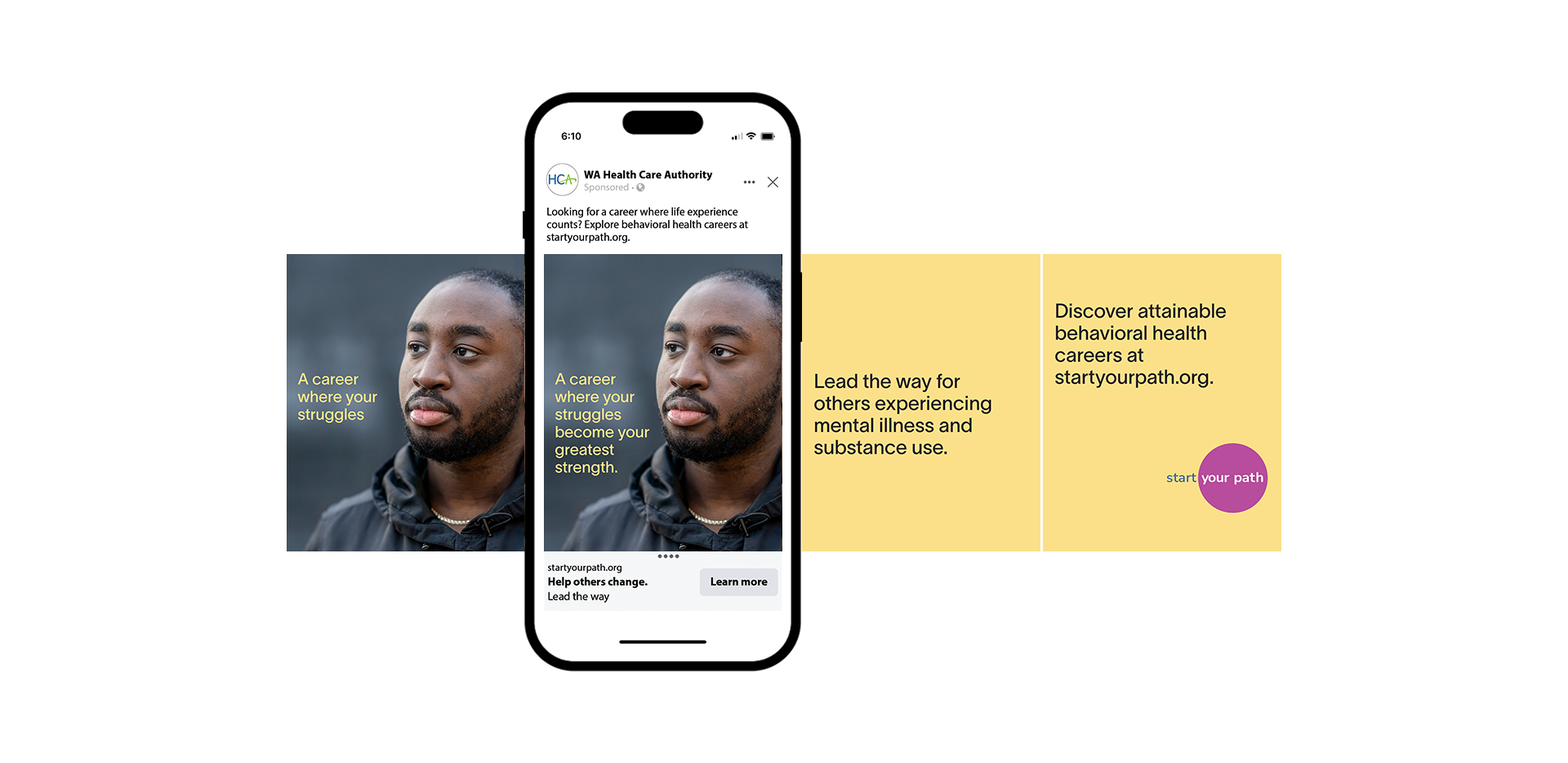
Commissioned by the Washington Health Care Authority and originally developed by QT in 2017, Start Your Path is a behavioral health workforce campaign that has evolved through continuous research, testing, and optimization. This entry highlights 2025's campaign, which built on years of insights to address one of Washington's most pressing challenges: a shortage of behavioral health professionals amid growing demand for mental health and substance use disorder services.
At its core, Start Your Path is about changing how people see themselves. Research revealed that many Washingtonians with lived experience navigating mental health challenges, substance use disorder, recovery, or supporting loved ones through those journeys did not believe they belonged in behavioral health careers. Misconceptions about educational requirements, career pathways, and burnout further discouraged candidates from exploring a field where their experiences could be a powerful asset.
2025's campaign set out to:
Ultimately, Start Your Path sought to build a stronger, more representative behavioral health workforce while delivering a message of hope: the experiences that shape us can empower us to help others find their path.
Plan of Action
Start Your Path was built on years of audience research, performance analysis, and campaign optimization. For the 2025 campaign, Quinn Thomas partnered with DHM Research to better understand the motivations, barriers, and perceptions influencing behavioral health career consideration across Washington. Research revealed a powerful insight: many people with lived experience navigating mental health challenges, substance use disorder, or recovery possessed the qualities needed to succeed in behavioral health careers, yet often did not see themselves as qualified. The campaign strategy centered on reframing lived experience as a valuable qualification while addressing misconceptions about career pathways and burnout.
Execution
Using this insight, we developed a statewide, multilingual campaign designed to reposition behavioral health careers as attainable, meaningful, and community-centered. Creative highlighted four entry-level behavioral health career pathways and encouraged audiences to see their experiences as strengths.
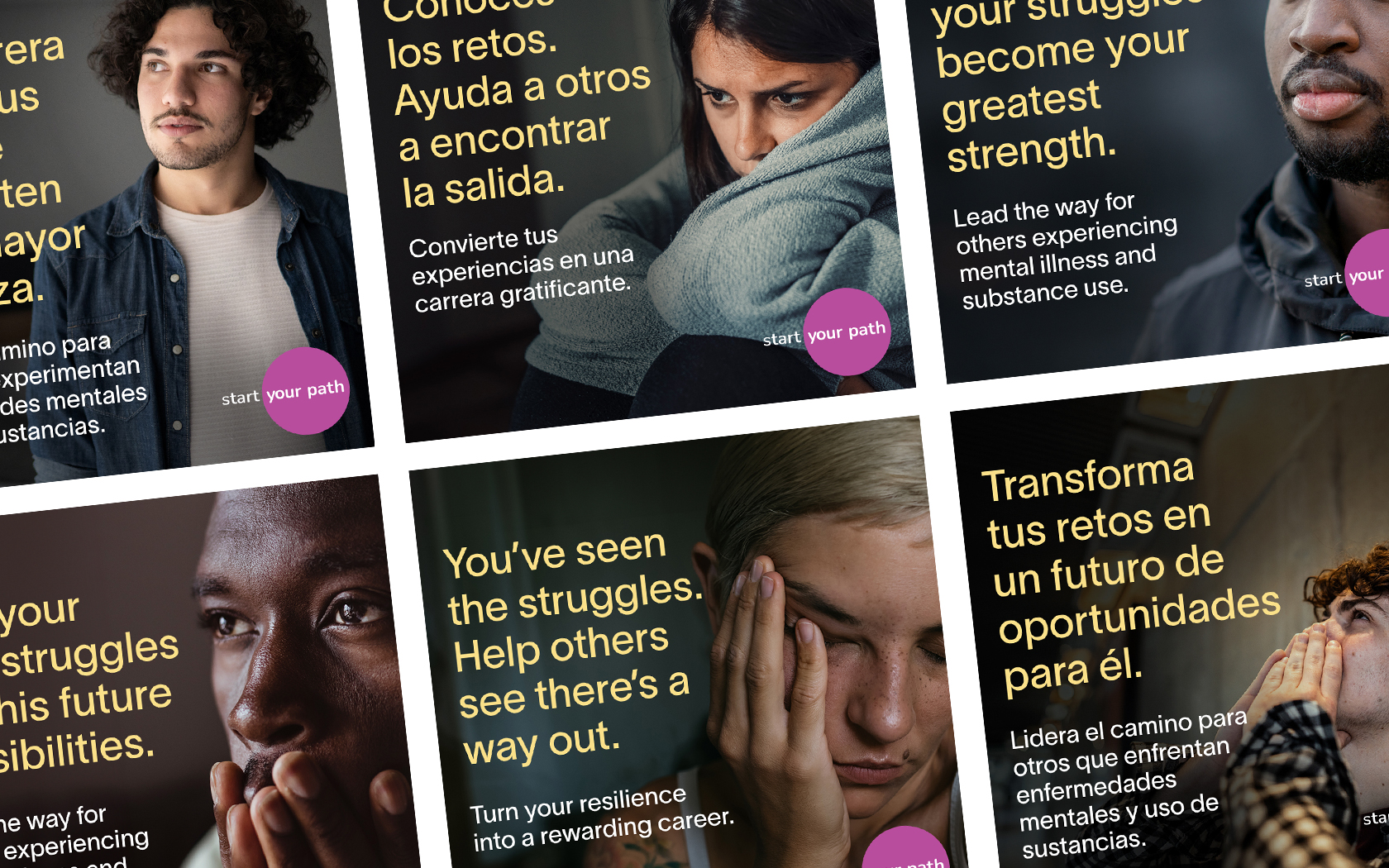
The campaign employed an integrated paid media strategy spanning streaming television, online video, YouTube, digital audio, podcasts, paid social, Reddit ads, paid search, programmatic display, transit advertising, college digital out-of-home placements, and influencer partnerships across Washington. English- and Spanish-language creative were tailored to audience needs, with Spanish-language assets transcreated rather than translated to ensure cultural relevance. Media placements and messaging were continuously optimized using performance data.
All campaign touchpoints directed audiences to StartYourPath.org, where users could explore career pathways, learn about training requirements, access resources, and complete an interactive career quiz matching them with behavioral health professions aligned with their interests. Retargeting efforts, influencer content, and Mental Health Awareness Month activations helped move audiences from awareness to action.
Challenges & Solutions
Behavioral health workforce recruitment presents challenges. Prospective candidates often view the field as emotionally demanding or limited to those with advanced degrees. Stigma surrounding mental health and substance use experiences can further discourage people from seeing themselves in the profession. To overcome these barriers, the campaign combined culturally responsive messaging, accessible career resources, and trusted community voices. Strategic targeting helped reach underrepresented audiences, including young adults, rural communities, and Spanish-speaking Washingtonians.
What Made the Work Unique
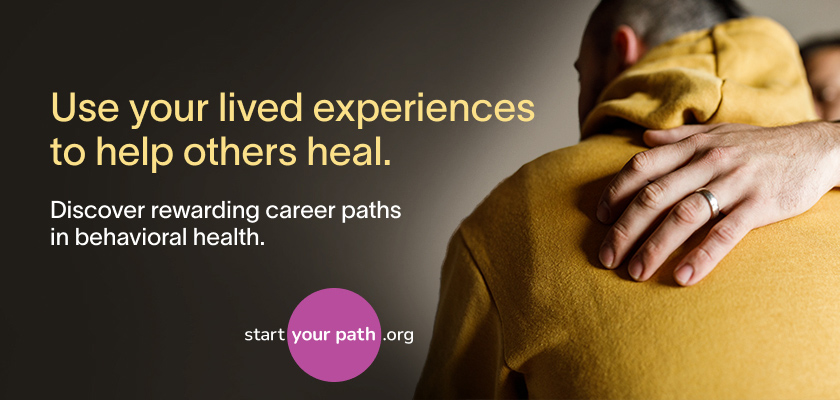
Rather than focusing on recruitment, Start Your Path sought to change how people view themselves and their potential. The campaign's flagship creative concept, Unexpected Leader, challenged assumptions about who belongs in behavioral health careers by illustrating how personal experiences navigating mental health and substance use challenges can cultivate the compassion and determination needed to help others heal. Research identified Unexpected Leader as the campaign's most persuasive creative asset among audiences likely to pursue a behavioral health career.
By reframing lived experience as a qualification rather than a barrier, Start Your Path transformed a workforce development challenge into a broader conversation about mental health, recovery, representation, and purpose. The result was a campaign that expanded awareness of behavioral health careers and helped Washingtonians see themselves as future leaders in community mental health.
Start Your Path successfully advanced its core objective: changing perceptions about who belongs in the behavioral health workforce while increasing awareness and consideration of behavioral health careers across Washington.
The campaign significantly expanded awareness and engagement. During the 2025 campaign period, paid media generated 37.8M impressions, 134,000 clicks, and over 139,000 new website visitors, driving Washingtonians to explore behavioral health careers and resources through StartYourPath.org. Across all phases since inception, Start Your Path has generated more than 287 million impressions, 43 million video views, and 528,000 website visits.
Importantly, the campaign achieved measurable progress against its audience and stigma-reduction goals. Research found that 61% of surveyed respondents recalled at least one campaign message, while key audiences, including young adults, men, Black/African American audiences, Hispanic/Latinx audiences, and Spanish-language media consumers, showed increased likelihood of considering a behavioral health career after exposure to campaign advertising.
The campaign also helped connect awareness to action. Nearly 2,000 visitors completed the interactive career quiz, with many indicating both an interest in behavioral health careers and personal lived experience with mental health or substance use challenges. Research further identified Unexpected Leader as the campaign's most persuasive creative asset, validating the campaign's central message that lived experience can be a qualification rather than a barrier.
We consider the campaign a success because it did more than promote careers. It helped reduce stigma, expanded representation, and empowered more Washingtonians to see their experiences, resilience, and compassion as strengths capable of supporting the mental health and well-being of others.