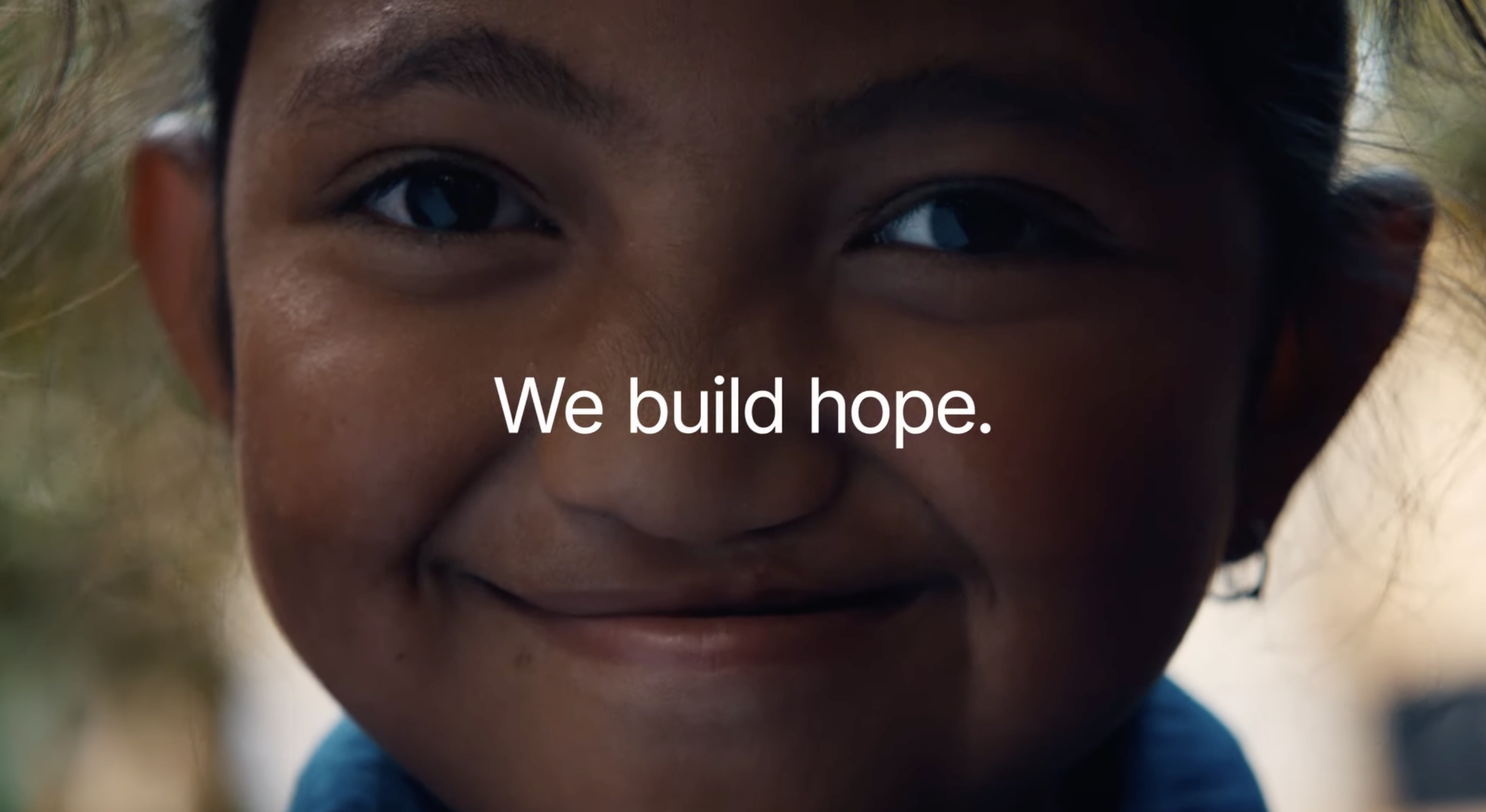
Despite broad name recognition, Operation Smile was widely misunderstood. Many perceived it as a fly-in, fly-out charity focused primarily on cleft procedures – overlooking the organization’s decades-long work building permanent access to safe surgery through local training and healthcare infrastructure.
In reality, Op Smile was helping solve a problem far more urgent and unknown: that two-thirds of the world still lives without access to safe surgical care.
So we needed to reintroduce Op Smile as the world’s leading advocate for safe surgery, redefining its impact in the minds of donors and companies, increasing their contributions and donations to help fuel this mission.
For many, a scar is a symbol of something that went wrong, a mark or blemish many want to hide.
When in reality it's a sign of something that went right.
Proof you were able to get the care you need in a system that worked.
So we turned scars into symbols of access and Badges of Hope, showcasing how having access to safe surgery could lead to transformations that created a new lease on life for Operation patients around the globe.
All while using these different types of scars to show all the different types of surgeries Operation Smile performed beyond just cleft lip and palate.
Operation Smile had a perception problem. Everyone thought they were a cleft-only, fly-in, fly-out organization, when in reality, they are providing access to safe surgery of all kinds to tons of people around the globe.
So to shift perception and make people realize their impact, we tapped into a key human insight.
That scars are often marks of something that went wrong, an accident, a difficult time in life, when in reality they are a mark of something that went right. A symbol of a system that worked, and access to safe surgery, which 2-in-3 people around the world don’t have.
The execution of Badges of Hope combined two things perfectly: global scale and personal intimacy.
Production spanned multiple countries, cultures, and healthcare realities, yet the work never announces its reach. Instead, scale reveals itself quietly – through the accumulation of stories, faces, and scars.
Every subject is a real, brave Operation Smile patient who volunteered to share their scar and story out of gratitude for the organization.
Their families, classmates, and partners appear naturally within each film, showing how access to surgery reshapes not just an individual life, but the world around it.
While each patient’s story or vignette is rooted in its respective language, environment, and daily rituals, they are all unified by a single creative constant: the scar.
We never shy away from it.
Rather than minimizing or disguising scars, the execution holds them plainly in frame – dedicating enough time for the initial discomfort to give way to an appreciation of the beauty.
The voice of the campaign balances poetry with precision, finding power in restraint rather than dramatization. Short, declarative lines mirror the physical and emotional simplicity of the films, avoiding overt medical language or charity rhetoric in favor of a quiet reframing of what scars mean – and what access makes possible.
Rather than softening scars or rushing past them, both the language and visuals hold steady, acknowledging instinctive unease and calmly recontextualizing it.
This patience is central to the work’s impact – it mirrors Operation Smile’s role itself – not a momentary intervention, but a lasting presence.
Since the brand campaign and films launched, refreshing Op Smile's creative and communications for the first time in 30 years, the organization has seen a 5% YOY increase in donations. Double that of any year before where they typically see a 1% to 2% increase.