Bots are quietly taking over the internet. They influence what we buy, control access to high-demand products and even catfish people on dating apps. The problem is, most of the time we can’t see them.
World ID was created to solve this:the world's first mobile media innovation powered by a unified network of bots. But explaining that problem to a mainstream audience is difficult.
To launch World ID, we needed to show the growing bot problem in a way people could instantly understand. Traditional media wouldn’t cut through in a landscape already dominated by automated systems. Instead, we needed to create something physical, unexpected and impossible to ignore.
If bots dominate the internet, why not let them take over advertising too?
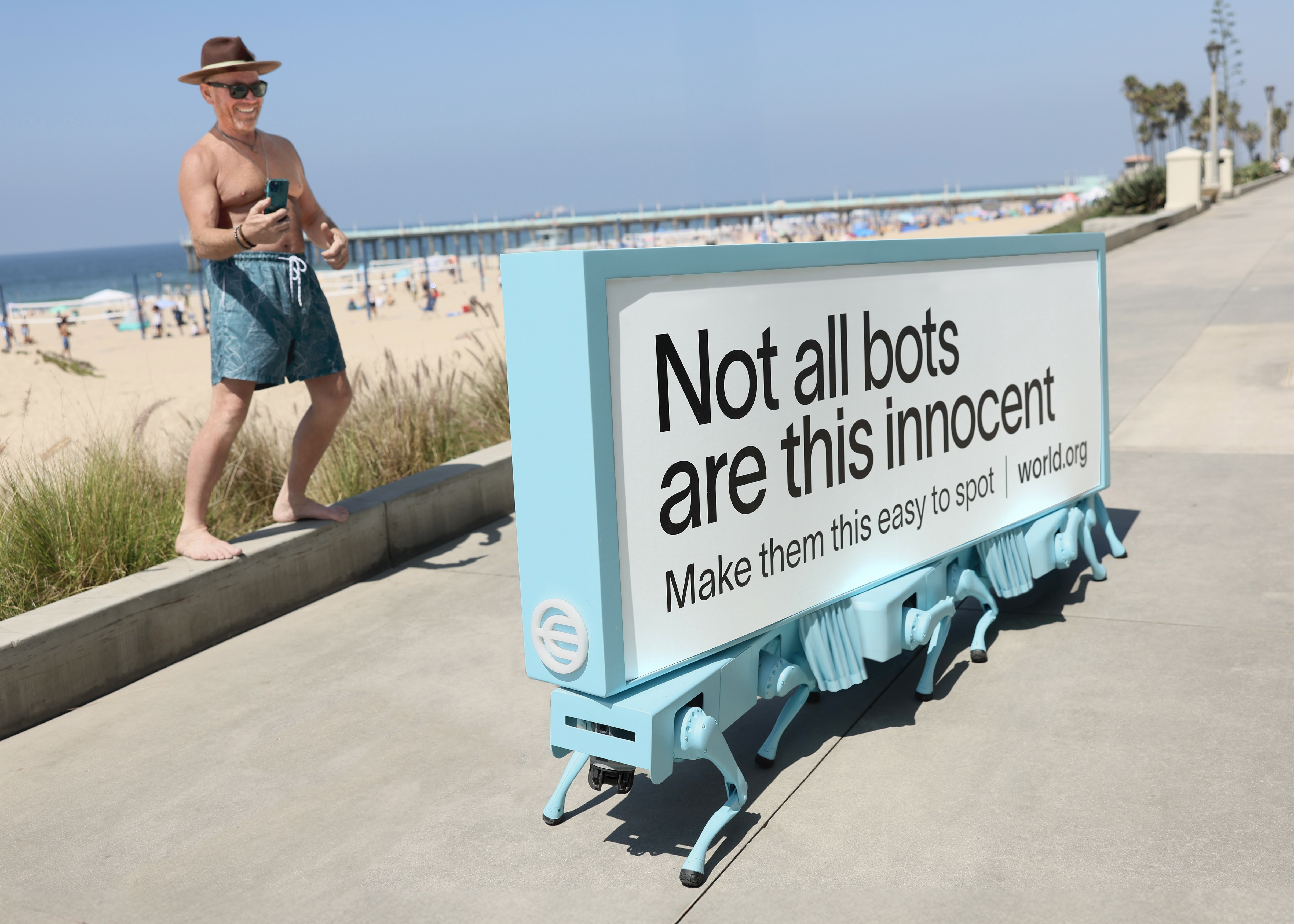
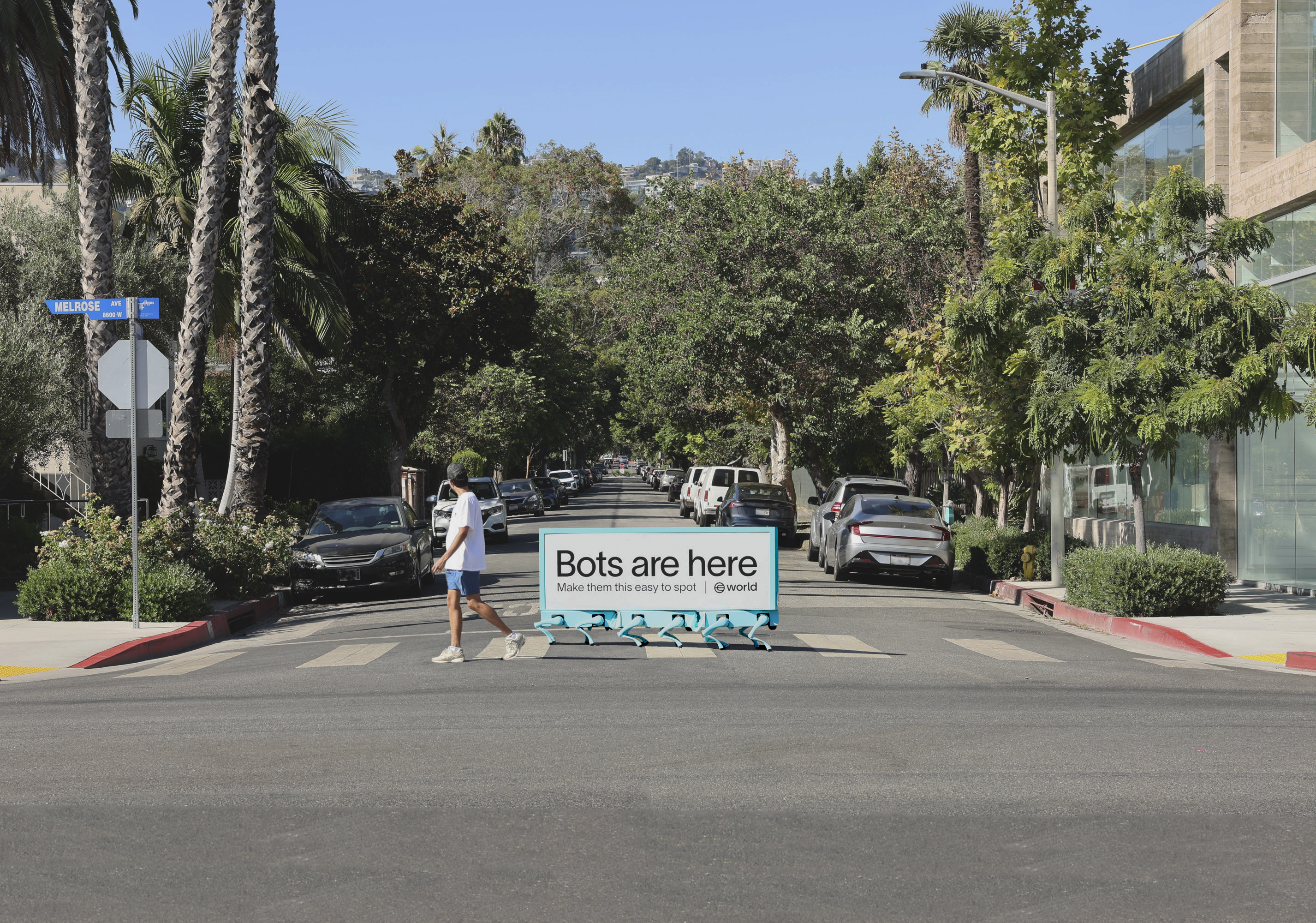
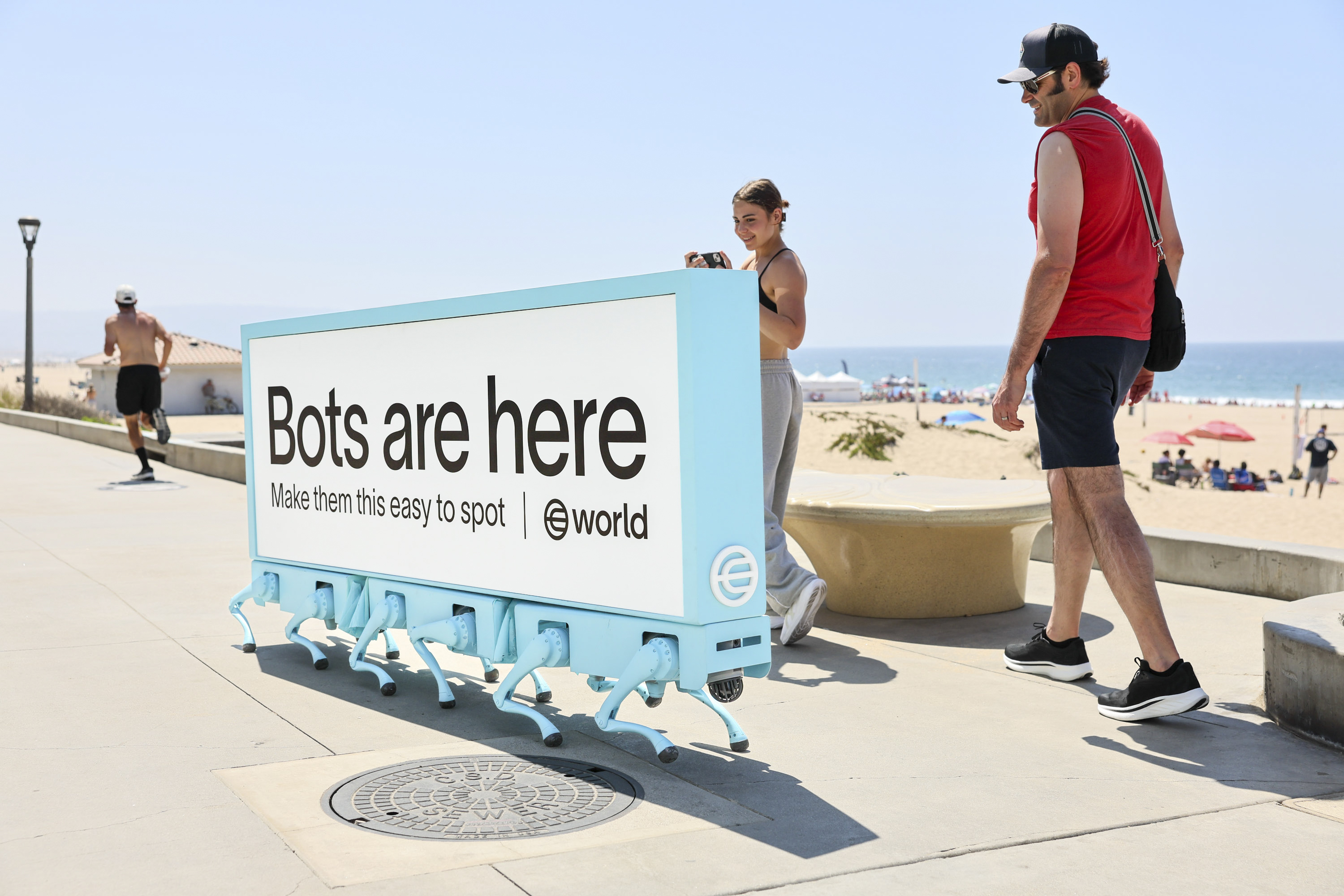
We partnered with MachineHistories to engineer BotBoard, the world’s first billboard fully powered by a coordinated robot network.
Three synchronised robots became a moving billboard through real-world environments, turning the technology usually hidden behind the internet into something people could see in plain sight. The message was deliberately simple and provocative:
“Bots are not always this easy to spot.”
“Not all bots are this innocent.”
BotBoard made the invisible systems shaping online experiences suddenly visible.
The first activation took place at Manhattan Beach on September 6, launching alongside World’s “No Bot Shop”, a one-day pop-up in Los Angeles designed to give high-demand items back to real humans.
Inside the shop were the kinds of products bots usually target online: concert tickets, limited-edition sneakers and collectible drops. But this time they were reserved exclusively for verified humans, demonstrating the real-world value of proof-of-human technology.
The campaign continued with a second BotBoard appearance in Seattle on September 13, outside the Razer gaming store, highlighting the World × Razer partnership enabling humans-only gaming experiences.
To extend the impact beyond the live activations, World’s social channels captured reactions and interactions in a series of compilation films, turning a physical technology demonstration into a shareable moment online.
The goal wasn’t just to explain the bot problem.
It was to make people see it.
BotBoard transformed an invisible digital problem into a tangible technological spectacle.
Across Los Angeles and Seattle, the robotic billboard captured attention and curiosity as passers-by encountered automated machines delivering advertising messages in the real world. By turning the systems that power bots into a visible physical experience, the campaign made the hidden mechanics of the internet instantly understandable.
The activation quickly extended beyond the street. Footage of the robot-powered billboard and the human-only No Bot Shop spread across social platforms, with reaction videos and street-level content translating a complex technological issue into a culturally relevant conversation.
The campaign drove an 800% increase in searches for World ID and generated $1.2 million in earned media, demonstrating how innovative technology can spark widespread public interest.
By using robotics as both the medium and the message, BotBoard showcased the creative potential of technology to communicate complex digital challenges. What began as three coordinated robots carrying a billboard became a powerful demonstration of the world bots are building, and why proving you’re human online has never mattered more.