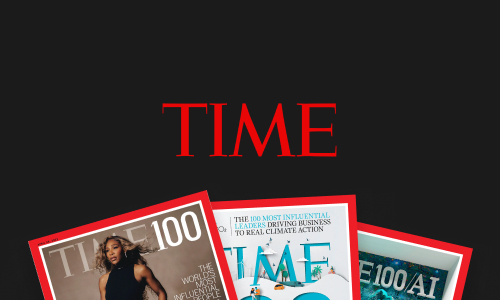
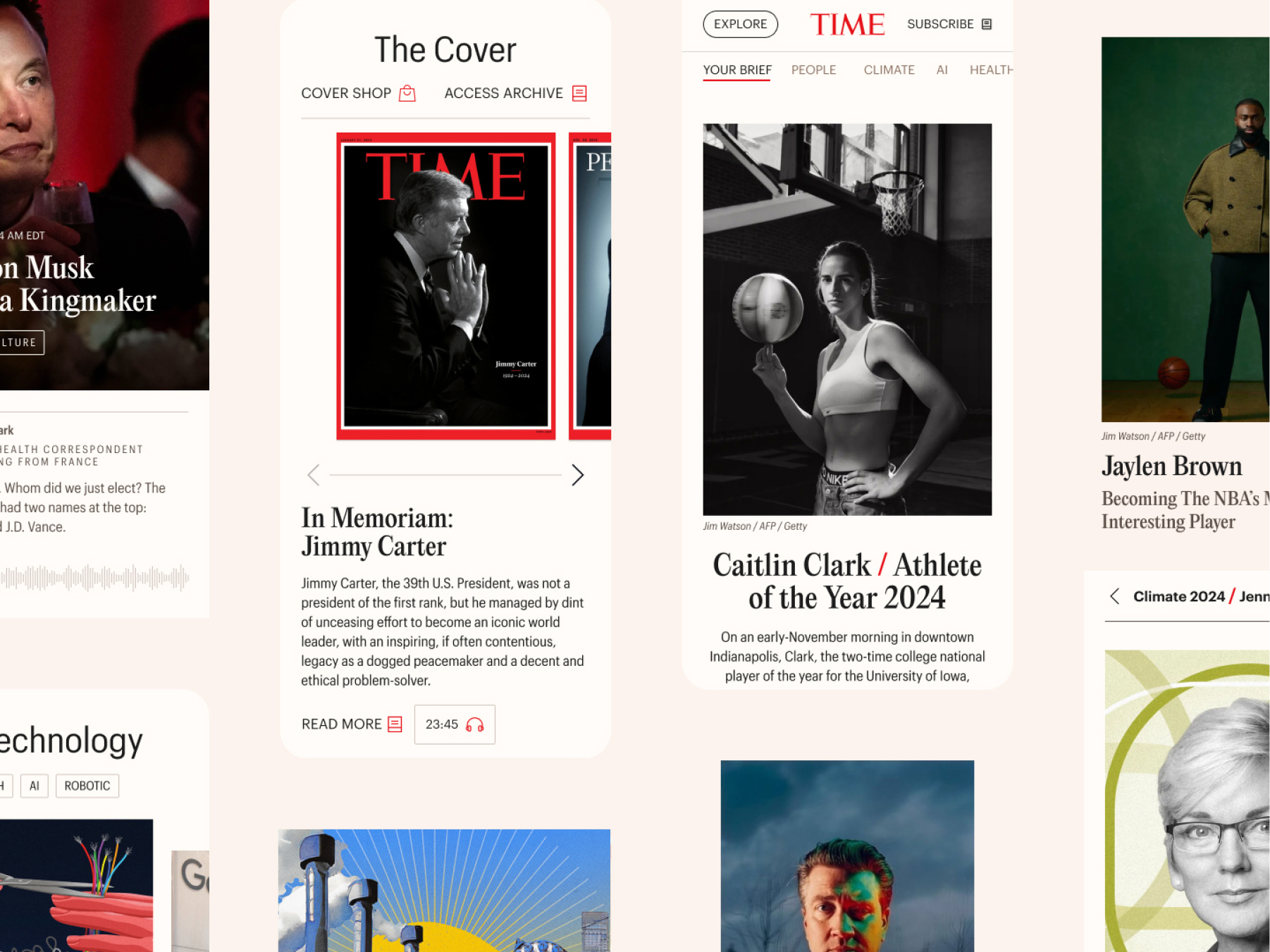
For more than a century, TIME has shaped global discourse — not just reporting history, but defining it. Yet its digital flagship no longer reflected that authority. A legacy CMS, slow load times and fragmented templates relegated a premium editorial brand to an interchangeable newsfeed. Readers seeking depth encountered surface-level consumption, and advertisers seeking impact found clutter.
The objective was not a redesign but a business and platform reinvention.
TIME set out to:
At a moment when trust in media is fragile and AI threatens to commoditize content, TIME’s set out to build a platform that reflects its legacy while defining the next era of digital publishing.
TIME sought to rebuild its website into a platform that honors its brand heritage while satisfying the demands of the modern attention economy.
The idea was radical in its simplicity. In a world besieged by infinite scroll, TIME would slow the scroll, delivering depth and defining moments.
The transformation began with a foundational question: What does authority look like online?
The approach combined editorial empathy with business transformation, harnessing a balanced, three-pronged focus on reader engagement, advertiser value and newsroom efficiency.
1. Replatforming for Speed, Scale and Control
In six months, we rebuilt TIME’s digital foundation using a headless, modular architecture that preserved design integrity and brand governance while enabling editorial teams to move faster. Modular components ensured consistency across coverage areas, dramatically improving performance, reliability and Core Web Vitals.
The website evolved into a newsroom tool and revenue engine.
2. Designing for Context, Not Clicks
Research revealed that readers were fatigued by fragmented news feeds and algorithmic churn. They craved depth.
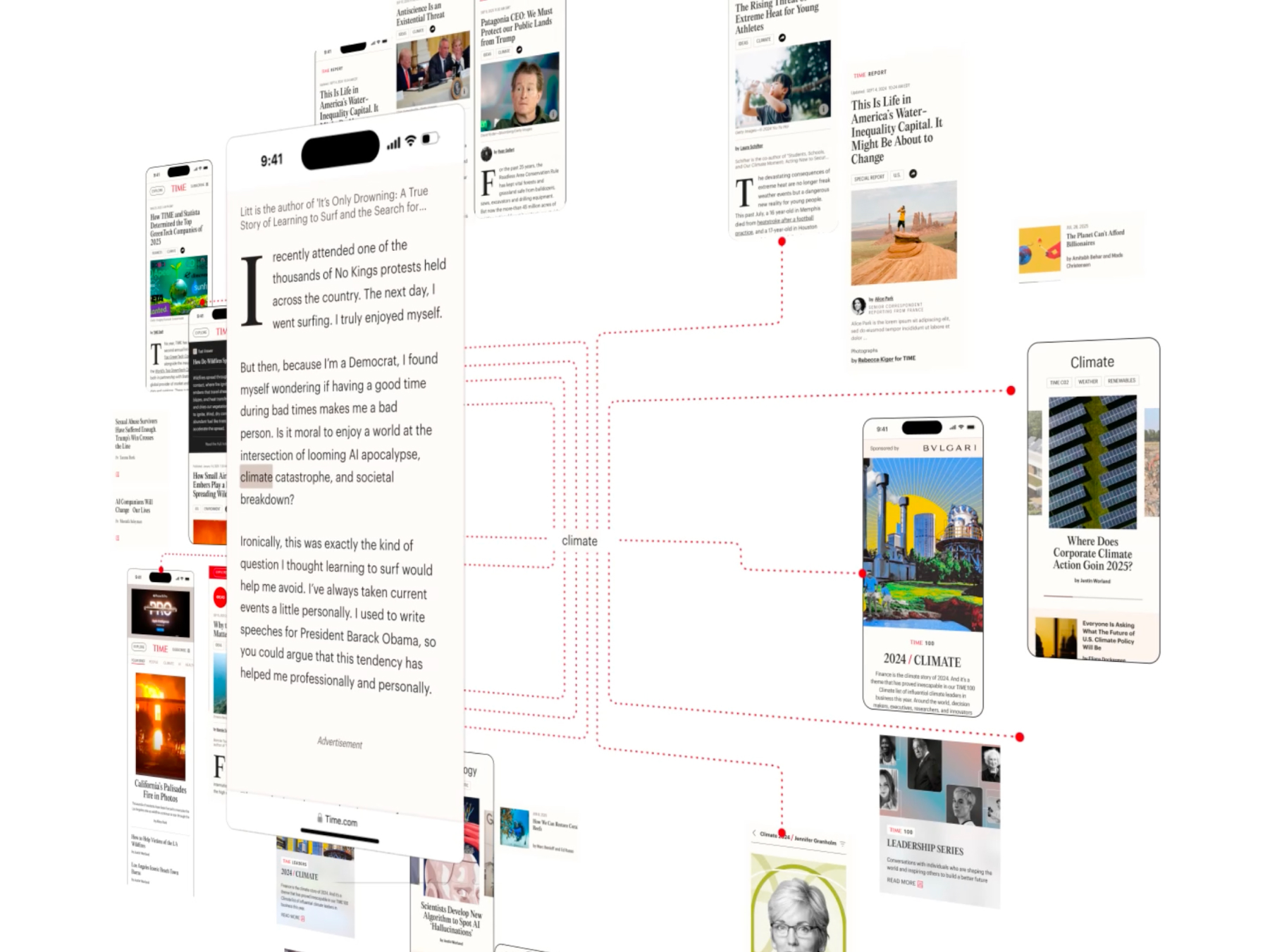
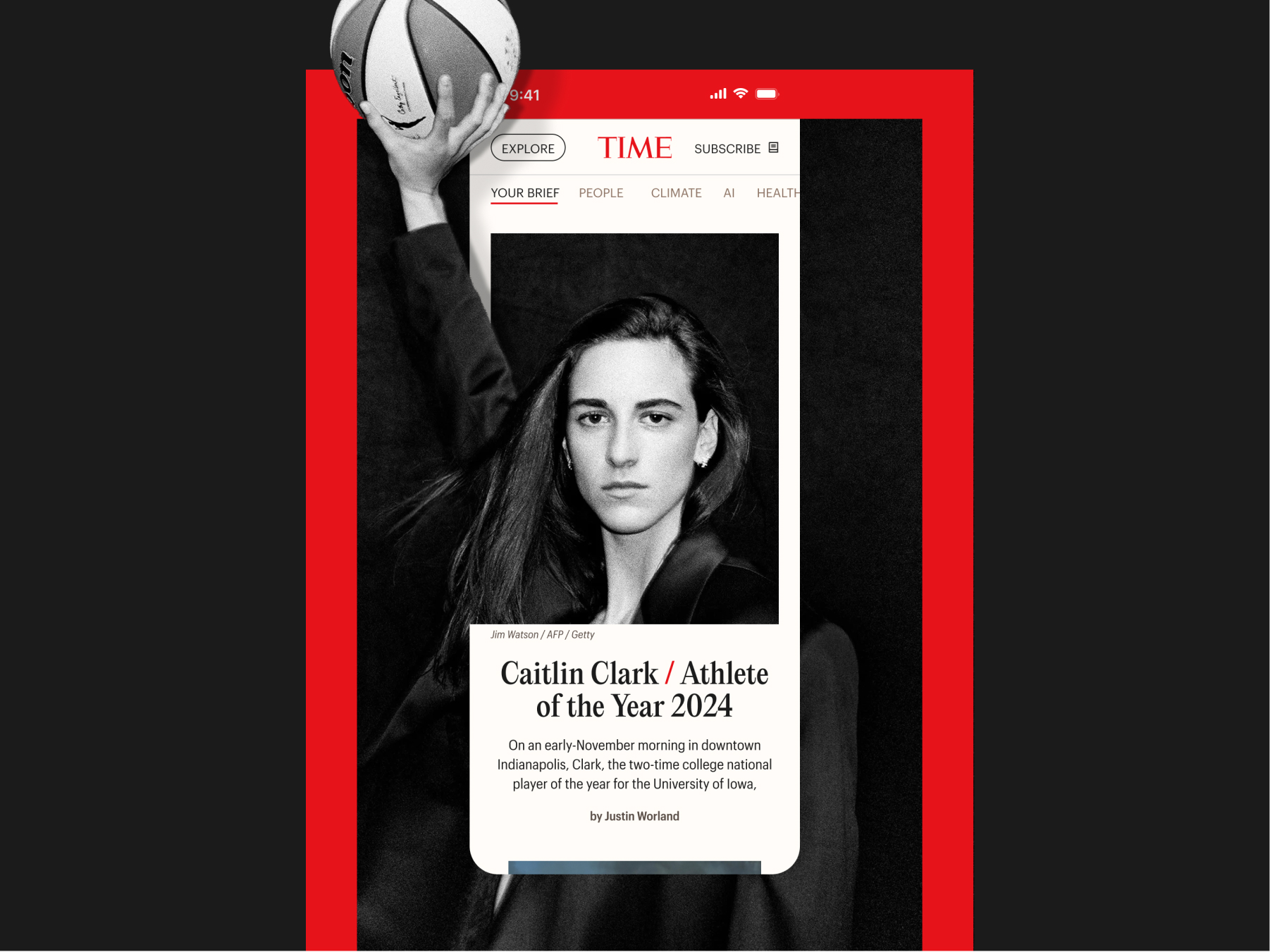
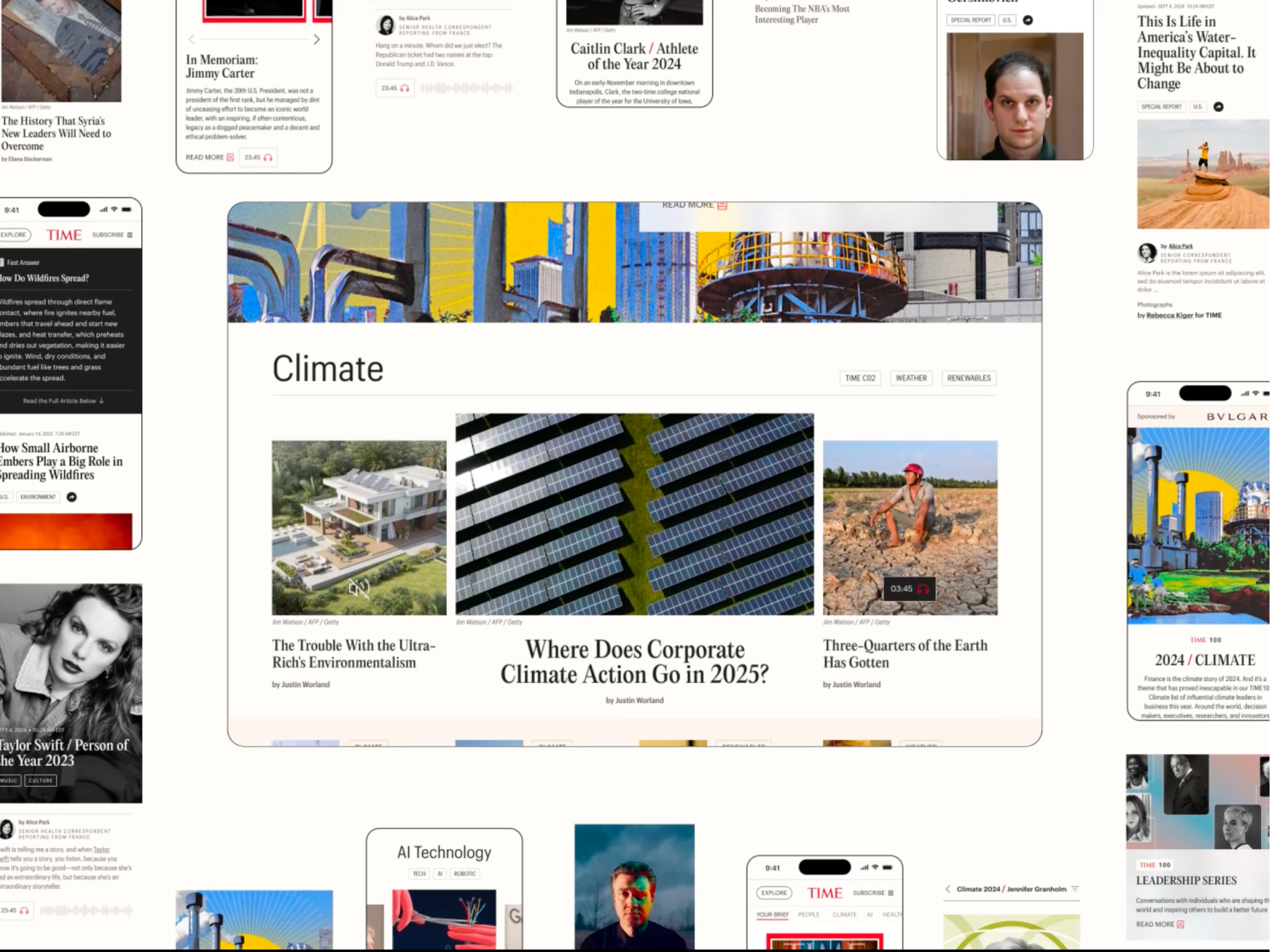
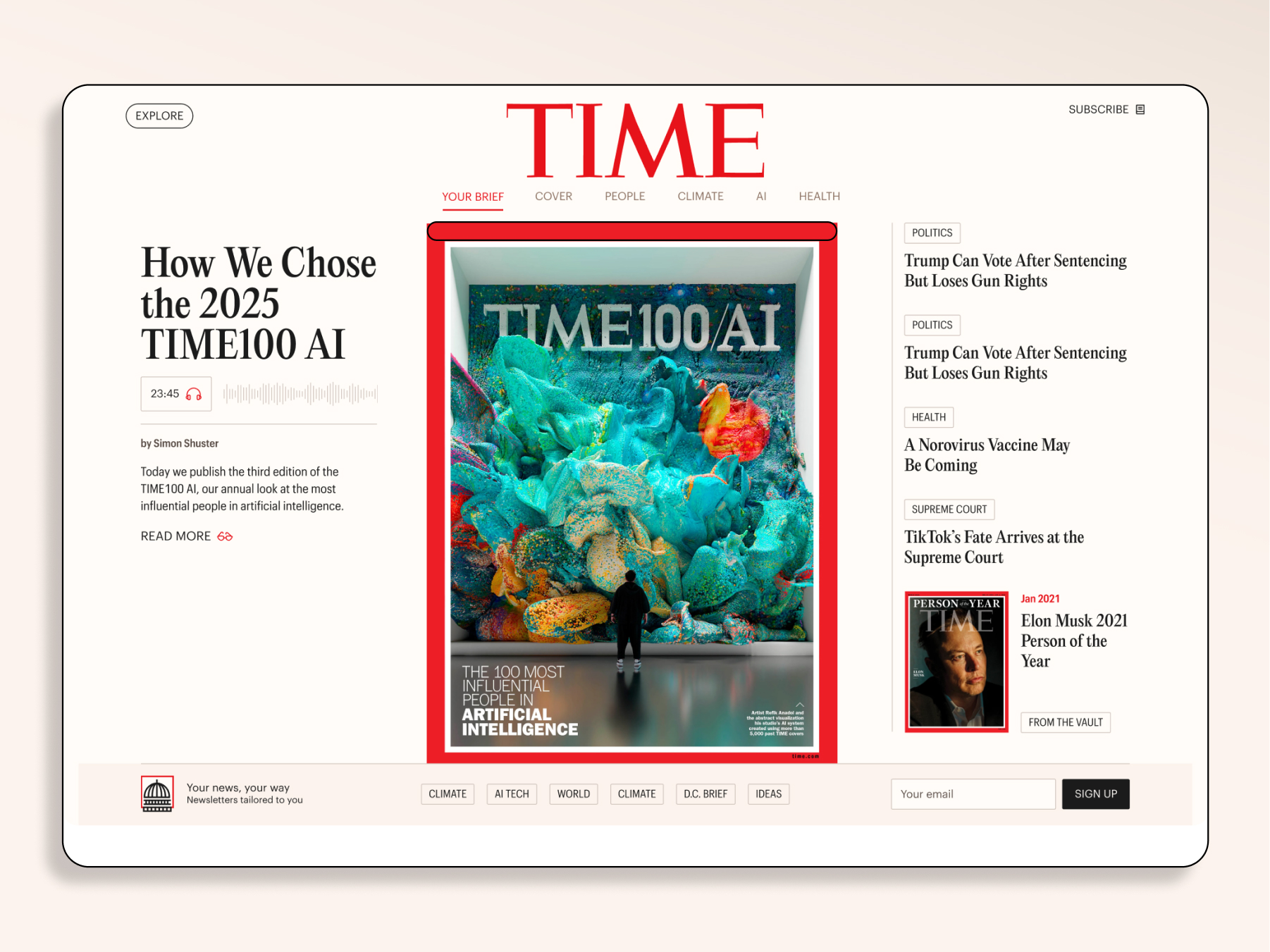
We redesigned the homepage as an elegant, curated environment that prioritizes editorial judgment over algorithmic chaos. Dedicated modules surfaced TIME’s core coverage pillars (AI, Health, Climate, Culture), reinforcing authority through an intentional hierarchy.
3. An AI Overhaul — With Editorial Guardrails
The transformation centered on an editorially guided AI system that connects current reporting to more than 100 years of archives. TIME’s AI Agent lets audiences interact directly with TIME’s journalism — from concise news summaries to multi-voice debates — through a unified, AI-powered interface. The resulting reader experience is intelligent, adaptive and grounded in verified insights and TIME’s editorial standards. This launch builds on two earlier AI-driven experiments: a generative ‘Person of the Year’ experience and personalized daily audio briefings introduced earlier this year. Both were collaborations with Scale AI and served as testbeds for technology that now underpins the TIME AI Agent. This is all part of TIME’s overarching shift from legacy publisher to digital-savvy product builder.
4. Advertising as Editorial Alignment
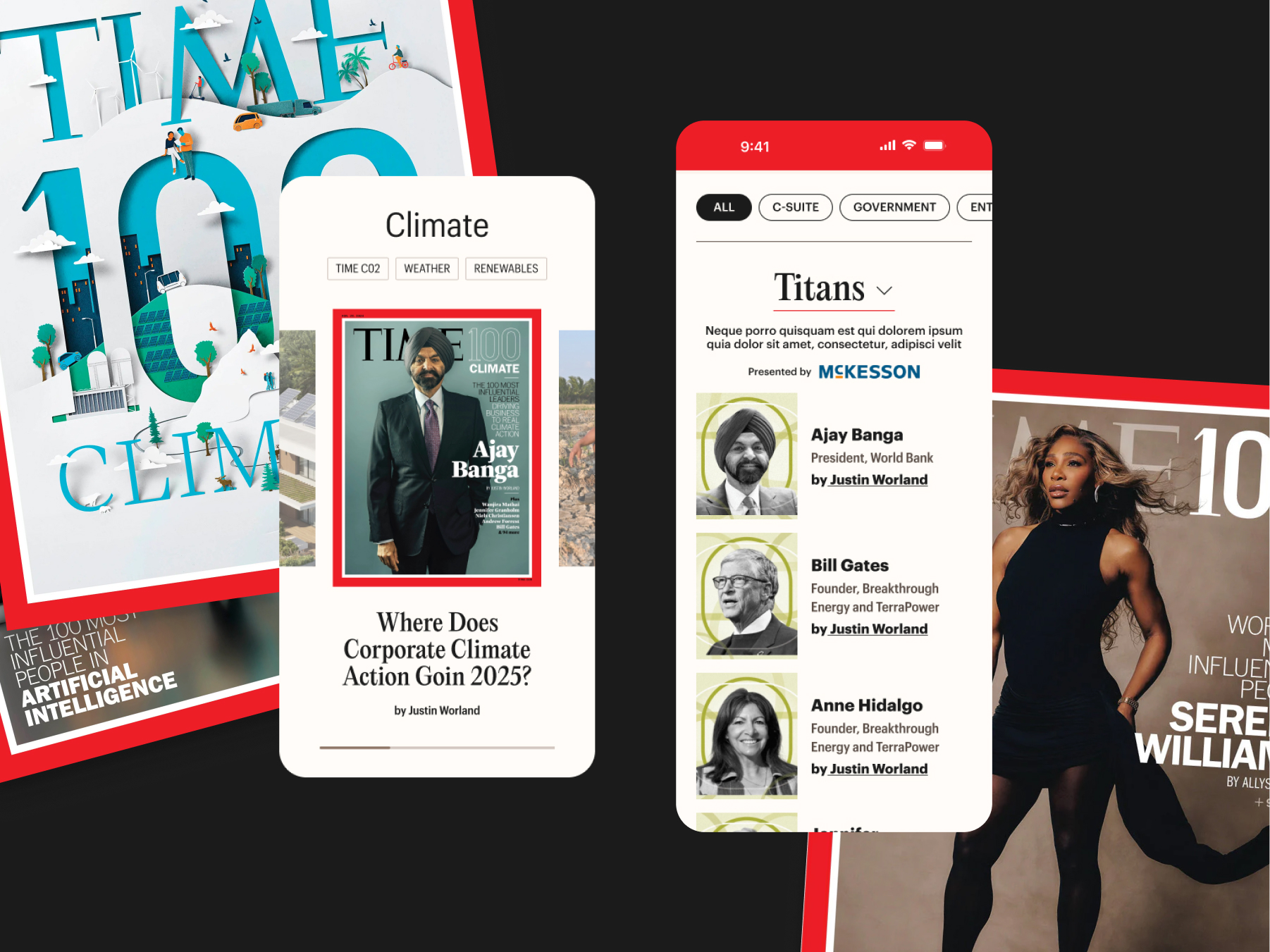
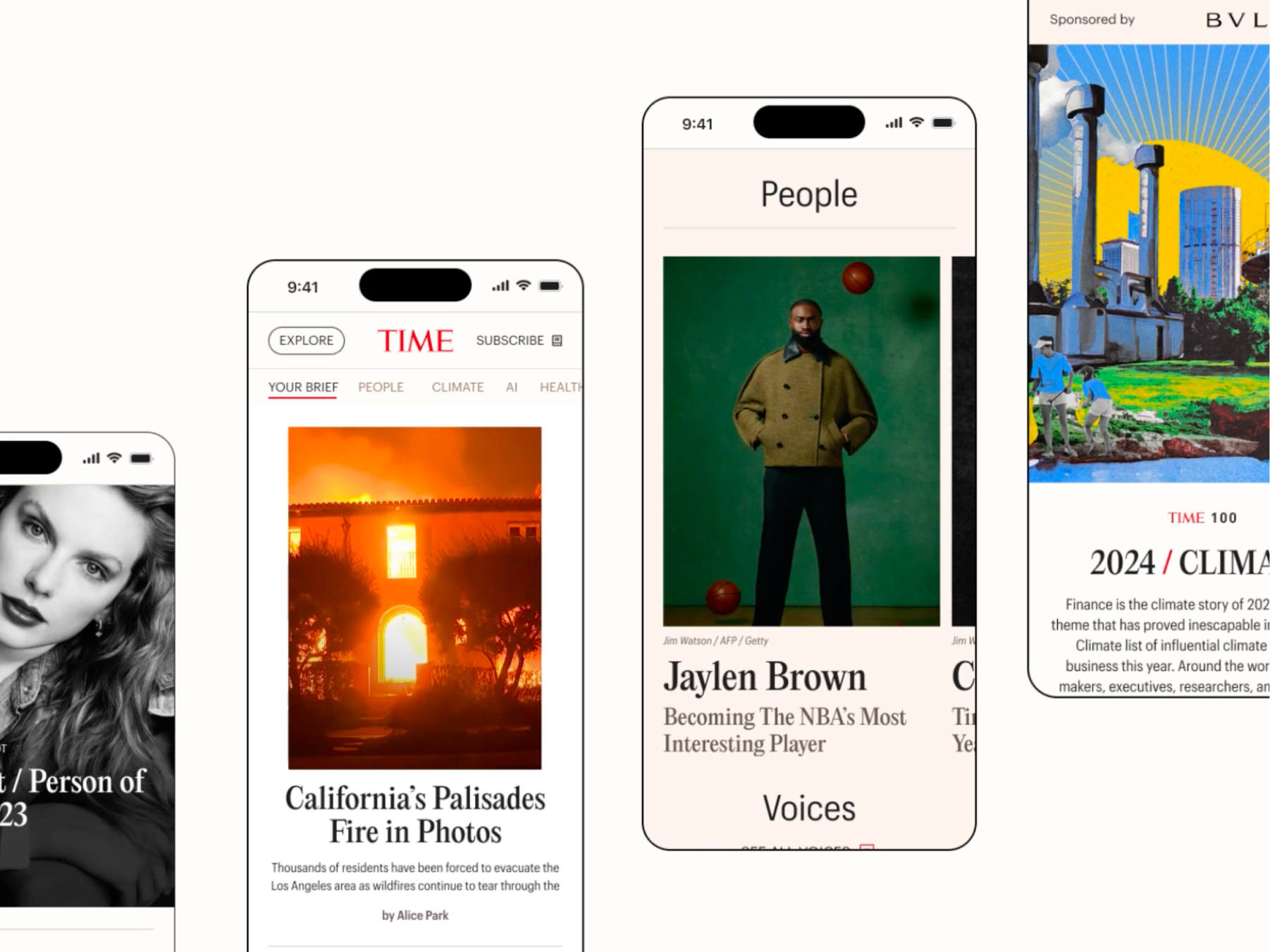
To restore advertiser value, we introduced Collections, premium, flexible sponsorship environments that integrate brand storytelling within curated editorial themes.
Instead of banner placements, they function as contextual partnerships. Luxury brands, e.g., Rolex and BVLGARI, returned in force, validating the new premium positioning.
5. Transforming Workflow and Governance
Behind the scenes, newsroom workflows were streamlined through automation and modular publishing templates. Journalists could publish faster, maintain visual consistency and scale coverage globally without diluting brand voice.
The phased rollout — Articles (March), Collections (April), Surrounding Stories (May), Homepage (June) — minimized risk while maximizing learning.
The result: an editorial-first, advertiser-ready, AI-enabled platform built for long-term sustainability.
The transformation delivered measurable business and brand impact:
Revenue growth outpaced traffic growth, proving that TIME shifted from monetizing volume to monetizing value.
Premium advertisers returned and renewed multimillion-dollar partnerships, validating the site as a brand-safe, high-impact environment. Luxury brands like BVLGARI and Rolex renewed multiple times, signaling confidence in TIME’s new advertising model.
The transformation restored TIME’s stature as a publication that shapes movements. TIME also, critically, built a scalable, AI-ready platform capable of defining the future of trust in news and media.