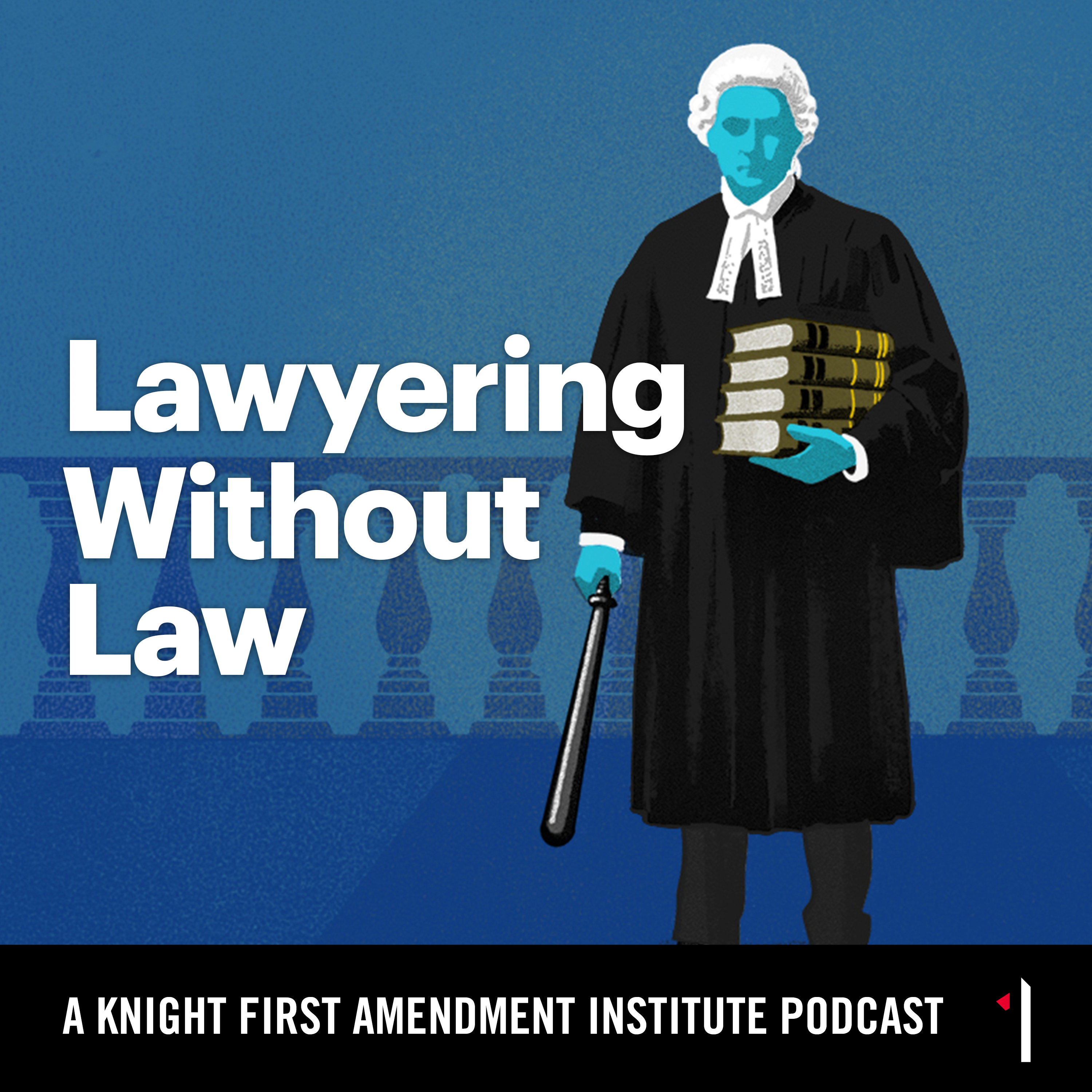
“Lawyering Without Law” interrogates the role of lawyers in defending democracy or enabling authoritarianism through diverse historical and contemporary perspectives. Across six episodes, the series examines how legal professionals, institutions, and doctrines can either safeguard democratic principles or facilitate their erosion.
The idea driving the work was to bridge the gap between time-intensive scholarly publishing and the growing public need to understand threats to democratic governance and the rule of law. As concerns about democratic backsliding intensify, legal scholarship offers essential context, but its insights do not always reach audiences beyond academic and professional circles. We set out to make these ideas accessible without sacrificing their intellectual rigor.
Through conversations with leading legal scholars and practitioners, the series translates complex legal questions into engaging, approachable discussions for a broad audience. Each episode connects historical precedents and contemporary developments to examine the choices lawyers make, the institutions they shape, and the consequences those choices have for democratic society.
Our goals were to expand public understanding of the legal profession’s role in democratic life, make rigorous First Amendment and constitutional scholarship more accessible, and create a lasting educational resource for listeners seeking to better understand the forces shaping American democracy. By bringing these conversations beyond traditional academic settings and into the podcasting landscape, “Lawyering Without Law” aims to foster informed public discourse about the responsibilities of lawyers and the fragility of the legal principles that sustain democracy.
The Knight Institute brought “Lawyering Without Law” to life as a six-episode podcast series that brings legal scholarship beyond academic and professional circles and into public conversation. The series unites legal scholars and practitioners to examine the role lawyers and legal institutions play in both facilitating and defending against democratic backsliding.
Our approach centered on conversations grounded in guests’ scholarship and professional experience. Drawing on global and historical democratic crises, guests connect legal theory and precedent to contemporary threats to democracy, exploring how lawyers’ decisions can shape the trajectory of democratic institutions. Each episode translates complex legal ideas into accessible discussions while preserving the depth and nuance necessary to understand the issues at stake.
A central challenge was making rigorous legal analysis engaging and understandable to listeners without specialized legal knowledge. We addressed this by building the series around expert conversations that connect abstract legal principles to concrete historical examples and current events. Rather than simply presenting legal doctrine, the podcast examines the choices, responsibilities, and consequences that define the legal profession’s role in democratic life.
The series is distinctive in its examination of lawyers not only as defenders of democratic institutions but also as potential participants in their erosion. This dual perspective moves beyond conventional narratives about the legal profession and invites listeners to consider how the law can serve competing ends. By bringing together historical context, contemporary analysis, and the perspectives of leading scholars and practitioners, “Lawyering Without Law” offers audiences a framework for understanding the legal dimensions of democratic backsliding.
Ultimately, the project reflects the Knight Institute’s commitment to making complex First Amendment and constitutional issues accessible to broader audiences. Through podcasting, we created an educational resource that extends the reach of expert legal analysis and encourages listeners to think critically about the relationship between law, professional responsibility, and democracy.
“Lawyering Without Law” met its objectives by bringing rigorous legal analysis to a broad audience through an accessible, engaging podcast format. Across six episodes, the series reached thousands of listeners, extending conversations about the legal profession’s role in democratic life beyond traditional academic and professional settings.
The podcast’s reception also earned recognition from the industry. “Lawyering Without Law” won two 2026 Signal Awards, including a Silver Award and a Listeners’ Choice Award, as well as an Anthem Award in the Podcast Limited Series category for Human & Civil Rights. These honors recognize both the series’ quality and its resonance with audiences.
The Listeners’ Choice Award was particularly meaningful because it reflected audience support for the project. Together, these achievements demonstrate that complex legal scholarship can find an audience through thoughtful storytelling and a medium that makes expert perspectives accessible to listeners beyond the legal academy.
Ultimately, we consider the project a success because it advanced the Knight Institute’s educational mission while generating meaningful audience engagement and external recognition. By connecting historical and contemporary democratic crises to the choices lawyers make, “Lawyering Without Law” created a resource that helps listeners better understand the relationship between the legal profession, democratic institutions, and the rule of law. Its awards and listenership affirm the value of bringing these conversations to a wider public at a time when understanding the role of law in democracy is especially important.