The New York Post has always been defined by its bold point of view.
But in a polarized media landscape, the Post stirs controversy. People call the paper a sensationalist, trashy tabloid. (Or worse.)
And as newspapers shutter across the country, the Post decided to launch a completely new sister publication all the way out in California.
Why California? From a news perspective, the nation’s most populous state is surprisingly underserved.
There’s a huge constituency of Californians seeking news with voice and conviction — news that reflects them, their communities and the issues they care about. But California is also a proud, media-literate state, with diverse local markets and a bone-deep resistance to imported narratives. For the California Post to succeed, it had to feel distinct yet native to the state.
Blow the entrance and the California Post would be dismissed as a soapbox for noisy East Coast interlopers. Or worse, irrelevant.
A brand with a 200-year heritage doesn’t get many chances to introduce itself, and as a brand that many love to hate, the Post needed to earn some California love.
The launch objectives were ambitious.
Trust in the media is in long-term freefall.
Over the last decade, the segment of U.S. adults who have a lot of trust or some trust in national news media has fallen from 76% to just 56%. Among 18-29 year olds, that number is 52% (according to Pew Research).
To get a view into what was happening, we surveyed 1,800 people, we listened on social and we spoke to industry insiders and news consumers. What did we discover? People say they want straightforward information — “just the facts.” When we looked at their actual behavior, we saw something different.
Audiences engage with publications that express perspective and a strong opinion. Hold the press. This seemed like an obvious contradiction.
But what if it isn’t?
What if having a clear, loud and consistent perspective is what builds credibility with modern audiences? And what if journalism isn’t losing trust by having opinions, but by pretending not to?
In 2026, audiences know how the media game is played. Protests of neutrality. Rituals of balance. Hedging vocabulary.
People don’t want to feel misled, managed or manipulated. A strong point of view has a lot of bark, but people are drawn to the bite. It signals transparency.
With a planned fresh start out West, the Post was at a crossroads. They had to decide whether to minimize the aspects of the brand that stir up contention, or to lean into them.
Our strategic approach, born of our insights, gave us the answer: Bold conviction beats performative neutrality.
In creative, we brought that bold conviction to life through a fearless message. The Post has always been willing to voice what others only think. In California, where news is driven by a cautious consensus, that made us stand out.
That inspired our promise to Californians: We’ll Say It. A simple line with big ownership over our voice and what we aim to do for the golden state.
We built anticipation with wild postings across the streets of Los Angeles and San Francisco, promising to shake news up in California.
On launch day, we came in hot.
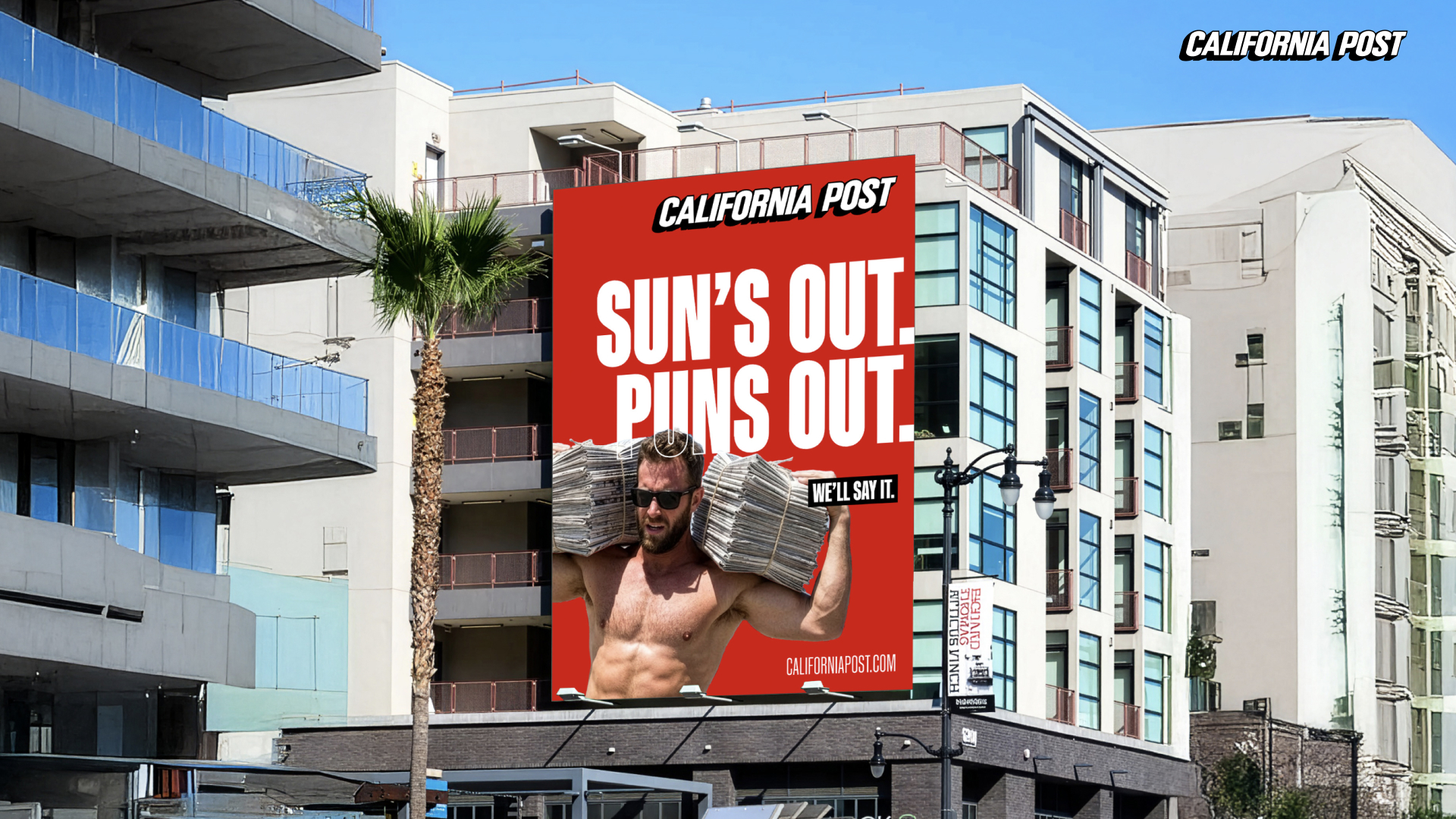
We took the Post experience — the takes, the hunks and the fun — and condensed it into creative for people who had never opened an issue or visited the website.
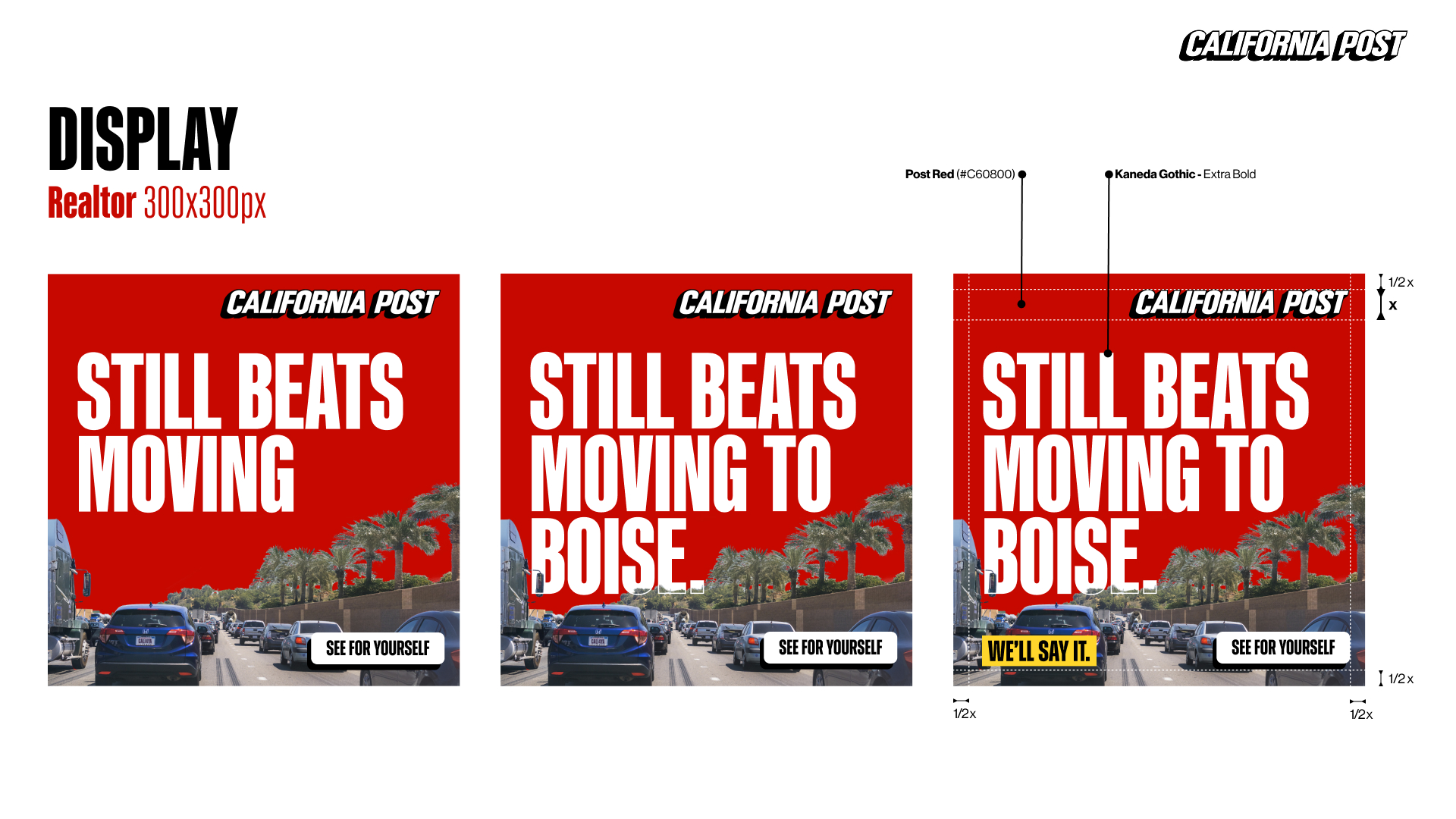
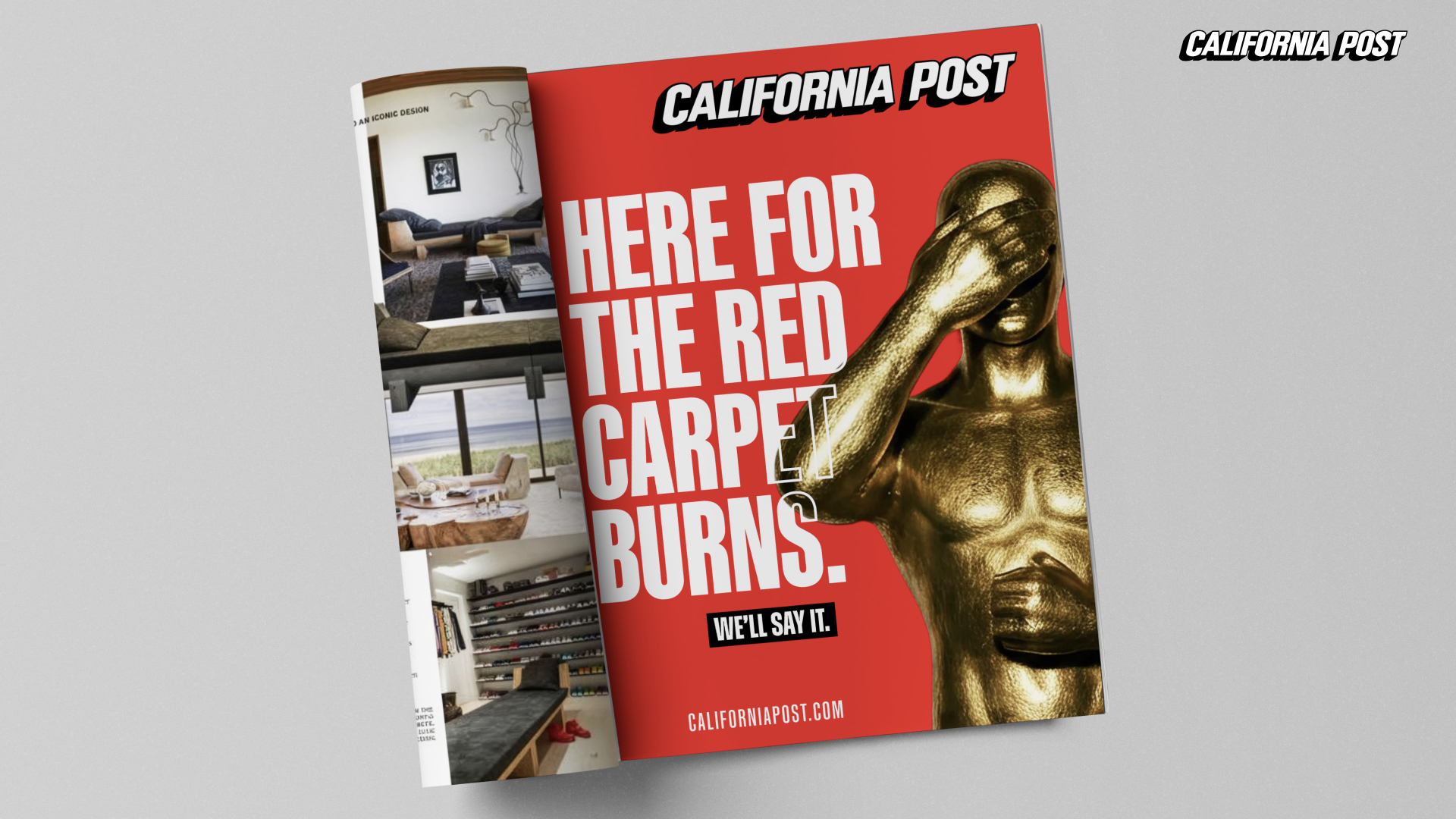
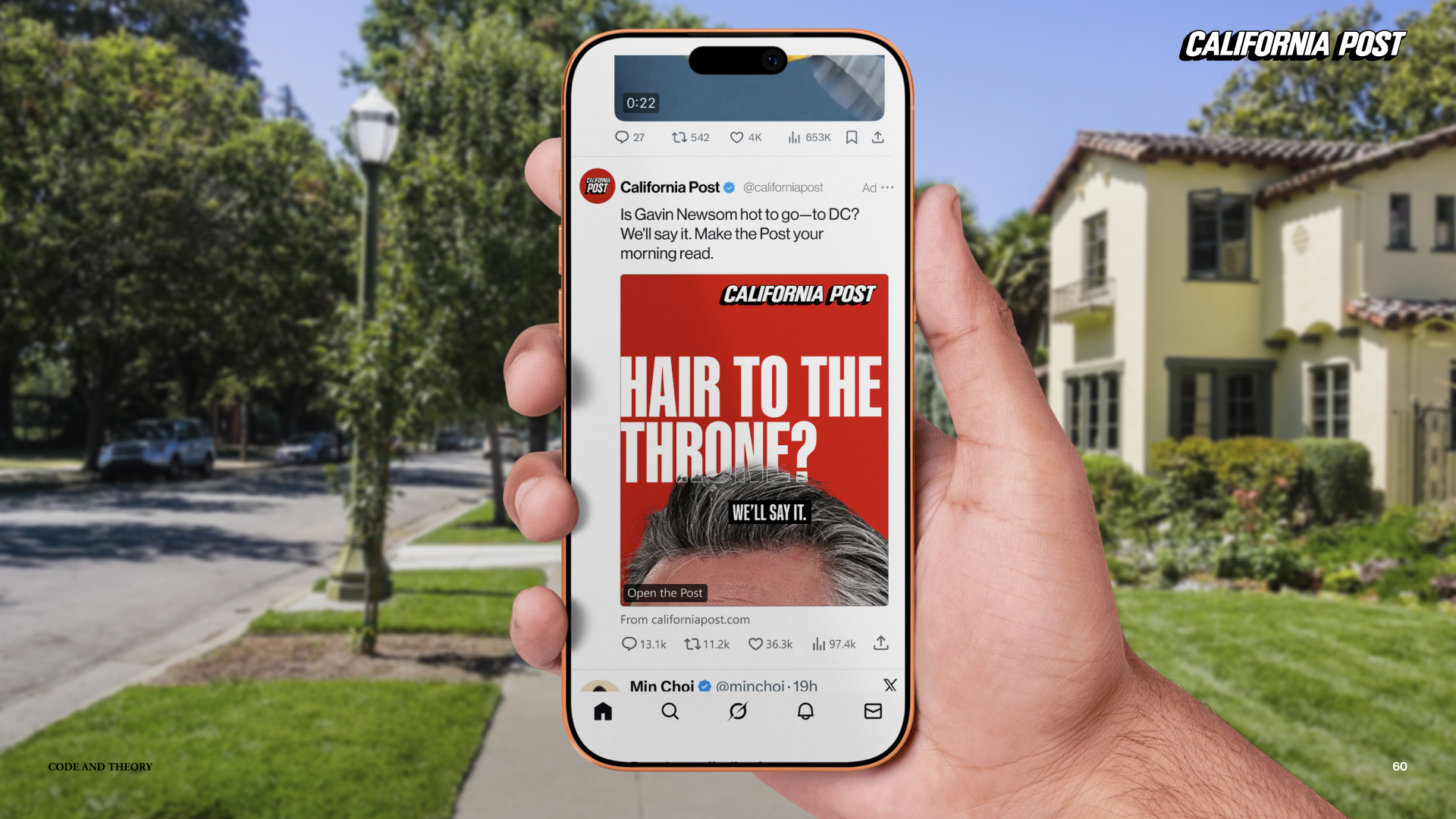
Copy proved that “We’ll Say It” across the full range of the Post’s editorial coverage, serving bold takes on politics, teasing fearless coverage to come and showing love to our new home. We took the all-caps, in-your-face, pun-packed experience of a Post headline and squeezed it into billboards and banners across California.
Art captured the essence of the Post’s iconic covers — arresting visual metaphors, larger-than-life characters, attention-grabbing layouts and type that goes big — and tied it together with unmissable Post red.
Let’s start with the numbers.
And what about those ambitious objectives we began with?