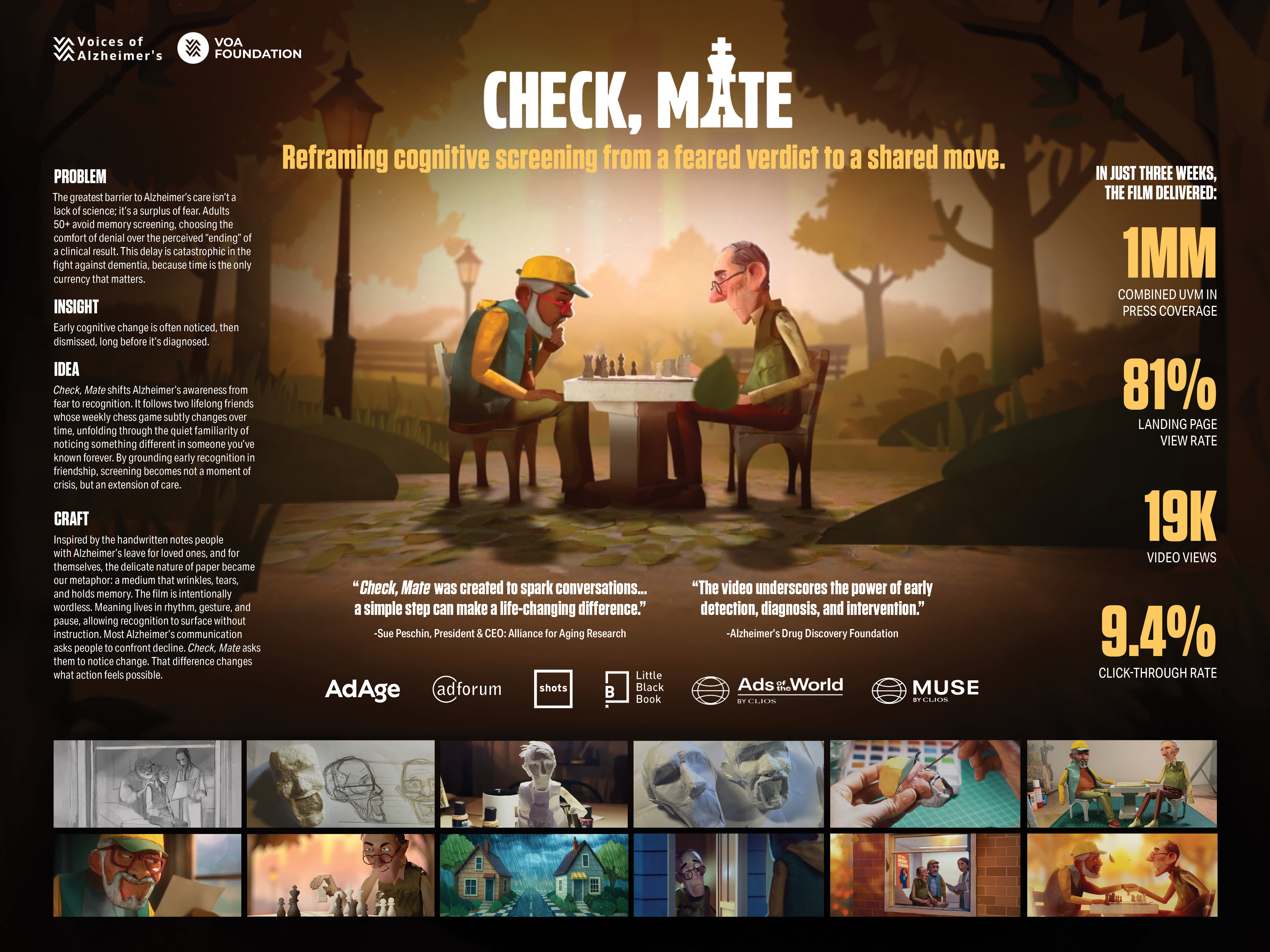
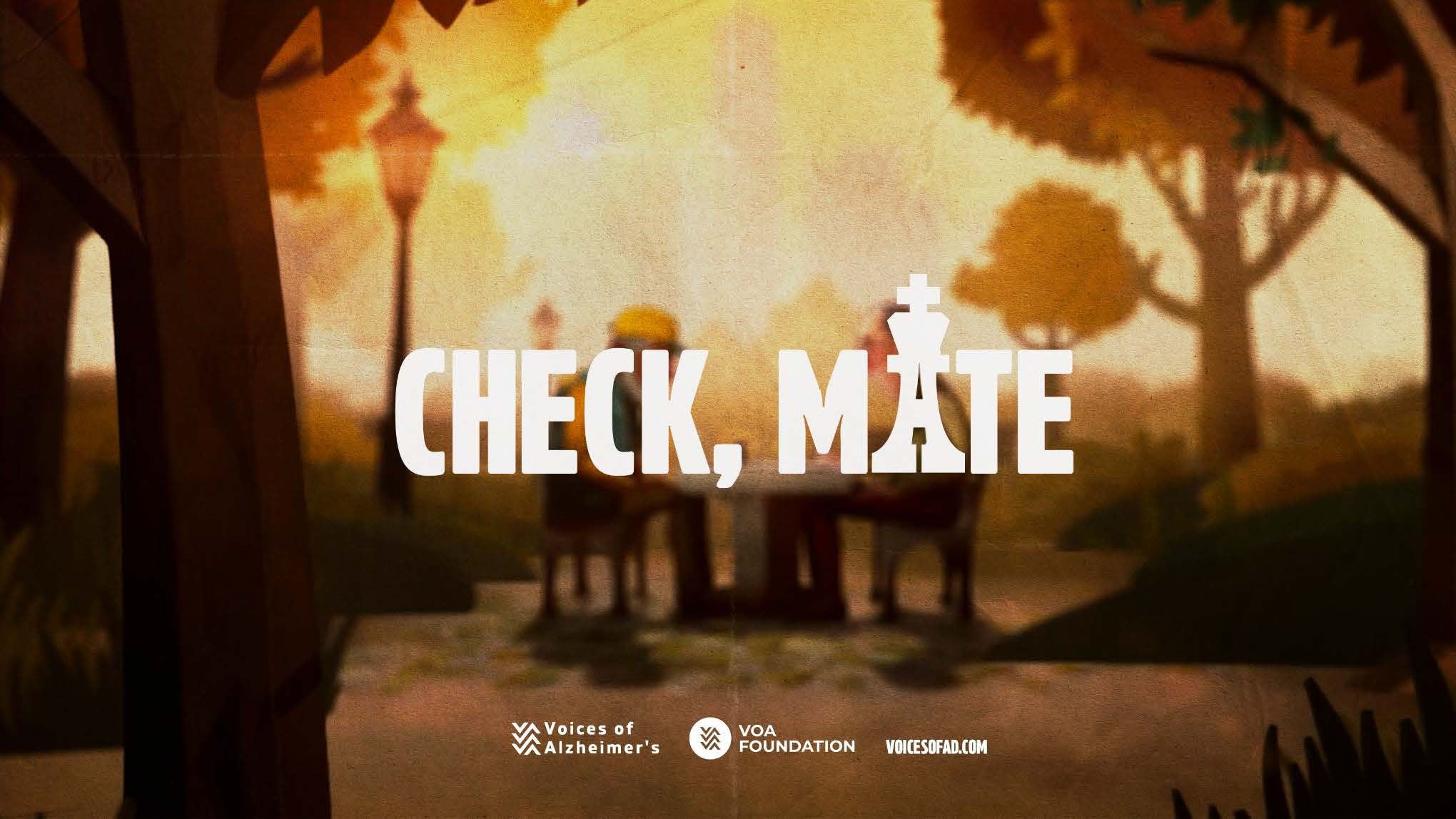
The objective of Check, Mate was to reduce fear-driven avoidance of early cognitive screening by changing how early cognitive change is emotionally understood.
Despite growing awareness and emerging treatments, many adults aged 50 and older delay or avoid memory screening because memory change is culturally associated with dementia and the loss of independence, agency, and self. As a result, early signs are often noticed, then dismissed, even though early recognition is the most actionable moment for care.
Rather than persuading audiences through urgency, statistics, or clinical explanation, the idea behind Check, Mate was to reframe early screening as an act of care rather than a feared verdict. The work sought to meet people at the moment where recognition actually begins: in everyday routines, shared experiences, and quiet noticing between people who know each other well.
The specific goals were to lower emotional resistance, make acknowledgment feel safe, and create space for reflection before fear takes over. By shifting Alzheimer’s awareness from fear to recognition, the campaign aimed to make early cognitive screening feel emotionally possible, not inevitable or alarming.
Through a wordless, relationship-centered film, Check, Mate was designed to encourage conversation, recognition, and earlier consideration of screening without telling audiences what to do. The ultimate goal was not immediate action, but a meaningful reframing that could support healthier engagement with Alzheimer’s care over time.
The strategy behind Check, Mate was to design an experience that lowered emotional defenses before asking for action. Rather than leading with information, urgency, or diagnosis, the work needed to create a moment of recognition that felt safe, familiar, and human. The plan was to use film not as an explainer, but as a space for reflection.
We began by identifying where early cognitive change is first experienced: not in a doctor’s office, but in shared routines and small deviations noticed by people who know each other well. That insight shaped both the narrative and execution. The film centers on two lifelong friends and a recurring ritual, their weekly chess game, allowing change to surface through repetition and variation rather than explanation.
To preserve emotional openness, the film was intentionally wordless. Removing dialogue eliminated authority and instruction, allowing viewers to engage without feeling judged or directed. Meaning is carried through pacing, gesture, and pause, mirroring how early cognitive change is often sensed before it is discussed. This approach also made the film accessible across audiences and platforms.
The visual execution used mixed-media animation combining hand-cut paper, collage, sculpted elements, stop-motion, and digital compositing. Inspired by the handwritten notes people with Alzheimer’s leave for themselves and loved ones, paper became a central material. It wrinkles, wears, and accumulates marks over time, quietly mirroring how memory carries repetition and history. The materials themselves evolve alongside the story, reinforcing the theme of gradual change without dramatization.
Tone was carefully calibrated throughout. The film avoids sentimentality, alarm, and resolution. It observes rather than instructs, trusting viewers to recognize meaning at their own pace. This restraint was essential to overcoming the primary challenge of the brief: fear-driven avoidance. By refusing to confront audiences with worst-case outcomes, the film keeps them emotionally present.
The campaign was deployed across paid and organic social, digital channels, and the Voices of Alzheimer’s website, designed to be encountered intimately and shared naturally. Supporting placements translated recognition into next steps without disrupting the tone of the film itself.
The primary challenge was addressing a deeply feared topic without reinforcing the very avoidance the work sought to overcome. By prioritizing recognition over explanation and care over crisis, Check, Mate uses film to reframe early cognitive screening as a shared, human act. The result is work that feels quiet, accessible, and emotionally distinct in a category often dominated by urgency and fear.
In just three weeks, “Check, Mate” generated strong early performance:
By reframing screenings as an act of care—both for oneself and for the people you love—“Check, Mate” helped transform a topic often avoided by older adults into an invitation to protect the moments and relationships that define life after 50.