The Lede had already won awards for its coverage of the Gaza conflict, with nuanced but powerful episodes that brought much-needed insight to this terrible war.
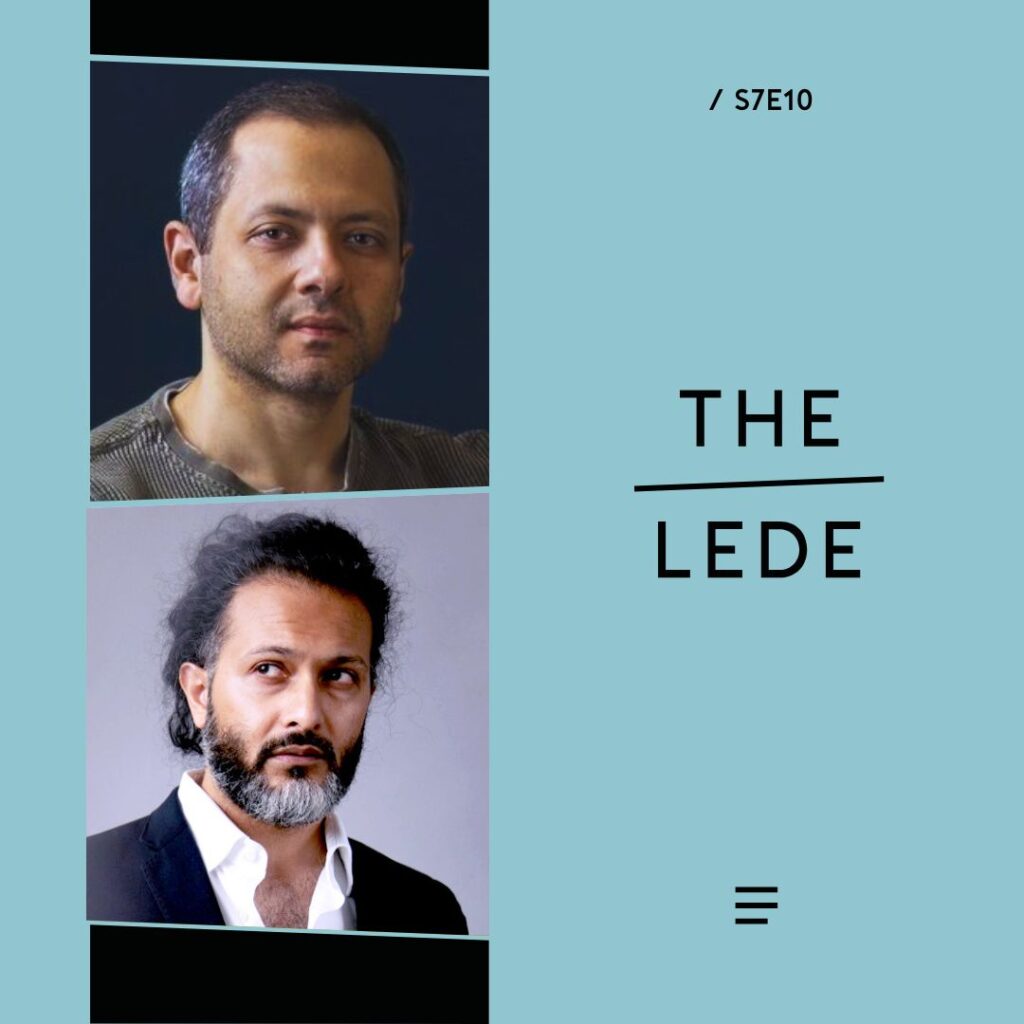
We identified that one of the lesser-examined consequences of the Gaza war was the profound crisis of belief experienced by those watching it unfold from the heartland of the West. We therefore reached out to the writer and journalist Omar El Akkad to join New Lines’ Faisal Al Yafai to discuss how months of witnessing the conflict online forced him to reconsider his positionality in the global world order, and the legitimacy of that order itself.
Drawing from his recently-published book, “One Day, Everyone Will Have Always Been Against This” (which would go on to win a 2025 National Book Award) we wanted to test our thesis with El Akkad, knowing from his book that he would want to reflect on the collapse of the “load-bearing beams” that once shaped his worldview and on the deep personal uncertainty that followed.
We wanted to explore these personal, moral and intellectual ruptures, and the dimensions of the war on Gaza that traditional geopolitical coverage often overlooks. By foregrounding El Akkad’s reckoning, the episode sought to illuminate how the war destabilizes the narratives and institutions many rely on to make sense of the world. The goal was to create space for an honest examination of complicity, disorientation and the fragility of liberal frameworks, showing that the consequences of this conflict are not only political but profoundly existential.
The team anchored the conversation in Omar El Akkad’s lived experience and thoroughly researched Omar’s new book and how it fit in his previous work, using his reflections as an entry point into a broader interrogation of institutional failures and moral paralysis during wartime.
Host Faisal Al Yafai entered the conversation not simply as an interviewer, but as a critical interlocutor who was willing to push past comfortable talking points. His questions were designed to probe the tensions in El Akkad’s thinking and draw out the contradictions that define this moment, something many previous interviews had sidestepped.
What makes the work unique is its focus on the interior consequences of global crisis. Rather than treating Gaza solely as a geopolitical event, the episode examines how the war reshapes the inner lives of those watching from afar. That shift in emphasis from the external to the existential was central to the project’s purpose and to its execution.
The final episode met the team’s objectives by offering a nuanced, intellectually honest account of how the Gaza war has destabilized long-held assumptions about and within Western liberalism. Through El Akkad’s reflections, the conversation illuminated the deeper fractures that traditional coverage tends to ignore: the collapse of ideological certainties, the moral disorientation of spectatorship and the discomfort of confronting one’s own complicity.
Listeners responded to the episode’s willingness to articulate questions that many were grappling with privately. Early feedback highlighted its clarity and emotional resonance, with many noting that it provided language for experiences they had struggled to articulate. Others highlighted how Faisal’s line of questioning clarified the stakes without flattening them, preserving nuance while insisting on moral clarity.
It delivered on the team’s goal: to create a space for rigorous, honest inquiry into the moral and intellectual fallout of the conflict. The success lies not only in the episode’s reach, but in its ability to shift how listeners think, question and understand the world around them.