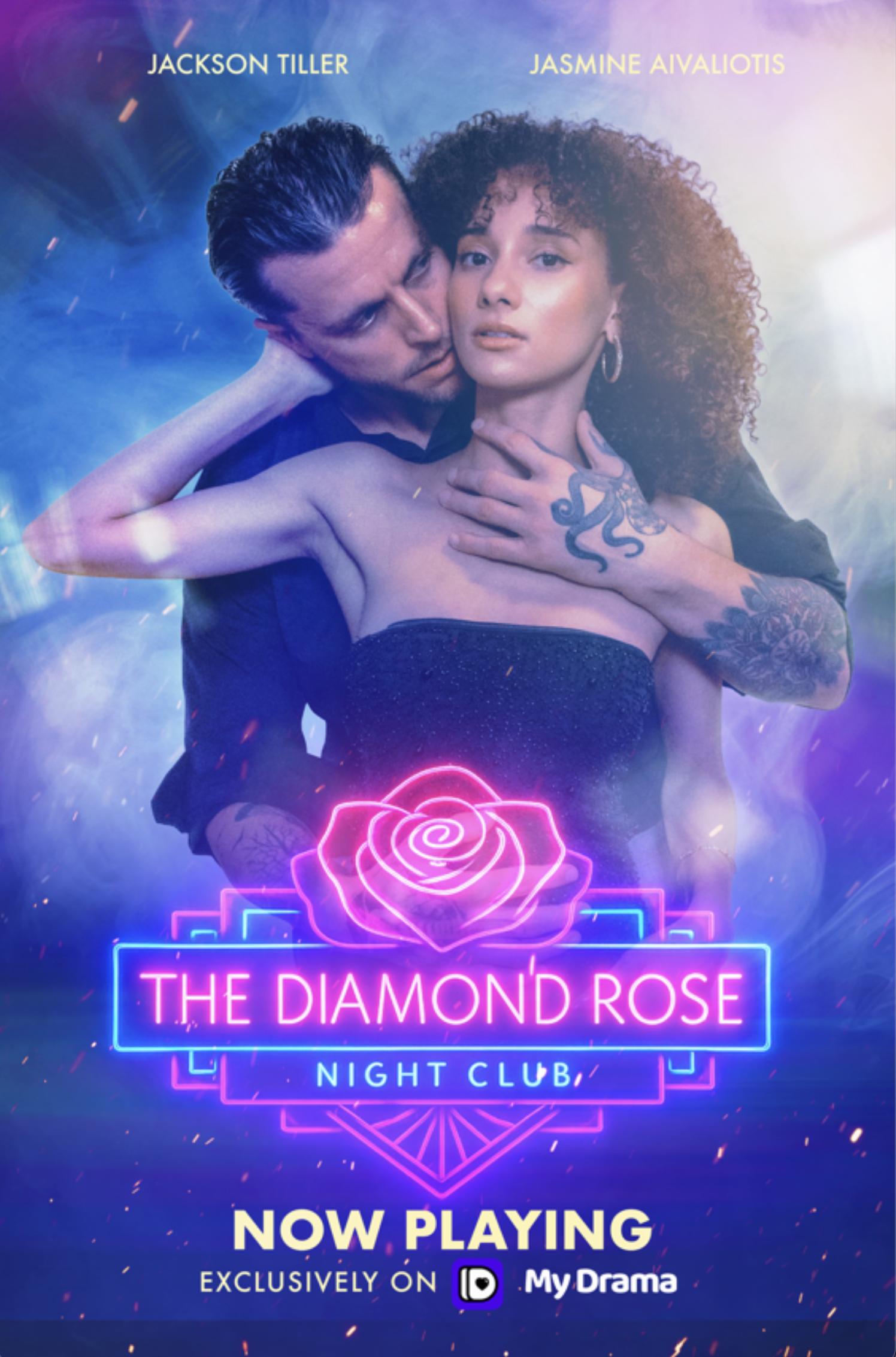
When The Diamond Rose was created, much of the microdrama ecosystem was built on a misunderstanding of its audience. Many platforms assumed viewers would tolerate stories driven by shock value rather than character, coherence, or emotional truth. As a result, the space became defined by underdeveloped narratives and a lack of respect for both the audience and the medium itself.
We rejected that premise.
The Diamond Rose was intentionally designed to prove that elevated, cinematic storytelling, reimagined for digital audiences, could thrive in microdramas. Scott Brown and the team at Second Rodeo believed that audiences consuming stories on their phones were not less discerning, only underserved, and that the narrative tools of film and television had yet to be fully realized in this format.
Rather than retrofitting television into a smaller container, The Diamond Rose was built from the ground up as a 90-second episodic microdrama. Each episode was crafted to deliver emotional depth, character agency, and narrative momentum while contributing to a larger serialized arc. The goal was not simply to entertain, but to demonstrate that short-form vertical storytelling could support real stakes and lasting emotional impact.
That belief was validated immediately. The Diamond Rose reached 20 million views in its first 24 hours and received coverage in The Washington Post, highlighting the series’ quality and ambition. More importantly, it helped shift industry expectations.
By trusting the audience’s intelligence and emotional appetite, The Diamond Rose changed what was thought possible for microdramas and established a new creative benchmark.
From the outset, The Diamond Rose was brought to life with a fundamentally different point of view about what microdramas could, and should, be. We set out to design every creative and technical element specifically for short-form, mobile consumption while honoring the fundamentals of great screenwriting and filmmaking. The plan of action was not to choose between “digital” and “traditional” storytelling principles, but to deliberately marry the two: combining audience retention theory native to digital platforms with time-tested narrative structure, character development, and emotional payoff.
On the writing side, this meant grounding every episode in character need, clear motivation, and evolving relationships, rather than relying on cheap tropes or manufactured shock. We focused on true narrative arcs, emotional causality, and stakes that emerged organically from the characters themselves. Traditional storytelling tools such as rising tension, reversals, and payoff were not abandoned. They were refined and compressed, informed by an understanding of digital pacing, audience attention patterns, and serialized retention. Each episode was designed to spark curiosity rather than rely on compulsion, encouraging viewers to lean in emotionally and ask what comes next.
Execution on set followed the same philosophy. The filmmaking approach was highly intentional, with shot lists and blocking designed specifically for the vertical frame. Rather than fighting the format, the team leaned into it. Focusing on living in close-ups, prioritizing intimacy, and allowing performances to fill the screen. Actors’ expressions, micro-reactions, and emotional shifts became central visual storytelling tools, creating a sense of immediacy and connection that feels natural on a phone. Cinematic discipline was applied through composition, lighting, and camera movement, ensuring the series retained polish and visual intention.
Post-production further reinforced this balance. Pacing was calibrated to match digital viewing habits and always striving for narrative clarity and emotional weight. Editing choices were guided by both creative instinct and an understanding of how tone, rhythm, and timing can spark curiosity in the viewer. Music, sound design, and transitions were used purposefully, enhancing emotional resonance rather than overwhelming the frame.
One of the greatest challenges was cultural rather than technical: asking collaborators to unlearn assumptions carried over from both traditional television and existing microdrama norms. Vertical storytelling required a new visual and narrative grammar, and finding the balance between cinematic ambition and platform-native execution demanded constant iteration and alignment across departments.
What ultimately sets The Diamond Rose apart is that it treats short-form vertical storytelling not as a limitation, but as a distinct creative medium. By treating microdramas as a legitimate, enduring storytelling medium, The Diamond Rose did not just execute differently. It helped redefine what is possible for scripted digital storytelling, setting a new standard for the space and pointing toward its future.
The Diamond Rose met and exceeded the objectives we set at the start of the project by delivering both strong audience engagement and credible industry validation for our approach to short-form, vertical storytelling.
On launch day, the series generated 20 million views within the first 24 hours.
Mainstream industry recognition followed: The Washington Post included The Diamond Rose in a feature about the rise of vertical mini-dramas, highlighting the series’ cinematic qualities and emotional depth compared to other titles in the space.
Reviewers and viewers alike noted that the project brought a level of craft and performance uncommon in short-form vertical content. One fan quoted in the article said it was “almost a shame to watch it on a small screen,” underscoring how the series transcended typical platform expectations.
Beyond raw metrics and press, The Diamond Rose shifted the conversation around what short-form storytelling can be. It proved that vertical narrative is not a compromise, but a canvas. That when treated with intention, craft, and respect for the audience, a micro-format can deliver emotional payoff, sustained engagement, and cinematic ambition at the same time. In doing so, it affirmed a belief that had been underestimated by the market: that audiences do not resist quality in short-form storytelling, they reward it.
What followed was a measurable shift in impact. The success of The Diamond Rose helped move microdramas from novelty to legitimacy, accelerating industry participation, attracting established talent, and raising expectations for what short-form scripted storytelling could deliver at scale.