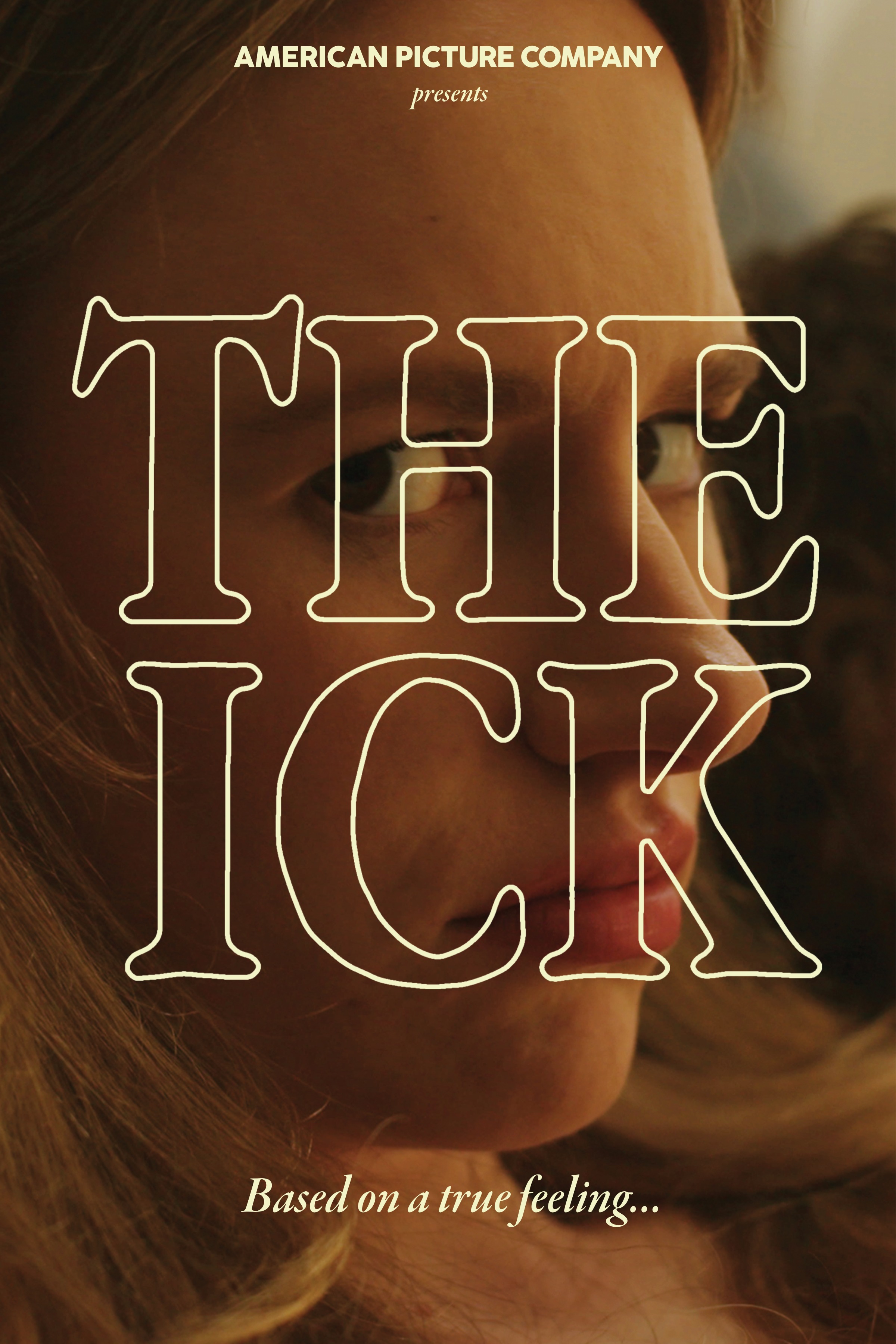
Our objective was to create a digital series that harnesses the audience participation of social platforms while still delivering the depth and craft of a cinematic scripted program.
We made The Ick for a very specific audience, people who love talking about dating, sharing stories with friends, and seeing their own experiences reflected back at them. The goal was to create a series that felt personal enough for viewers to submit their real icks, and crafted enough to keep them watching episode after episode.
Success wasn’t defined by views alone. Our benchmark was simple:
Does this make someone immediately text a friend and say, “You need to watch this”?
At its core, our objective was to build a proof of concept, showing that scripted storytelling doesn’t need to shrink to fit phone screens. Instead, it can evolve with them, using audience participation as fuel and cinematic craft as structure.
The strategy behind The Ick was to make the audience an active member of the writing process. Most short-form scripted shows struggle because they feel disconnected from viewers. We designed a system that let the audience supply the raw experiences, and let our filmmaking supply the clarity, structure, and craft.
This began with a submission website (Submityourick.com), where anyone could share a real ick story for us to bring to life. We launched the show with zero followers and intentionally didn’t promote it through our other pages. The strategy was to attract the right audience first, people who cared about the show, not people who came from our existing platforms. To achieve that, the first episodes came from our own real icks. After episode one, submissions started flowing in immediately.
From there, our execution process worked in three steps:
1. Receive audience submissions
We comb through hundreds per day. A usable submission must have a turn, the exact moment the feeling changes. We skip submissions that are too broad, and choose ones with a clear behavioral shift we can dramatize in under 60 seconds.
2. Adapt the submission into an episode
Every episode is different but relies on the same spine:
• Instantly compelling hook
• Clear premise, ideally with a red herring
• Strong emotional turn
• The Ick!
We rewrite the submission to fit our tone, characters, and world. The anecdote becomes inspiration, not a transcript.
3. Release episode and request more submissions
Our weekly cadence is strategic.
• Sunday its a special occasion.
• Monday call-outs generate fresh stories while the episode is still circulating.
• Thursday runner-ups reinforce that submissions matter and encourage more participation.
This loop trains the audience to expect, engage, and contribute.
Our strategy is built on constant improvement. After about 7 episodes, the series started to decline in viewership, so we analyzed the best performing episodes, and spent a lot of time refining what makes an episode good, what makes an episode perform, and how to consistently hit both. Some things are straightforward: brighter images work better, and faces need to be closer to the camera. Other rules are specific to our series:
• Every episode must be told from the perspective of the person getting the ick
• The person giving the ick should always be completely unaware of their ickyness
• Get both actors in the opening frame.
• Make sure the story is as clear as possible (Some earlier episodes feature drawn out dialogue, there isn't time for this online.)
After instituting these changes, episodes started to perform much better. We continue to explore what works, and improve the series. Even though The Ick is short-form, we bring the same discipline we use in TV and film. The running joke on set is, “All this for Instagram?” Yes! because taking a few extra minutes to make a shot beautiful matters. Audiences aren't mindlessly scrolling, they are looking for something good.
The Ick quickly proved that an audience-powered scripted series could scale, sustain interest, and build loyalty from scratch. We launched with zero followers and no cross-promotion, yet the submission pipeline activated immediately, a sign the format resonated on first contact.
The series grew to 500,000+ followers in seven months, driven entirely by organic discovery. Episodes consistently generated high watch-through rates, strong rewatch behavior, and week-to-week stability. On average, episodes reached 1.8 million viewers, with several breakouts climbing into the 5–10 million range.
The most meaningful metric came from participation. We have receved over 10,000 submissions, and sometimes receive hundreds of new icks per day. Viewers compete to have their ick selected, tag friends, quote episodes, and send multi-paragraph submissions. The audience isn’t just watching the show, they’re helping write it.
The impact extended beyond social platforms. In 2026, viewers will see their icks published in a book with Simon Element (US) and HarperCollins (UK), along with a judges-choice card game inspired directly by audience submissions.
Ultimately, the results proved our thesis: when you fully embrace the strengths of the platform, and tastefully invite the audience into the creative process, they show up.