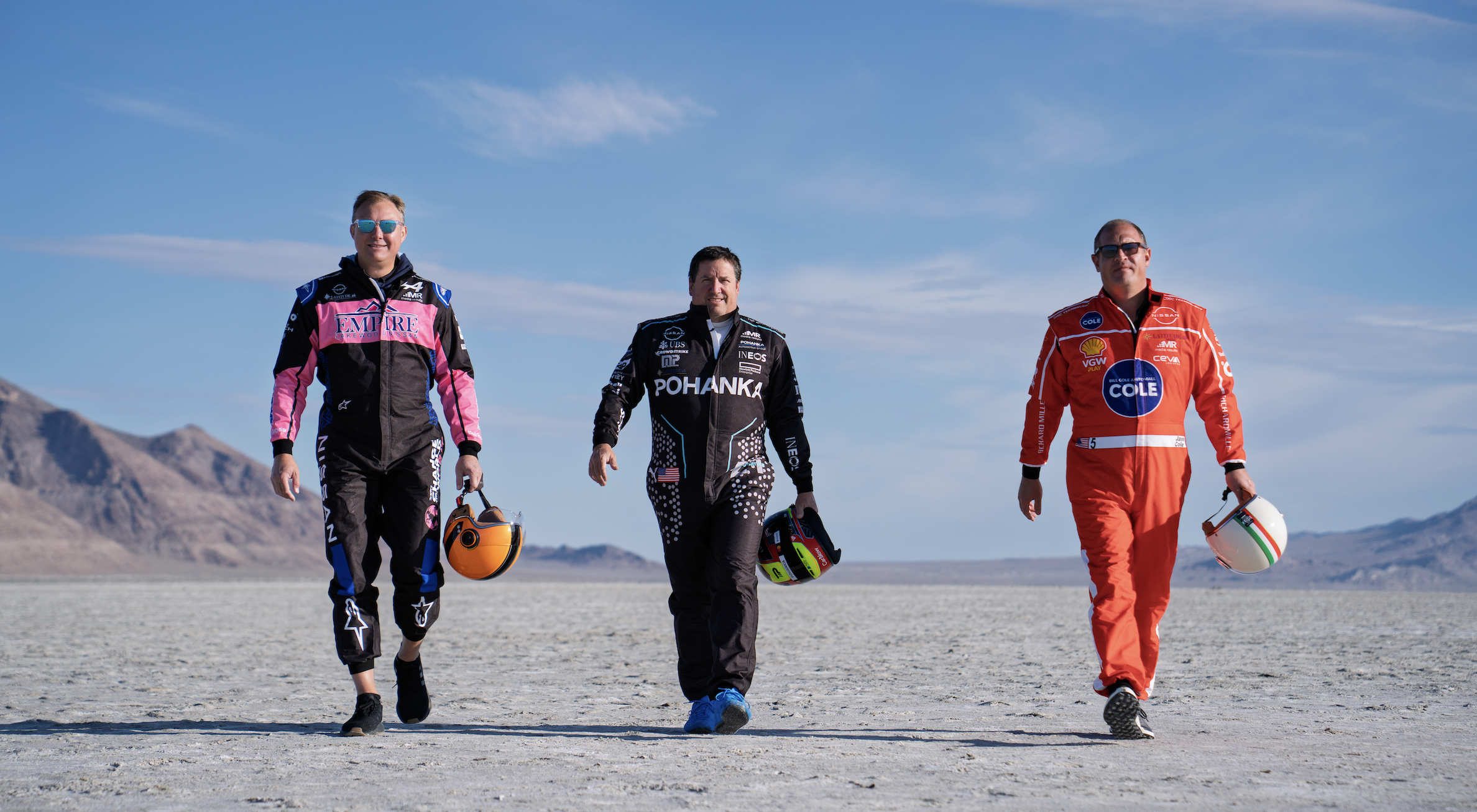
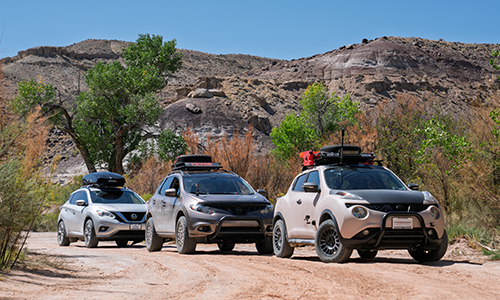
Tour Detour began with a simple, slightly unhinged idea:
If the internet insists that high-mile Nissan CVTs can’t survive real-world abuse, why not test the claim ourselves on camera, with three used Nissans, three dealership owners, and 1,500 miles of some of the most punishing terrain in the American West?
The concept was intentionally the opposite of a polished OEM campaign. Instead of corporate messaging, the series leaned into authenticity, uncertainty, humor, and risk. Three Nissan dealers, longtime friends from a Dealer 20 Group, bought three high-mile CVT vehicles for under $10K each and set out to see whether these cars would fail spectacularly…or surprise everyone.
The goals were threefold:
1. Reframe a stereotype through real testing.
For years, CVTs have been the punchline of reliability debates. Tour Detour aimed to replace the narrative with evidence not by preaching, but by pushing these cars through dunes, rivers, canyons, and alpine passes.
2. Prove that dealership voices can create premium entertainment.
The project set out to show that compelling automotive storytelling doesn’t have to come from automakers, agencies, or influencers, it can come from the people who live in this industry every day.
3. Build a social-first entertainment brand from scratch.
The series was designed to thrive on YouTube, supported by 80+ short-form videos across TikTok, Instagram, and Facebook, with the goal of establishing a repeatable, multi-season adventure format.
Tour Detour wasn’t created to sell cars. It was created to tell the truth and make people laugh while we did it.
Tour Detour was brought to life by flipping the traditional automotive marketing model upside down. Instead of creating a scripted campaign or a controlled product showcase, we set out to make a full-blown adventure series conceived, funded, and executed entirely by three Nissan dealers with no prior experience in entertainment production.
THE PLAN OF ACTION
The project moved from concept to execution in just six months.
The plan centered on a simple framework.
Three friends. Three used Nissans. One 1,500 mile gauntlet across some of the most unforgiving terrain in the American West. If the cars broke, that was part of the story. If they survived, that was part of the story. Authenticity guided every decision.
EXECUTION AND KEY FEATURES
Over eight days, the team filmed more than 120 hours of footage with a lean crew. Key creative elements included:
CHALLENGES AND HOW WE OVERCAME THEM
The cars faced the biggest challenges, and so did the team. A roof rack ripped off at highway speeds. A tire shredded on a dune miles from help. A production vehicle hit a rock on a cliffside road. Days stretched into nights due to weather, mechanical delays, and the unpredictability of extreme terrain.
From a storytelling standpoint, the challenge was balancing narrative clarity with the chaos of adventure filmmaking. The solution was to anchor each episode to a central question such as “Can a CVT survive this trail” and let the environment dictate the drama.
The biggest creative challenge was earning viewer trust. Audiences are used to automotive content scripted by marketing teams. Tour Detour had to prove that dealership voices can create premium entertainment worth watching. The answer was honesty. Nothing was staged. Nothing was hidden.
WHAT MAKES TOUR DETOUR UNIQUE
No agency. No actors. No corporate script. Just three real dealership operators testing their own industry’s stereotypes with humor, honesty, and real mechanical risk. In an industry built on controlled messaging, Tour Detour succeeded because it was not controlled at all.
Tour Detour succeeded because it achieved exactly what it set out to do. The first objective was to reframe a long-standing stereotype around Nissan CVTs through real, unscripted testing. The results spoke for themselves. All three high-mile vehicles completed the full 1,500 mile journey across salt flats, dunes, canyons, river crossings, and alpine passes. Viewers witnessed the transmissions holding up under extreme stress, creating an authentic counter-narrative that no traditional marketing campaign could match.
The second objective was to prove that dealership voices could create premium entertainment. Over the first 90 days, the series earned nearly 800,000 YouTube views, 4,270 hours of watch time, and 3,000 new subscribers. The short-form ecosystem amplified reach even further with strong multi-platform traction and thousands of engagements driven by humor, scenic visuals, and real adventure. These results validated the idea that real automotive professionals can build an entertainment franchise outside of agency or OEM structures.
The third objective was to establish a repeatable, social-first format. Tour Detour achieved this with a seven-episode arc supported by more than 80 shorts, a growing subscriber base, high engagement across platforms, and clear audience demand for Season Two. The production proved that the format, the cast chemistry, and the myth-testing structure can be scaled into future seasons exploring new vehicle genres and new automotive stereotypes.
The effort was a success because it created something rare: authentic automotive storytelling that audiences trusted, rooted for, and returned to week after week.