What happens when a national crisis becomes a content strategy? This video exposes the predatory rise of "poverty porn"—a digital sub-genre where some of the most vulnerable communities in the UK and elsewhere are treated as "poverty safaris" for the algorithm. We were inspired when the algorithms of social media platforms kept recommending vloggers filming "Britain’s worst towns," and we set out to interview the creators behind these videos, their motivations, and how they’re received in these places.
We wanted to conduct an honest interrogation of the ethical conundrum of this type of content, challenging viewers to recognize that behind every "viral" walk-through of a council estate is a community being used as a prop. It asks a vital question for the digital age: at what point does "documenting" reality become the exploitation of it?
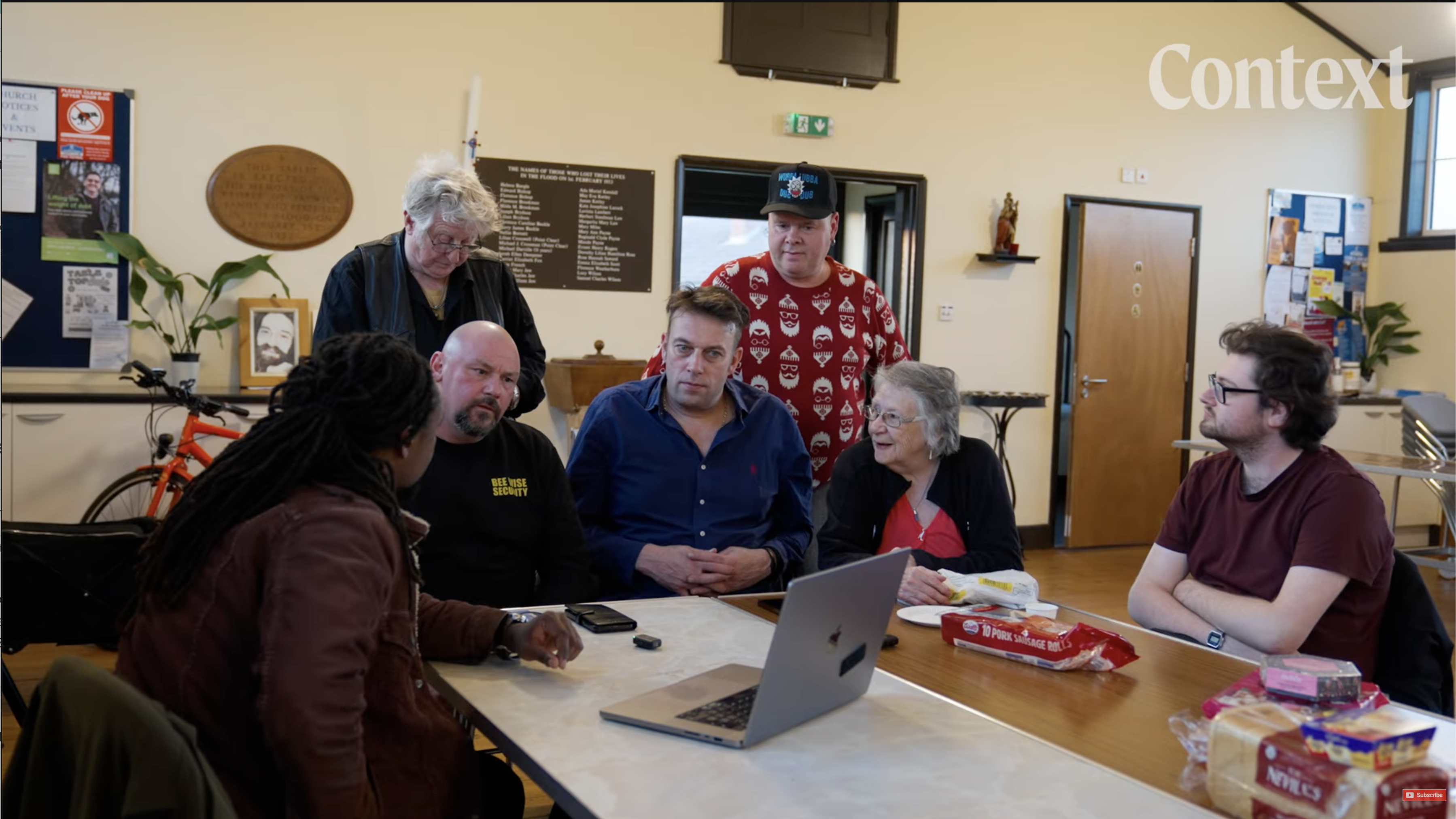
To bring this project to life, I chose a boots-on-the-ground investigative approach in order to examine the poverty porn genre. My plan of action centered on Jaywick, a seaside town in England that’s frequently characterized s as the "worst place to live in the UK." Rather than treating the town as a dystopian backdrop, I embedded myself within the community, working alongside a local resident who guided me through the "nice parts" of town—the parks, the community hubs, and the vibrant local spirit that the algorithm ignores. I know I wanted to give the subjects of these videos their agency back. A key feature was a filmed roundtable where I sat with residents from Jaywick and showed them the very content that mocks their hometowns. This created a raw, unfiltered dialogue that highlighted the profound disconnect between a vlogger’s "click-bait" thumbnail and the reality of the people living here. To ensure the project was analytical, I collaborated with experts and researchers to situate this modern digital trend within a wider historical context of "slum tourism," proving that while the platforms have changed, the exploitation remains the same.
I had to overcome several challenges. One of the biggest ones was the evasiveness of the creators themselves. When I reached out to the vloggers responsible for this content, many of them were suspicious of my intentions. Many of these creators don’t trust "legacy media" which is part of their appeal: as long as the views are high and the revenue is flowing, they feel no obligation to defend their work. During the research phase, I discovered that the "anti-woke" or "tell-it-like-it-is" branding of these channels often masked more sinister racist or xenophobic undercurrents, with some creators using urban decay as a dog-whistle for broader political grievances. Navigating these extremist views while trying to secure interviews was a constant ethical tightrope. Ultimately, what makes this project unique is its refusal to look away from the human cost. While these YouTubers film for the "shock factor," my video focuses on the resilience of the community. I have transformed a story about "decay" into a story about dignity, challenging the viewer to question not just the creators, but the very platforms that profit from the commodification of poverty.
The success of this project is mainly being able to question the genre of "poverty porn," successfully meeting our core objectives by providing a counter-narrative to the dehumanizing content currently flooding digital platforms. Our primary breakthrough was securing a candid interview with multiple creators in this space—a significant achievement given the sub-genre’s typical hostility toward scrutiny. Furthermore, we achieved our goal of restoring agency to these communities by showcasing the "nicer" side of a town notoriously mocked online. By highlighting vibrant local spaces and community resilience, we offered a nuanced look to an otherwise misperceived town.
I’m also proud of how this work provides vital economic and historical context. We successfully framed this digital trend not as a new phenomenon, but as the latest iteration of a long history of using media to mock the working class or communities in the Global South. This project is a success because it replaces exploitation with education, challenging the audience to see the systemic reality.