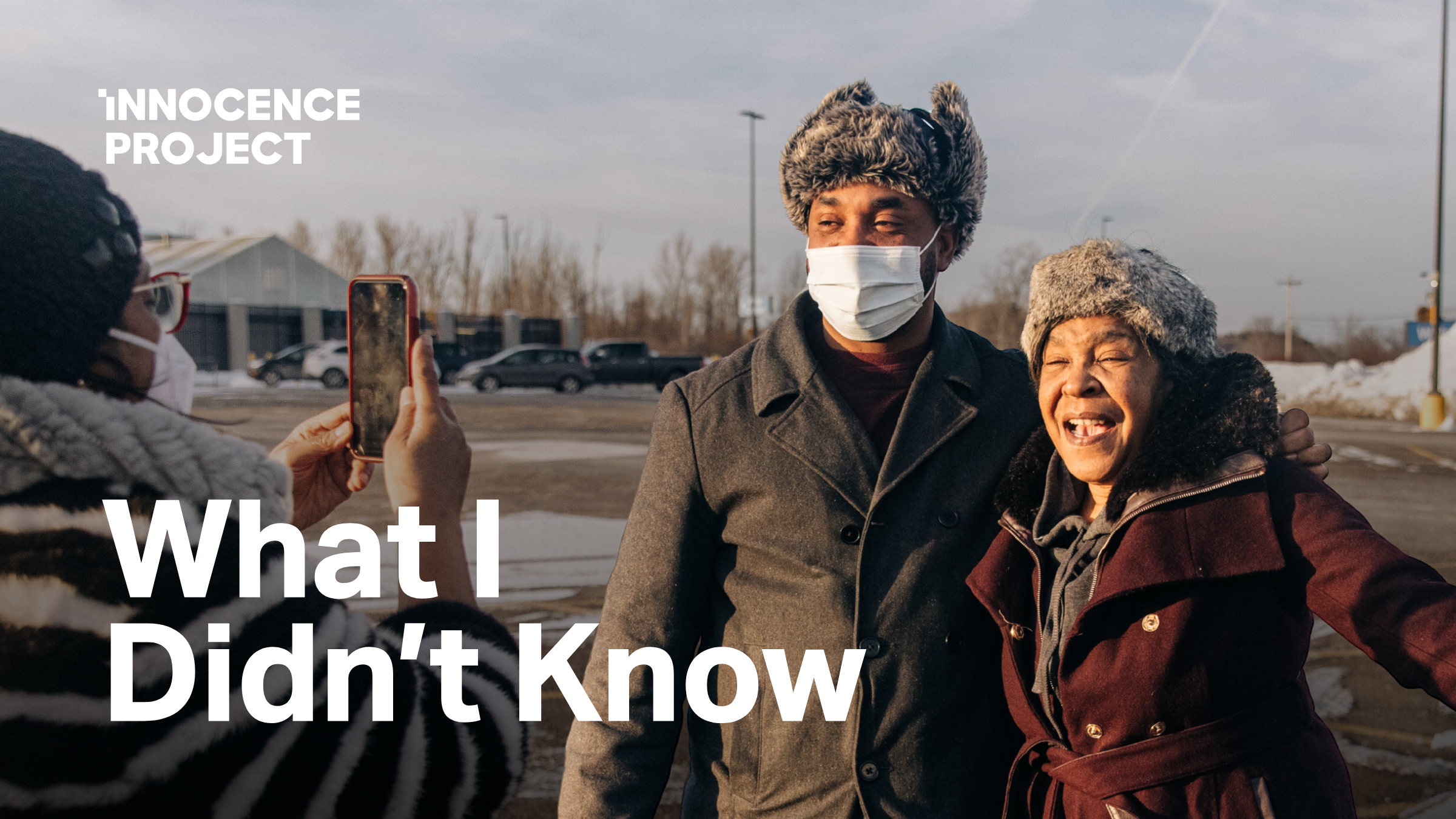
What I Didn’t Know was driven by a powerful, but often ignored reality: Freedom is only the first step after wrongful conviction. While public narratives tend to end at exoneration, this short film intentionally begins there — focusing on the emotional, physical, and practical challenges of rebuilding a life after decades of incarceration.
The goal was to shift public understanding of justice beyond release and innocence, and toward the complex process of healing. Through the lived experiences of three Innocence Project clients — Renay Lynch, Jabar Walker, and Paul Hildwin — the film explores what it means to navigate a world that has moved on without you, while carrying the weight of profound loss and trauma.
The project set out to shed light on the realities of reentry by highlighting both the visible and invisible barriers faced by freed and exonerated people, including securing housing, health care, identification, financial stability, and emotional support. Just as importantly, it sought to honor the resilience, strength, and self-discovery that sustain individuals through these challenges.
By centering exonerees as storytellers, What I Didn’t Know also aimed to spotlight the Innocence Project’s holistic approach to justice — one that extends beyond the courtroom through social work, policy advocacy, and long-term community support. Ultimately, the film invites audiences to reconsider what justice truly requires and why freedom alone is not the end.
What I Didn’t Know was brought to life as a continuation of the Innocence Project’s anthem series, following the award-winning short film Happiest Moments. While the earlier film captured the joy of freedom restored, this project intentionally shifted focus to the quieter, more complex aftermath of release.
The film was written and directed by Ariel Ellis and produced in collaboration with Woodward Original, building on a trusted creative partnership. Emmy Award–winning actor and Innocence Project Ambassador Joe Morton served as narrator, providing emotional grounding while allowing the voices of exonerees to remain central. An original score by composer Louis Weeks, featuring vocalist Anesha Birchett, was designed to underscore vulnerability rather than spectacle. To ensure broader accessibility and cultural resonance, a Spanish-language version was also produced, narrated by Innocence Project Ambassador Dascha Polanco.
From the outset, the plan prioritized intimacy and authenticity. The team worked closely with three Innocence Project clients — Renay Lynch, Jabar Walker, and Paul Hildwin — to ensure their stories were told with care, agency, and respect. Candid footage and raw reflections were used to capture not just the logistical challenges of reentry, but the emotional reckoning that accompanies newfound freedom.
One of the project’s greatest challenges was navigating deeply personal trauma while maintaining a safe, trauma-informed process. The production required flexibility, trust, and ongoing collaboration with participants to ensure the storytelling felt empowering rather than extractive. Another challenge was resisting simplified narratives of resilience; the film embraces uncertainty and discomfort, reflecting the reality that healing is nonlinear.
What makes What I Didn’t Know unique is its refusal to resolve injustice with a single triumphant moment. Instead, it creates a space for reflection. The film positions freedom not as an ending, but as the beginning of a lifelong journey, reinforcing the Innocence Project’s commitment to justice that is compassionate, comprehensive, and deeply human.
What I Didn’t Know met its objectives by reframing how audiences understand freedom, justice, and life after wrongful conviction. By centering the voices of exonerees and focusing on the realities that follow release, the film expanded public awareness beyond the moment of exoneration and into the ongoing process of healing and rebuilding.
The project illuminated systemic barriers faced by freed and exonerated people while honoring the resilience required to navigate them. Through both English and Spanish-language versions — narrated by Joe Morton and Dascha Polanco — the film reached broader audiences and reinforced the Innocence Project’s commitment to accessibility, equity, and inclusion.
The film also reinforced the Innocence Project’s holistic mission by elevating the essential role of social work, policy advocacy, and community care alongside legal victories. As a continuation of the organization’s anthem series, it demonstrated the power of storytelling as an advocacy tool.
We consider the project a success because it told a more nuanced, challenging story — one that resonated emotionally while advancing a more complete understanding of justice. What I Didn’t Know affirms that true freedom requires more than release; it requires care, accountability, and sustained commitment to those who have endured profound injustice.